
Reviewed · CITY TOURS
Cape Town Private City Tour
Four hours, a lot of Cape Town. If you want to understand the Mother City through its early colonial sites and the social history in between, this private route is a strong way to get your bearings. I like how it pairs big landmarks like the Castle of Good Hope with human stories around segregation, without turning the day into a boring lecture.
What really makes it work is the guide. Guides such as Stuart and Anesu are praised for going at a pace that fits your questions, and for being able to adjust when you want a different museum or an extra moment somewhere. The one thing to plan for is that not every stop has free entry, and the District Six Museum admission is not included.
In This Review
- Key highlights you will feel on the day
- What this private city tour is best at
- The morning start: getting your bearings in Cape Town
- Stop 1: Castle of Good Hope, 1666 to 1679
- Stop 2: Cape Town City Hall and the Mandela and King Edward VII connection
- Stop 3 and onward: District Six Museum, built around documents and photos
- District Six area: the Sixth Municipality District story
- A quick history beat: Parliament of South Africa context
- Stop 5: Company’s Gardens, established in 1652
- Stop 6: Greenmarket Square and African curios
- Stop 7: Bo-Kaap, colorful streets and the Malay Quarter story
- Stop 8: Noon Day Gun, British cannons 1806
- Stop 9: Afrogem, jewelry making, gemstone learning, and a complimentary pendant
- How the guides make the day feel worth the money
- Price and value: what $202.01 per group really covers
- What to watch out for on a half-day schedule
- Who this tour suits best
- Should you book this Cape Town private city tour?
- FAQ
- How long is the Cape Town Private City Tour?
- How much does the tour cost, and how many people can it include?
- Is pickup included?
- What ticket format will I receive?
- Is the tour admission fully included?
- Which stops are included?
- Are there any admissions listed as free during the tour?
- What is included in the price?
- What is the cancellation policy?
Key highlights you will feel on the day
- Short stop format with real breathing room: You get time at each place, but the schedule stays light enough to stay curious.
- Castle of Good Hope, built 1666 to 1679: One of the oldest colonial buildings in South Africa, with context that helps it make sense.
- District Six Museum plus the neighborhood next door: Museum first, then the District Six area named the Sixth Municipality District in 1867.
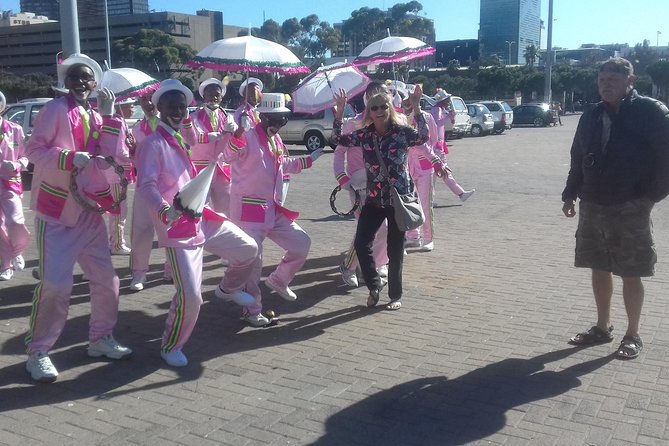
- Bo-Kaap’s Malay Quarter story: Colorful streets plus the background that explains why it looks the way it does.
- Company’s Gardens from 1652: The oldest garden in South Africa, created by the DEIC, plus an easy walk-through.
- Afrogem includes a behind-the-scenes jewelry and gemstone experience: Welcome drinks, education, a factory tour, and a complimentary Africa pendant.
What this private city tour is best at
This tour is built for people who like history, but do not want to spend the whole day staring at their phone or rushing from one place to the next. The flow is designed like a good conversation: start with the major colonial anchor points, then shift toward the memory of segregation, then end in areas where you can see how culture and everyday life shape the city.
It is also a practical fit because you do not have to coordinate transport. Bottled water and an air-conditioned vehicle are included, and pickup is offered. The tour runs about 4 hours, starting at 9:00 am, so you can still keep the rest of your day for views, a beach, or a good meal.
Because it is private, it is easier to ask questions without feeling cut off. The guide can also tailor the day toward your preferences, and that matters in Cape Town, where the difference between a memorable stop and a forgettable one is often how someone explains what you are actually looking at.
More City Tours in Cape Town
- Cape Town Hop-On Hop-Off City Tour with Optional Cruise
★ 4.5 · 1,793 reviews - Cape Town: 12-Minute City Scenic Helicopter Tour
★ 4.8 · 853 reviews - Cape Town City Pass: Save Over 50% on 80+ Top Attractions
★ 4.5 · 348 reviews
The morning start: getting your bearings in Cape Town
The day begins with an organized start, with pickup offered and a meeting point near public transportation. That is a small detail, but it helps if you are staying somewhere without easy access to taxis at breakfast time.
Once you are on the move, the guide helps you read the city. Cape Town can feel like a patchwork if you only visit a few highlights, so the early strategy here is to begin with the kind of landmark that gives you a timeline to hang everything else on.
Even if you only have one day and you want the highlights, this structure helps. You end up understanding what was built, what was reshaped, and why some neighborhoods are remembered differently than others.
Stop 1: Castle of Good Hope, 1666 to 1679
Your first major stop is the Castle of Good Hope, one of the oldest colonial buildings in South Africa. It was built between 1666 and 1679, and the value of starting here is that it sets the political and military context early.
What I like about the way this is handled is that it is not just about admiring stone walls. You get the sense of why a fortress mattered, and how that early chapter connects to later growth and later conflict in the city. This is a good time to ask your guide what the castle is protecting, what it represents, and how its role shifted over the years.
Admission is listed as free for this stop, so it is a low-cost way to begin with a high-impact sight.
Stop 2: Cape Town City Hall and the Mandela and King Edward VII connection
Next up is Cape Town City Hall, an Edwardian building established in 1905. The guide also points out the stature of Nelson Mandela, with its erection date listed as 2018, and ties it back to the history of Nelson Mandela and King Edward VII.
This stop works well because it bridges eras. You start to see how Cape Town’s story is not only about the distant past, but also about who the city chooses to honor in the present, and how older architecture can hold newer symbolism.
Admission is also listed as free here. The short time at the stop still lets you learn what you are looking at, without turning the morning into a long indoor detour.
A few more Cape Town trips worth comparing
- Wine Tour: Paarl, Franschhoek & Stellenbosch incl 3 wineries
★ 5.0 · 3,940 reviews - Cape Town: Hop-On Hop-Off Bus Tour with Optional Cruise
★ 4.8 · 3,929 reviews - Cape Town: Cape of Good Hope & Penguins Day Tour with Pickup
★ 4.7 · 3,362 reviews - Zipline Cape Town – From Foot of Table Mountain Reserve
★ 5.0 · 3,179 reviews
Stop 3 and onward: District Six Museum, built around documents and photos
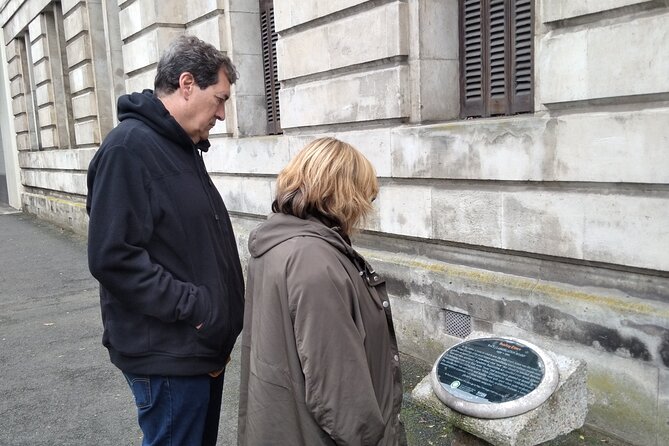
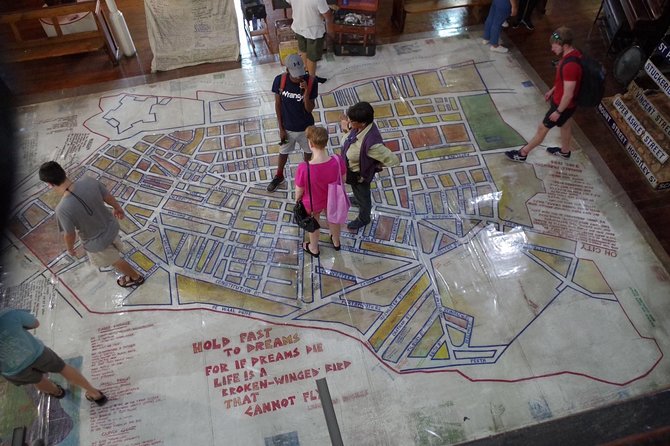
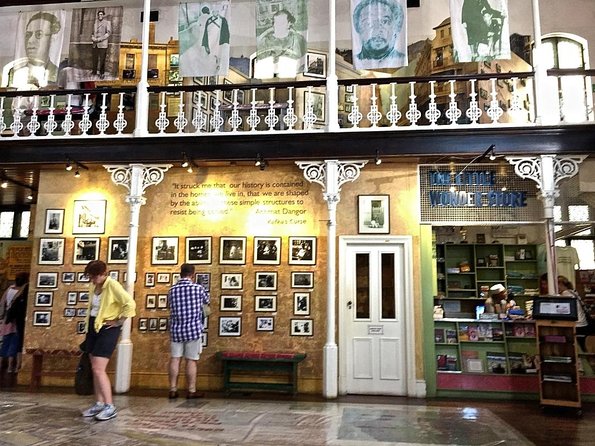
Then the tone shifts, and that is the point. District Six Museum focuses on the segregation history tied to the District Six area. Expect reading materials and pictures, and a full 1 hour at this stop.
Here is the practical part: admission is not included, so you will want to budget a bit extra if you plan to visit the museum in full. The upside is that the museum format is built to make the topic understandable, especially if you want more than a quick roadside explanation.
This is one of the stops that tends to stick with you after the tour. Not because it is dramatic for the sake of drama, but because it gives you real material to connect names, places, and memories.
District Six area: the Sixth Municipality District story
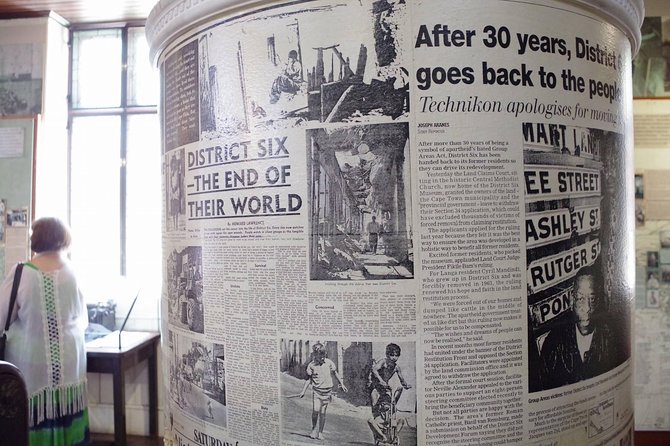
After the museum, you move into the area itself, with time set aside for the District Six story. You are told about how the area was named the Sixth Municipality District of Cape Town in 1867, and the guide helps connect what you saw in the museum to the streets and setting you are standing in now.
This is a smart sequence. The museum gives you context, and the neighborhood stop helps you translate that context into something spatial. You start to notice how the city layout and landmarks create a map of memory.
Admission is listed as free for this stop, and the time allotment is about 30 minutes, which is long enough to ask questions and get your head around the story without dragging the pace.
A quick history beat: Parliament of South Africa context
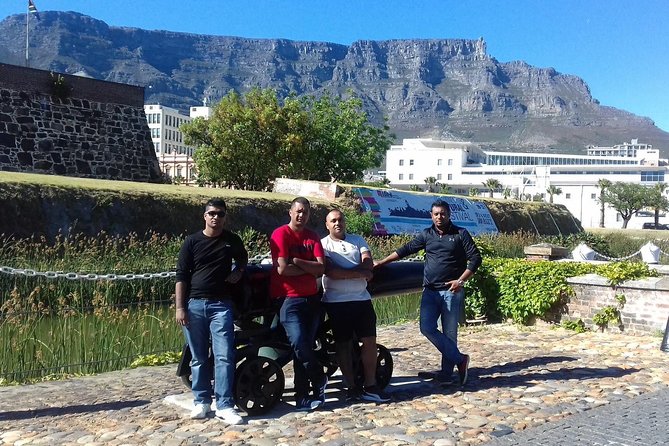
Between the segregation chapter and the greener, more market-facing parts of the city, the schedule includes History of Parliament of South Africa. The goal here is to keep the day connected, so you understand not only old colonial power, but also how later governance fits into Cape Town’s broader narrative.
Because the time for this specific element is not clearly broken out as a separate numbered stop, I treat it as part of the city-center explanation: a chance to link past institutions with later changes.
Stop 5: Company’s Gardens, established in 1652
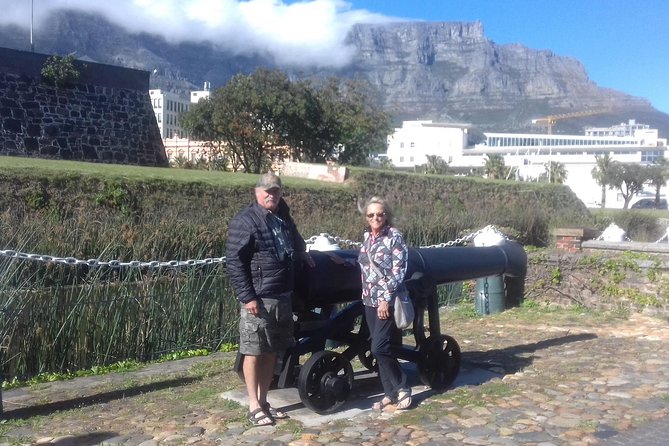
After District Six, you get a breather with Company’s Gardens. These gardens are listed as the oldest garden in South Africa, established in 1652 by the DEIC (Dutch East Indian Company).
This is one of those stops that feels simple, but it does real work for the day. It gives you shade, a slower pace, and a different kind of context than the museums and buildings. Plus, it helps you see Cape Town as more than history written in stone. There is everyday movement through the gardens, and that is part of how the city lives now.
Company’s Gardens is also listed as free for admission, and you have about 20 minutes, enough for a walk-through and a few good photo angles.
Stop 6: Greenmarket Square and African curios
Next comes Greenmarket Square, where the focus is history and shopping for African curios and souvenirs. You get about 10 minutes, which is short but useful if you are hunting for one or two small items without turning it into your whole afternoon.
The value here is not just buying things. It is learning how places like markets fit into the city’s present culture. If you like souvenirs with a story, this is a practical stop to make.
Admission is listed as free, so the time is your only real cost.
Stop 7: Bo-Kaap, colorful streets and the Malay Quarter story
Then you move to Bo-Kaap, with about 30 minutes set aside for colorful houses and the Malay Quarter history.
This stop tends to be a favorite because the streets look the way the stories sound: bold, personal, and full of identity. But the real win is the explanation. The guide helps you connect the visual style to the community history, so you leave with more than a stack of photos.
Admission is listed as free here too, so it is easy to justify time at the place that often becomes your most memorable neighborhood moment.
Stop 8: Noon Day Gun, British cannons 1806
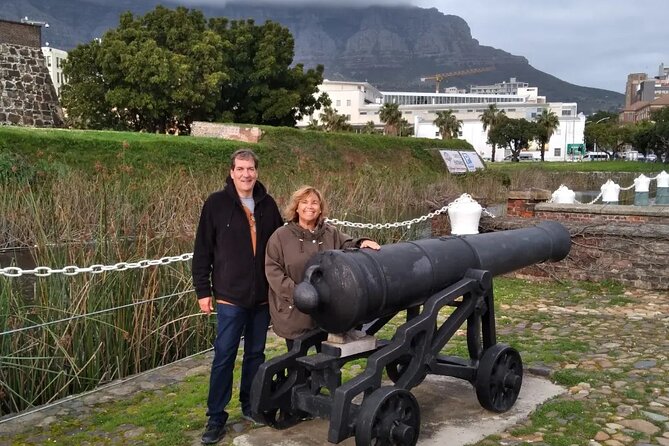
The schedule includes the Noon Day Gun, with history tied to British cannons from 1806. You have about 30 minutes at this stop.
This is a great example of why a guide helps. Without context, you might see a cannon and think it is just a photo opportunity. With context, it becomes part of the city’s routines and its colonial-era timing traditions.
Admission is listed as free. The main thing to bring is patience. The best experience comes from standing there, listening to the explanation, and taking in the spectacle as part of Cape Town’s daily rhythm.
Stop 9: Afrogem, jewelry making, gemstone learning, and a complimentary pendant
If you enjoy hands-on shopping, Afrogem is the most interactive stop of the day. You get about 20 minutes, and the experience is described as a behind-the-scenes look at jewelry manufacturing plus gemstone education.
The flow includes welcome drinks, then educational time, then a factory tour, and finally a showroom where you can browse gemstones, jewelry, and handcrafted South African curios. You are also gifted a complimentary Africa pendant as a thank-you for visiting.
Admission is listed as free for this stop, but you should think of it as a shopping experience with guidance, not a pressure-only sales pitch. It can be a fun way to buy something meaningful, especially if you like knowing where materials and craft come from.
How the guides make the day feel worth the money
This tour earns its high scores because the guides are described as more than safe drivers with a checklist. The feedback highlights three big strengths.
First, they are flexible. One review notes the guide went out of the way when a museum preference changed and even when coffee was needed. That is small, but it makes the tour feel human.
Second, they are patient. The day includes multiple short stops, which can be perfect for people who hate rushing. Guides are praised for letting you interrupt for questions and for not making you feel like your curiosity is slowing them down.
Third, they tailor. This is especially helpful because Cape Town interests people for different reasons. If you are focused on history, you will get it. If you want culture and color, you will get it too.
When guides like Stuart and Anesu show up with that kind of approach, the tour becomes more than transportation. It becomes a story you can actually follow.
Price and value: what $202.01 per group really covers
The price is $202.01 per group, up to 4 people. On its face, that sounds like a lot. But you should compare it to the cost of doing the same combination of sites by taxi and paying for multiple individual guides, or trying to piece together a route on your own without losing time.
For your money, you are getting:
- an air-conditioned vehicle and bottled water included
- pickup offered
- a private, custom-feeling explanation at multiple major stops
- several free-admission sites during the route
Also, the schedule includes at least one stop where admission is not included, the District Six Museum. So your real budget is the base price plus that museum entry and any optional purchases at markets or at Afrogem.
If you are traveling with friends or family, and you like the idea of a local guide syncing everything into one coherent day, the per-group cost can feel like a bargain.
What to watch out for on a half-day schedule
A private half-day tour has limits. The stops are time-boxed, even when they are meaningful. That is ideal for getting the big picture, but it is not built for someone who wants to spend hours deep in one museum.
Also, because the District Six Museum admission is not included, you should plan for a small extra cost. If you are the type who hates surprise expenses, skim the included versus not included details before you go.
Finally, Afrogem and the curio-shopping areas can turn into your least favorite part if you dislike shopping. If you do not want to buy anything, the good news is that the gemstone education and factory tour are the focus. You can still treat it as a short cultural experience.
Who this tour suits best
This Cape Town private city tour is ideal if:
- you want a guided introduction to multiple sides of Cape Town in one morning
- you care about the city’s political and social layers, not just scenic stops
- you appreciate a relaxed pace, with time to ask questions
- you are traveling in a group of up to four and want private convenience
If you are traveling solo and want total independence, you might still enjoy it. You are just paying the group rate as a solo traveler.
If you are only interested in beaches or dramatic views, this may feel history-heavy. If your goal is to understand the city first, then explore freely later, this is a smart way to start.
Should you book this Cape Town private city tour?
I’d book it if you want a thoughtful, well-paced route that connects colonial landmarks, segregation memory, and Cape Town neighborhoods into one clear story. The guides sound like the real engine here. Stuart and Anesu get praised for tailoring, for making room for questions, and for keeping the day calm instead of rushed.
I would think twice if you want maximum time in museums, because the format is designed to cover a lot without turning into a marathon. Also, if you strongly dislike shopping stops, you can still enjoy the gemstone education part, but you may want to go in with the right mindset.
For most people who want a high-value first pass through Cape Town, this tour hits the sweet spot: major sites, good context, and a guide who knows how to keep it personal.
FAQ
How long is the Cape Town Private City Tour?
It runs for about 4 hours.
How much does the tour cost, and how many people can it include?
The price is $202.01 per group, up to 4 people.
Is pickup included?
Pickup is offered, and the start time is 9:00 am.
What ticket format will I receive?
You get a mobile ticket.
Is the tour admission fully included?
No. All fees and taxes are not included, and District Six Museum admission is specifically listed as not included.
Which stops are included?
The tour includes the Castle of Good Hope, Cape Town City Hall, District Six Museum, District Six, the History of Parliament of South Africa, Company’s Gardens, Greenmarket Square, Bo-Kaap, Noon Day Gun, and Afrogem.
Are there any admissions listed as free during the tour?
Many stops are listed as free, including Castle of Good Hope, Cape Town City Hall, District Six, Company’s Gardens, Greenmarket Square, Bo-Kaap, Noon Day Gun, and Afrogem.
What is included in the price?
Bottled water and an air-conditioned vehicle are included.
What is the cancellation policy?
You can cancel for free up to 24 hours before the experience starts for a full refund.
Newest around Cape Town
- Private E-Bike Cape Town MTB Trails with a Pro★ 5.0 · 3 reviews
- Taste of Cape Town – food and city tour★ 5.0 · 46 reviews
- Skip the Line: District Six Museum Admission Ticket★ 4.0 · 6 reviews
- E-Bike Cape Peninsula tour★ 5.0 · 7 reviews
- 1-3 Passenger Private Arrival & Departure Cape Town – Airport Transfers★ 4.5 · 17 reviews
- Private Cycling Tour of Constantia Winelands★ 4.5 · 10 reviews
- Private Tour To Stellenbosch Franschoek Wineries from Cape Town Price Per Group★ 5.0 · 4 reviews
- Catamaran Cruise and Sushi Experience in Cape Town★ 4.0 · 6 reviews
City Tours, compared.
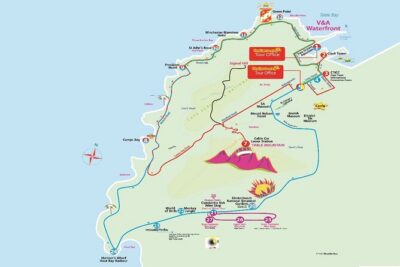
Cape Town Hop-On Hop-Off City Tour with Optional Cruise
Read our review →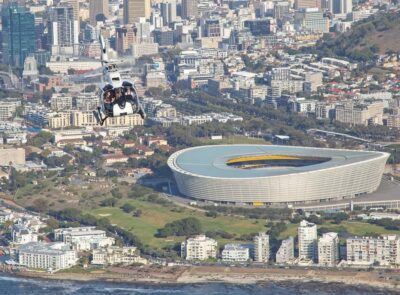

Johannesburg Hop-On Hop-Off City Tour with Soweto Option
Read our review →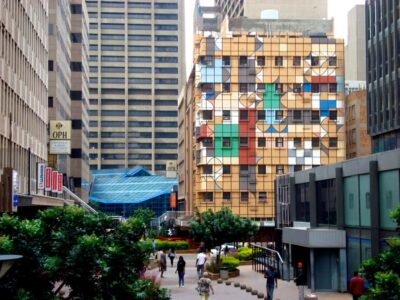
Jo’berg in 1 Day: Soweto, Apartheid Museum & City Tour
Read our review →
Cape Town City Pass: Save Over 50% on 80+ Top Attractions
Read our review →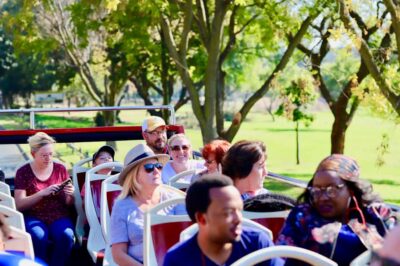
Hop-On Hop-Off Bus, City Tour and Apartheid Museum
Read our review →
Browse the lists this tour appears in