
Reviewed · STREET ART
Cape Town: Woodstock Street Art & Culture Tour
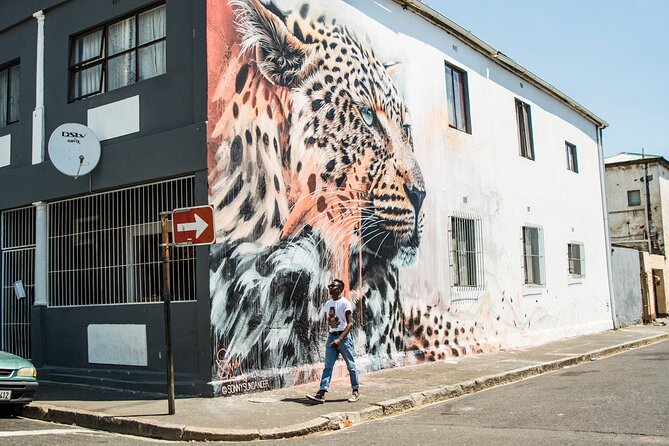
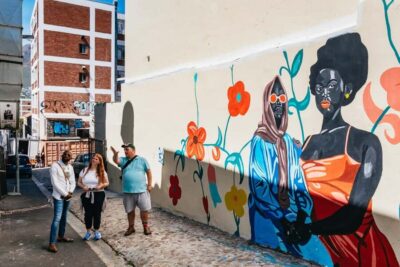
Street art in Cape Town has a pulse. This 2-hour walk through Woodstock and Salt River puts murals up close and connects each piece to the people and issues shaping the neighborhood.
I especially liked how the guide makes the art feel personal, not just pretty. You’ll get real stories behind the paintings, including how local artists think about their work and why they choose their techniques.
One thing to consider: meeting point directions aren’t always crystal clear, and one past group reported a late start. I’d plan to arrive a bit early and confirm the meeting spot in your booking message.
In This Review
- Key Highlights to Look For
- Woodstock and Salt River: Why This Part of Cape Town Matters
- The Two-Hour Walk: What You’ll Experience on the Ground
- How the walk tempo should feel
- A drawback to keep in mind
- Meeting Murals in Woodstock: Art as Commentary, Not Decor
- The best part if you like real conversations
- Salt River and Salt Circle: Where Festival Energy Shows Up
- Why this matters for your photos
- The Guides: Why the Stories Land
- What you’ll learn about artists’ motivations
- Street Art and Social Issues: The Part Many People Are Not Ready For
- Tips for Getting the Most Out of It (And Not Feeling Lost)
- Expect the tour to feel conversation-led
- Price and Value: Is $38.65 Fair for 2 Hours?
- Who Should Book This Tour?
- Should You Book This Cape Town Woodstock Street Art & Culture Tour?
- FAQ
- How much does the Cape Town Woodstock Street Art & Culture Tour cost?
- How long is the tour?
- Where does the tour take place?
- How big is the group?
- Do I need a printed ticket?
- What is the cancellation policy?
Key Highlights to Look For

- Woodstock and Salt River street art, in a part of Cape Town many visitors skip
- Local conversation focus, with social and economic issues woven into the murals
- Hands-on mural storytelling, walking piece by piece instead of looking from far away
- Salt Circle mural area, including festival or exhibition themed work
- Small groups (max 30) that keep the walk feeling conversational
- Guide-led Q&A, with praise for patient answers and encouragement to ask questions
Woodstock and Salt River: Why This Part of Cape Town Matters
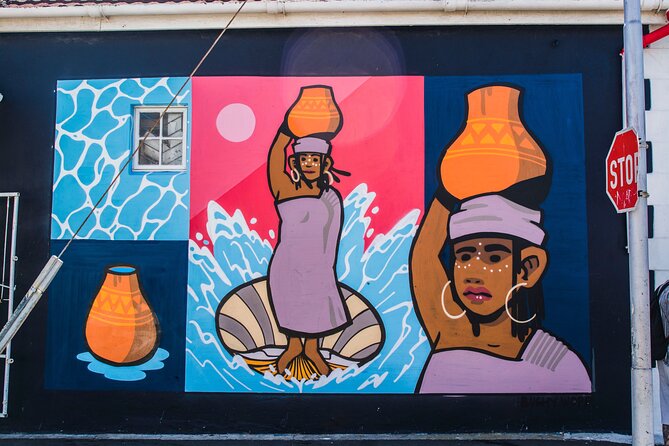
Cape Town’s reputation for creativity is real, and this tour targets the streets where that creativity shows up in daily life. Instead of treating street art like a one-time photo stop, the walk uses Woodstock and Salt River as a living canvas. You’ll see murals that look like they belong on walls and also feel like messages aimed at the community, not outsiders.
What makes this area particularly interesting is the mix. You’re in neighborhoods dealing with real social and economic pressure, and the art reflects that tension. At the same time, you’ll hear about the positive side of South Africa’s creative scene too, including how artists build voice and visibility through public work.
This tour also fits the way many people actually travel. It’s short, about 2 hours, and it’s built for walking. In other words, you can do it even if your day is already packed with table mountain plans, waterfront wandering, or a long food crawl. You still come away with something meaningful: context, not just color.
A few more Cape Town trips worth comparing
- Wine Tour: Paarl, Franschhoek & Stellenbosch incl 3 wineries
★ 5.0 · 3,940 reviews - Cape Town: Hop-On Hop-Off Bus Tour with Optional Cruise
★ 4.8 · 3,929 reviews - Cape Town: Cape of Good Hope & Penguins Day Tour with Pickup
★ 4.7 · 3,362 reviews
The Two-Hour Walk: What You’ll Experience on the Ground
This is a guided walking tour that runs for about 2 hours in the Woodstock and Salt River area. The format is simple and effective. You’ll move from mural to mural, stopping long enough to take in the details and talk through what you’re seeing.
You can expect a mix of:
- up-close viewing of individual pieces
- group discussions on why the art exists in that specific place
- explanations of techniques, motivations, and what the artist was trying to say
Because the route is concentrated, the time feels efficient. You’re not spending the evening crossing the whole city. You’re learning how street art works as a language, then putting that idea into practice as you see multiple examples in the same neighborhood context.
How the walk tempo should feel
The best street art tours don’t rush. Here, the pace is built around conversations while you’re looking at the walls. One reason the ratings are so strong is that guides are praised for being patient and for encouraging questions. So if you’re the type who likes to ask, you should feel comfortable doing it.
A drawback to keep in mind
The only consistent caution from past experiences is meeting point clarity. One group noted the booking info didn’t clearly state the correct meeting point, and they started 30 minutes late. That doesn’t mean your day will go that way, but it does mean you should take two minutes to reread your confirmation details and arrive early enough that a small mix-up won’t throw off your schedule.
Same province, a very different day:
- Zipline Cape Town – From Foot of Table Mountain Reserve
★ 5.0 · 3,179 reviews - Cape Town: Table Mountain Cable Car, Hop-On Hop-Off Bus Tour
★ 4.6 · 3,157 reviews - Cape Point and Boulder’s Penguins Full Day Tour
★ 5.0 · 3,118 reviews - From Cape Town: Cape Point & Boulders Beach Full-Day Tour
★ 4.8 · 3,032 reviews
Meeting Murals in Woodstock: Art as Commentary, Not Decor
Woodstock is the kind of place where street art can feel like neighborhood journalism. As you walk, you’ll spend time with individual pieces and learn how artists use public space to speak about community life.
What I like about this part of the tour is that it treats murals as more than decoration. You’ll hear how street art often carries social commentary, especially around economic pressure and community change. That theme matters because Cape Town’s street art scene didn’t grow in a vacuum. It reflects the realities people live with, then transforms those realities into something visible, debate-worthy, and sometimes even hopeful.
You’ll also get explanations of techniques. Even if you don’t know spray paint from stencil paint, the guide’s job is to give you a framework. The goal is not to turn you into an artist overnight. It’s to help you read the wall the way you’d read a photograph with a caption: what’s happening, why it matters, and what emotions the artist is shaping.
The best part if you like real conversations
Some tours give you facts. This one tries to give you dialogue. The walk is designed for talking with locals and hearing about subcultures. That can mean hearing a personal angle on why the art is there, and also hearing what the community wants visitors to understand.
Salt River and Salt Circle: Where Festival Energy Shows Up
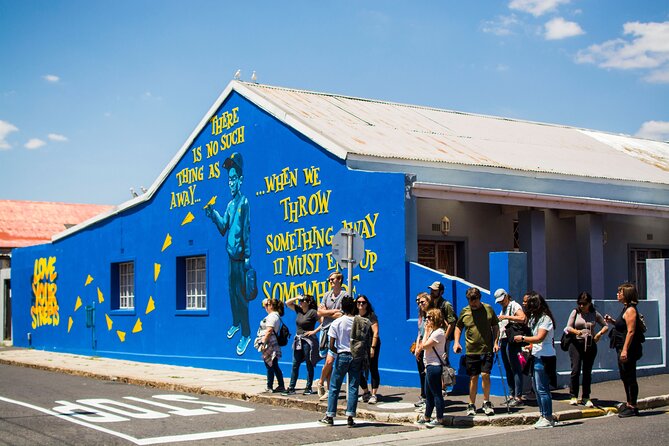
As the walk shifts toward Salt River, the tone can change depending on the murals you encounter. The big idea stays the same, though: public art is a communication tool.
One specific area that comes up is Salt Circle, where you’ll find multiple mural examples connected to a festival or exhibition. That’s a useful angle because it shows a different side of street art. Not every wall is anonymous protest. Some work is planned, organized, and part of an event culture, with the neighborhood acting as the stage.
Seeing that variety is worth it. If you only know street art from the idea of graffiti as chaos, you may expect everything to feel the same. Here, the tour helps you notice differences in intent and presentation. The art can be community art, festival art, political art, or art built to spark discussion. Same streets, different purposes.
Why this matters for your photos
This is not a tour that only chases the biggest mural from the best angle. You’ll still take photos, sure. But the value is that you’ll understand what you’re photographing. It turns a pretty picture into a story you can remember.
If you’re the type who likes to caption photos with actual context, you’ll appreciate this.
The Guides: Why the Stories Land
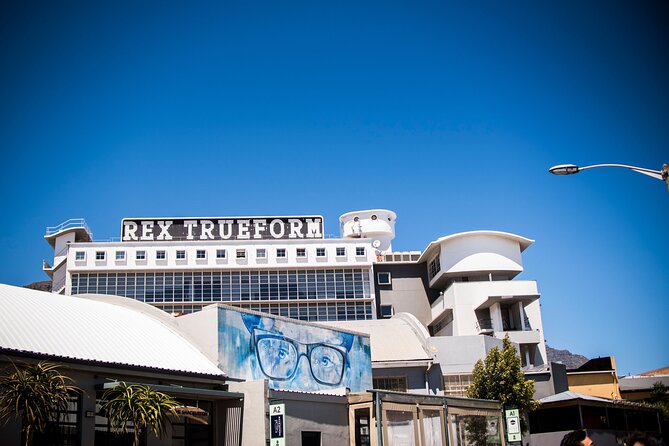
A street art tour lives or dies by the guide. This one has strong consistency in that regard, with past groups praising guides for being thoughtful, patient, and strong on explanation.
Names that have shown up in past experiences include Chandy, Terrence, and Shipo. You can’t count on the exact guide you get, but the through-line is clear: these are guides who can connect art with people and place.
What to look for in your guide’s approach:
- encouragement to ask questions
- clear background on the artwork you’re seeing
- context about South Africa’s past and present concerns
If you want more than a highlight reel, this kind of guided explanation is exactly the point.
What you’ll learn about artists’ motivations
You’ll talk about why artists make public work. Sometimes it’s about visibility. Sometimes it’s about identity. Sometimes it’s about pushing back against silence around social issues. And sometimes it’s about taking part in a broader creative moment, like a festival themed project.
The guide’s job is to connect these motivations to what’s on the wall, so the art doesn’t feel random. It should feel like language.
Street Art and Social Issues: The Part Many People Are Not Ready For

This tour doesn’t treat murals as neutral. You’ll talk about the social and economic issues neighborhoods face and the idea of a new South Africa, including positive change. That can be heavy in parts. But it’s also one of the reasons the walking format works well. You’re not learning this from a screen. You’re seeing it beside the walls where it lives.
A couple themes you should expect:
- the way art responds to community pressure
- how public murals can preserve memory or reflect new realities
- why artists use different techniques to communicate different messages
Even if you’re not a politics person, the practical value is that you’ll understand what you’re looking at without needing a degree. You walk away with mental hooks that help you interpret future murals you see in Cape Town, and maybe even elsewhere in the world.
One past experience called out how the dialogue on past and present political and social concerns made the tour genuinely invaluable. That matches what this type of walk is built to do: connect the aesthetic with the human.
Tips for Getting the Most Out of It (And Not Feeling Lost)
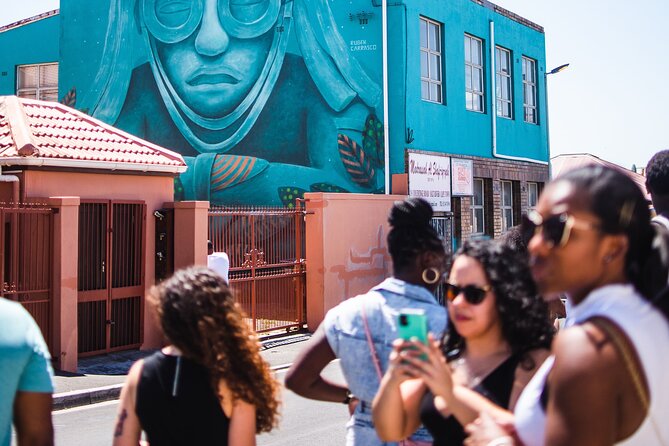
This is a walking tour, so your baseline needs are simple: comfortable shoes and a willingness to look closely. Street art rewards close viewing. If you’re used to quick sightseeing from a bus window, slow down. You’ll be grateful you did.
Here are smart, practical moves:
- Bring a charged phone or camera, because you’ll want to photograph pieces you understand, not just pieces you spot.
- Wear layers. Weather changes fast in Cape Town, and you’ll be outside for the full 2 hours.
- Ask questions early. If you’re curious about a technique or an artist’s intention, the best time to ask is when you’re standing in front of it.
Expect the tour to feel conversation-led
The group size cap is 30 travelers, so it’s not a mass event. It’s also not a private tour. That sweet spot is part of the value. You get interaction without losing momentum.
Price and Value: Is $38.65 Fair for 2 Hours?
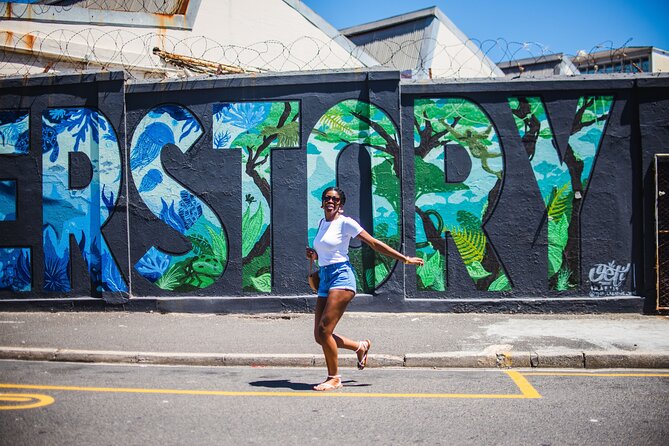
At $38.65 per person for about 2 hours, this tour is in the midrange for a guided activity. Whether it feels like a deal comes down to what you value.
Here’s why I think the price is reasonable:
- You’re paying for a local guide who ties murals to community context, not just pointing out pretty images.
- The walk includes social and economic discussion, plus explanations of techniques and motivations.
- It’s a small-group format, with up to 30 people, so you’re not just listening from the back.
- The tour uses a mobile ticket, which lowers friction on your end.
Also, the tour is often booked ahead, averaging around 15 days in advance. That’s a sign of steady demand, and it suggests the experience has a repeatable formula that people like.
If your goal is purely scenic photos, you might find cheaper ways to wander Woodstock on your own. But if you want to understand the art you’re seeing, this price feels like it buys real meaning.
Who Should Book This Tour?
This is ideal for you if:
- you want Cape Town street art with context, not just a quick mural checklist
- you like walking tours that include discussion and local perspective
- you enjoy creative neighborhoods and want to understand why art shows up in certain places
It’s also a good match if you’re traveling with a partner or a small group that enjoys conversation. The guide-led dialogue and the encouragement to ask questions can make the tour feel like a guided chat with an art focus.
If you prefer quiet sightseeing and minimal talking, you might find the social discussion a bit intense. Still, even then, the mural explanations and up-close viewing should help.
Should You Book This Cape Town Woodstock Street Art & Culture Tour?
Yes, I’d book it if you want street art that comes with a human explanation. The biggest win is that the tour treats the murals as part of community life, with a focus on artist motivation, technique, and the social realities Woodstock and Salt River face. The consistently high ratings and the praise for guides like Chandy, Terrence, and Shipo point to the kind of guiding you want for this topic.
Book it sooner rather than later if your dates are fixed, since it’s commonly reserved about two weeks out. And do yourself a favor, double-check the meeting point details in your confirmation, so you don’t lose time on a mix-up.
FAQ
How much does the Cape Town Woodstock Street Art & Culture Tour cost?
It costs $38.65 per person.
How long is the tour?
The tour lasts about 2 hours.
Where does the tour take place?
You’ll explore the Woodstock and Salt River neighborhoods in Cape Town.
How big is the group?
This experience has a maximum of 30 travelers.
Do I need a printed ticket?
No, it uses a mobile ticket.
What is the cancellation policy?
You can cancel for a full refund if you cancel at least 24 hours before the experience starts. Free cancellation is available up to 24 hours in advance.
Newest around Cape Town
- Private E-Bike Cape Town MTB Trails with a Pro★ 5.0 · 3 reviews
- Taste of Cape Town – food and city tour★ 5.0 · 46 reviews
- Skip the Line: District Six Museum Admission Ticket★ 4.0 · 6 reviews
- E-Bike Cape Peninsula tour★ 5.0 · 7 reviews
- 1-3 Passenger Private Arrival & Departure Cape Town – Airport Transfers★ 4.5 · 17 reviews
- Private Cycling Tour of Constantia Winelands★ 4.5 · 10 reviews
- Private Tour To Stellenbosch Franschoek Wineries from Cape Town Price Per Group★ 5.0 · 4 reviews
- Catamaran Cruise and Sushi Experience in Cape Town★ 4.0 · 6 reviews
Street Art, compared.
Colours of Johannesburg: A Graffiti & Street Art Tour
Read our review →
Browse the lists this tour appears in