
Reviewed · GARDEN ROUTE TOURS
From Oudtshoorn: Full-Day Private Swartberg Mountain Tour
One hike, big sky, and rare plants. A private guided walk up the Swartberg Pass puts the Great Karoo views on full display, and you get a close-up lesson on fynbos like protea. The day also includes a real uphill and some uneven paths, so the main consideration is simple: you need to be comfortable with a hike that starts with a 900m climb.
I like the private format here. Your guide can answer questions as they come up, and that makes the vegetation, rocks, and wildlife feel more like a story you understand than scenery you just watch from a distance. When I picture this tour working best, I keep coming back to the small details a guide can explain, like why those plants belong in this part of South Africa.
One more thing to factor in: it is not designed for wheelchair users. Beyond that, the route is built for people who want a full day in the mountains, with transport included so you do not lose time figuring out logistics.
In This Review
- Key highlights that make this day work so well
- Starting in Oudtshoorn, then walking into real mountain time
- Swartberg Pass hiking route, from national monument to summit air
- Die Top summit, where the Great Karoo stretches out
- Fynbos and protea lessons, plus how to spot plants up close
- Prince Albert lunch stop, a smart reset in the middle of the route
- Great Karoo arid country, succulents, and karroid bush
- Meiringspoort Waterfall and the 300-million-year rock story
- Finishing through the pass toward De Rust
- Price and value: what $229 per person really buys
- Who this tour fits best, and what to consider first
- Should you book the Oudtshoorn Swartberg day hike?
- FAQ
- How long is the full-day Swartberg Mountain Tour?
- Where does pickup happen?
- What are the main walking highlights?
- Is lunch included?
- How big is the group?
- What languages is the live guide available in?
- What wildlife and plants can you expect to learn about?
- What is included in the price?
- Is the tour suitable for wheelchair users?
- What should I bring for the hike?
Key highlights that make this day work so well
- Private guide, English or Afrikaans, so you can actually ask why things are the way they are
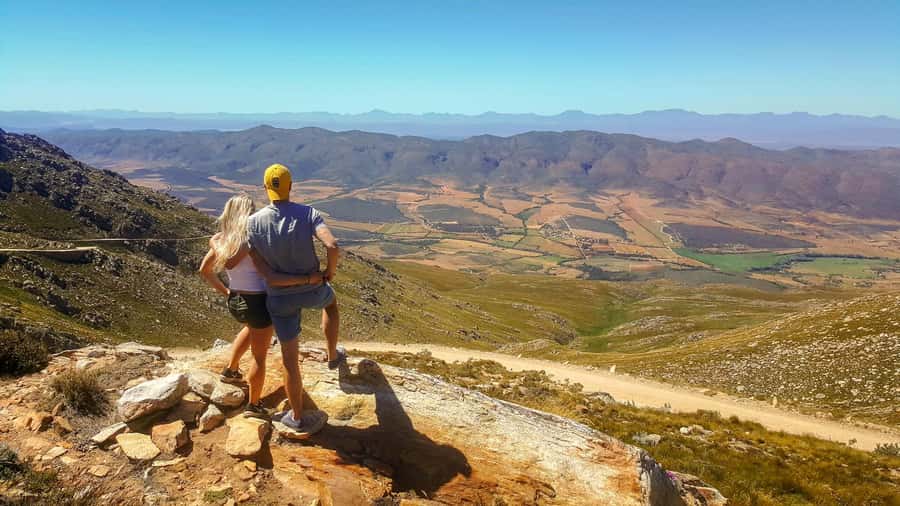
- Swartberg summit viewpoint (Die Top) with a wide Great Karoo panorama
- Fynbos plants such as protea, plus time to notice smaller details beyond the big views
- Meiringspoort Waterfall at about 60 meters high, a major natural landmark on the route
- Old sandstone geology with folded layers dating back more than 300 million years
- Conservation context, including the leopard initiative linked to the H.O.P.E. Foundation
Starting in Oudtshoorn, then walking into real mountain time
Your day begins with pickup in Oudtshoorn at your accommodation. That matters more than it sounds, because it keeps the start calm and lets you focus on the hike instead of juggling directions. From there, you head toward the Swartberg Mountains, with a guide in your group and private transportation doing the heavy lifting.
Once you’re on the ground, you start the hike from the southern foothills. The route is described as a guided walk along the Swartberg Pass, and you begin with an ascent of about 900m. In practical terms, that means you should plan on a steady effort early on, not a gentle stroll. Bring warm layers even if the day seems mild when you leave, because mountain weather can change fast and you’ll be gaining elevation.
I also appreciate that this is a private group tour. That typically translates to less waiting around and a better pace for what you want to see. If you like stopping to take notes, watch birds, or just pause for a better angle, you’re not forced into a rigid group rhythm.
More Garden Route trips:
- From Cape Town: 2-Day Safari at Garden Route Game Lodge
★ 4.8 · 928 reviews - Plettenberg Bay: Swim with Seals
★ 4.7 · 887 reviews - Knysna Ziplines Tour
★ 5.0 · 688 reviews
Swartberg Pass hiking route, from national monument to summit air
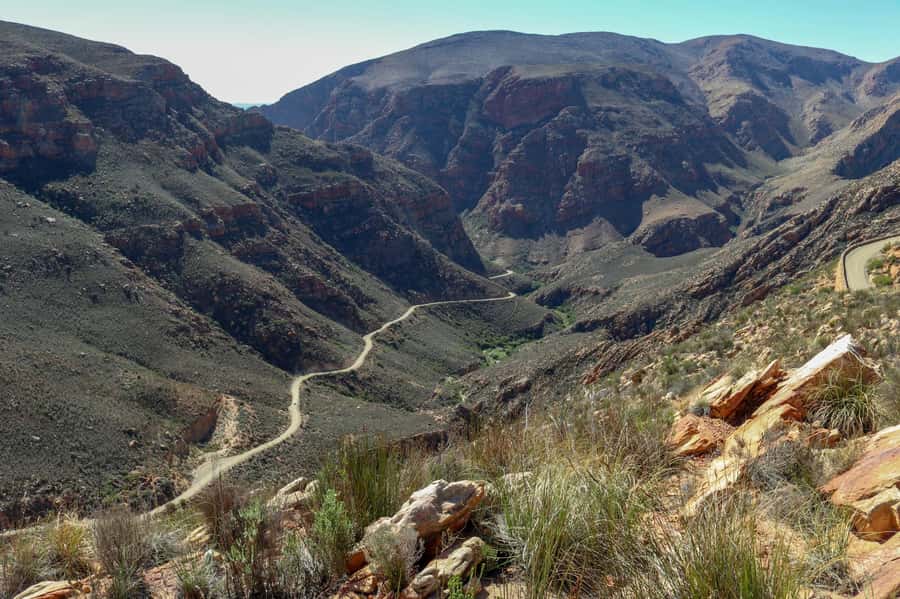
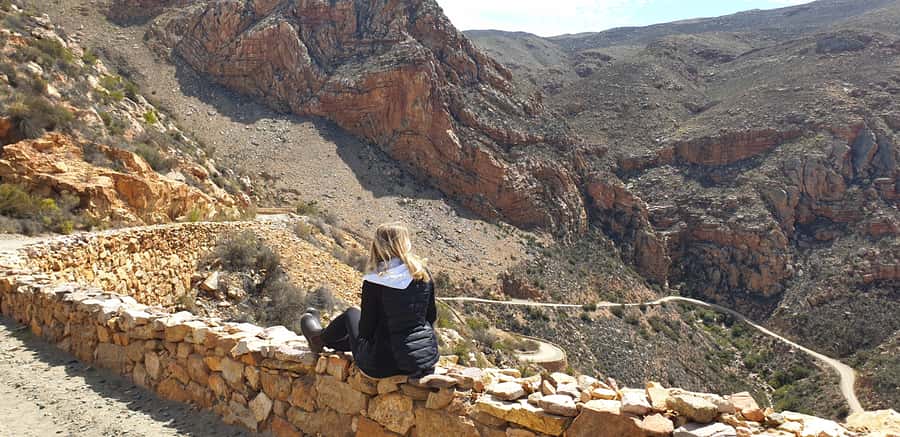
Swartberg Pass is a South African National Monument, and the walk is designed so you do not just reach the top, you learn the way up. You’ll spend about 3 hours on the Swartberg Pass section with guided walking and scenic viewing along the way. This is where the day earns its name: you’re moving through a mountain corridor that feels remote, yet the guide is still connecting it to the bigger story.
The Swartberg Mountains sit in a UNESCO World Heritage landscape, and your guide helps you connect the dots. You’re not only looking outward at the Great Karoo, you’re also looking at what is happening under your feet. The pass route is known for its visible geology, and part of the magic is that you can literally see time in the rocks.
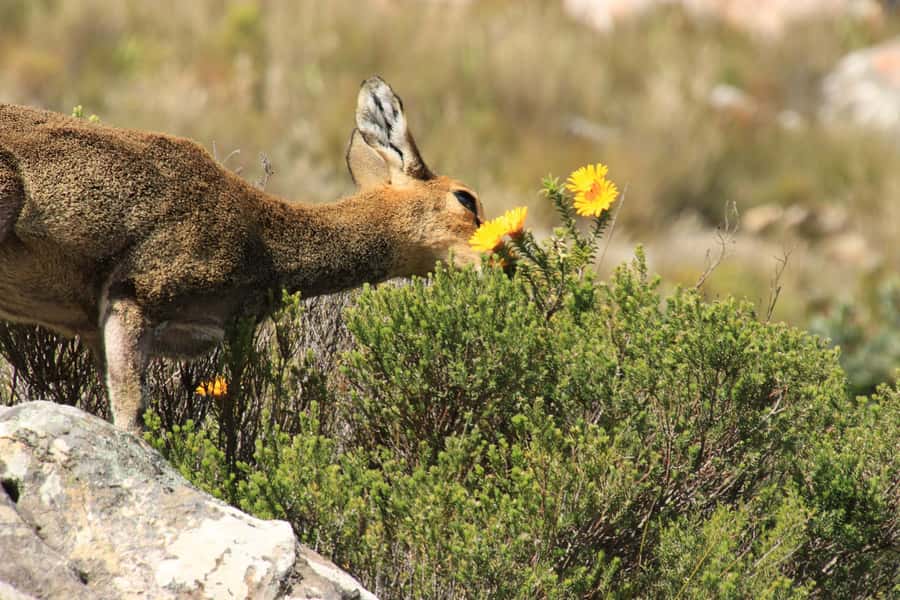
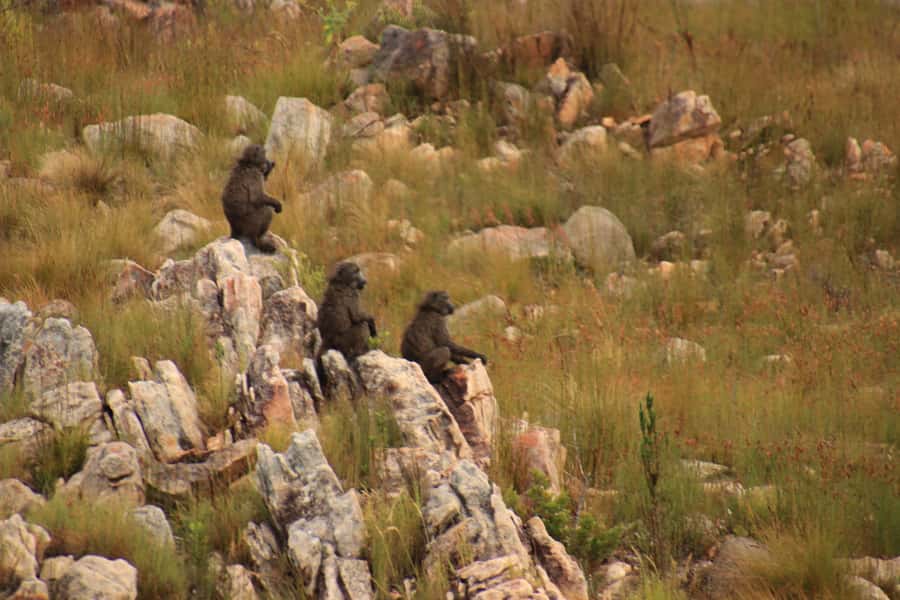
During the ascent, your guide may point out wildlife you might spot at the right moment, including Verreaux Eagle or Jackal Buzzard, and even the agile Klipspringer (a small antelope) on rugged sandstone formations. You should not treat wildlife spotting like a guarantee, but the tour is structured to make it possible: pauses happen, viewpoints happen, and the guide helps you notice what you would otherwise pass by.
Die Top summit, where the Great Karoo stretches out
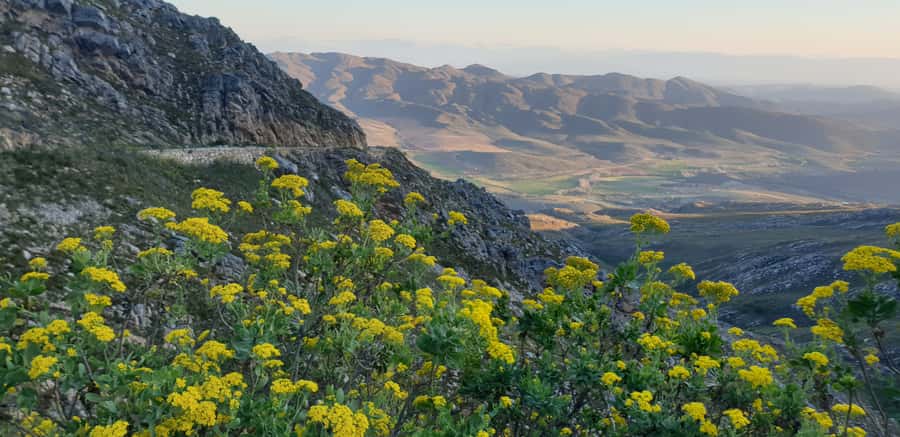
At the summit of Swartberg Pass, also called Die Top, you get the panoramic payoff. The view is described as about 170 km across the Great Karoo, which is the kind of distance that makes your brain slow down a bit. This is where you stop thinking in terms of effort and start thinking in terms of scale.
I love summit time on hikes like this, because it changes your relationship with the terrain. From high up, you start to see how the mountain acts like a boundary, and how the surrounding arid country keeps its own rules for survival. The guide’s role here is key. Instead of just pointing and calling it impressive, they help you understand why the plants and animals you’ve been hearing about fit this area.
If you’re the type who likes photos, bring a bit of patience here. Panoramas are not one-second shots when you’re standing still and trying to frame layers of rock, sky, and distance. The best pictures usually come after you’ve taken a few minutes just looking.
Fynbos and protea lessons, plus how to spot plants up close
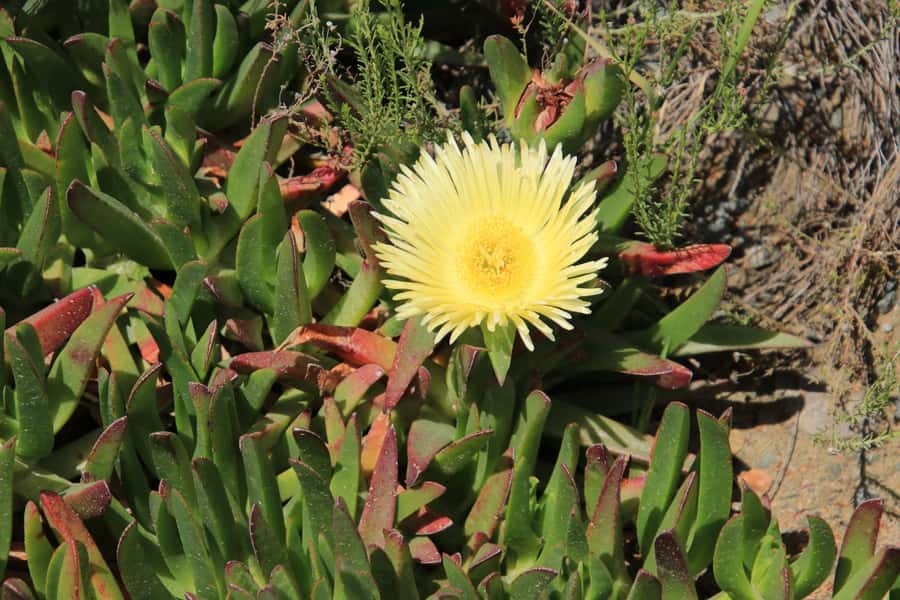
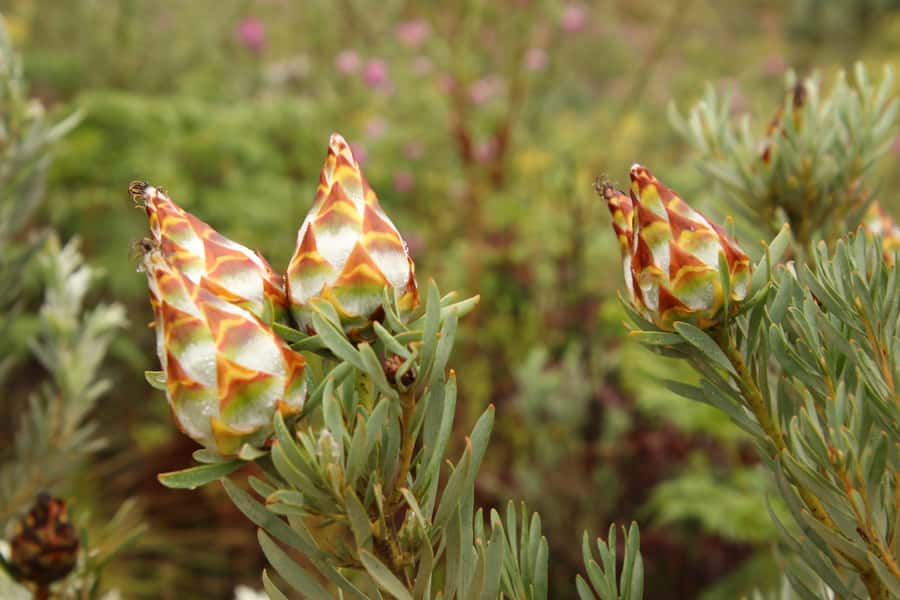
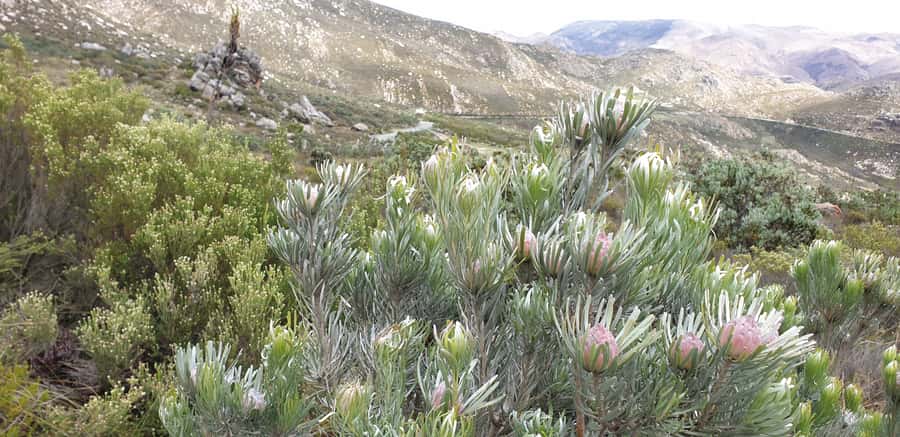
One of the tour’s best value-adds is how it turns botany into a walk you can enjoy. You’re specifically going to explore fynbos vegetation, including protea. The tour info highlights protea as a South Africa plant, and that is exactly why this kind of guided stop is so worthwhile. If you only see protea in a garden, you miss the part where it evolved to survive here.
With a guide, you’ll learn what you’re looking at in the moment, not later from a phone screen. You’ll also get help distinguishing vegetation in an area that can look uniform if you’re not trained to notice the differences. A private hike gives you time for that. It’s not a drive-by photo stop where you get 30 seconds and a generic explanation.
This is also where your packing choices matter. You’ll be outdoors for a full day, and plants and views are more pleasant when you’re comfortable. Warm clothing, sunscreen, and a hat are practical necessities rather than optional extras.
A few more Garden Route trips worth comparing
- Botlierskop Private Game Reserve: 3.5-Hour Sunset Game Drive
★ 4.9 · 227 reviews - Plettenberg Bay: Private Guided Wildlife Photography Tour
★ 4.9 · 49 reviews - 3 Day Garden Route Highlights and Safari with Private Transfers
★ 5.0 · 26 reviews - Oudtshoorn: Half-Day Swartberg Pass Private Guided Tour
★ 5.0 · 12 reviews
Prince Albert lunch stop, a smart reset in the middle of the route
After the summit experience, the route descends the Swartberg Pass and continues toward Prince Albert. This is your lunch break, described as a light lunch with about 1 hour available in Prince Albert.
That timing is smart. A long ascent can leave you mentally tired even before your legs feel it, so having a scheduled break helps you finish the rest of the day with energy. Prince Albert is also a good cultural contrast point: you go from mountain geology and plant life into a town setting where you can recharge.
What I find practical about this design is that lunch is included. You do not need to plan a separate meal stop or worry about whether you’ll find something that fits your pace. You eat, you regroup, and then you’re ready for the next phase of the route.
Great Karoo arid country, succulents, and karroid bush
After lunch, you’ll explore the arid Great Karoo terrain on the way to Meiringspoort Waterfall. The tour description calls out diverse succulents and karroid bush. Even without a botanist background, this is the kind of country you can start to understand through patterns: what grows here is shaped by limited water and harsh light.
A guide makes this part more rewarding, because it’s easy to look at a dry-looking area and think there’s nothing to see. With the right explanations, you start noticing how plants persist, how they’re spaced, and what survives in rocky pockets. This is also a good time to keep your eyes up for movement, since small birds and animals can appear when you’re focused on plants and then suddenly notice something different moving across the terrain.
You might not spot every species your guide mentions, but the tour does its job by slowing you down enough to have a realistic chance. The Great Karoo can feel open and quiet. That silence is part of the experience, and the guide helps you fill it with meaning.
Meiringspoort Waterfall and the 300-million-year rock story
Meiringspoort Waterfall is the big natural landmark on this route, and it’s about 60 meters high. If you’ve only seen waterfalls as short, curbside thrills, this one feels more like a statement in the landscape. You’re not rushing past it, and you’re arriving after hours of walking, which makes it hit harder.
Just as important, the tour builds in the geology so you can connect waterfall and rock to the same time scale. You’ll be marvelling at folded sandstone strata, described as dating back more than 300 million years. That is not just trivia. It changes what you notice. Instead of thinking only about the waterfall itself, you start thinking about why the water collects and how the rock layers shape the terrain.
This is also where the conservation learning becomes more grounded. Your guide explains landscape and local wildlife conservation efforts, including a leopard conservation initiative pioneered by members of the H.O.P.E. Foundation. Even if you never see a leopard, it’s a reminder that conservation is an ongoing process, not a postcard idea. It’s tied to protecting habitat and supporting local efforts, and the tour helps you see that connection in a real place.
Finishing through the pass toward De Rust
After Meiringspoort, the route continues through the rest of the pass, eventually reaching the peaceful dorpie of De Rust. “Dorpje” basically signals a small, quieter village vibe, and this ending tone is a nice counterweight to a long, active hike.
From De Rust, you’ll enjoy transportation back to your accommodation. The return is not just convenience. It’s practical fatigue management. When you’ve spent hours walking, driving yourself would be the least romantic part of the day. Here, you can simply close out the experience and reflect on what you saw while someone else handles the road.
The overall duration is about 8.5 hours, so plan your day around it. This is not a quick add-on tour. It’s a full day that trades city convenience for mountain time.
Price and value: what $229 per person really buys
At $229 per person, this is not a bargain-basement excursion. But it’s also not trying to be. You’re paying for a private guide, private transportation from Oudtshoorn, conservation fees, and lunch.
Here’s the value logic that matters:
- Private guide time: you’re not sharing your questions with a large group, and that improves how much you actually learn and notice.
- Full-day format: the itinerary covers Swartberg Pass, summit views, Prince Albert lunch, Great Karoo terrain, and Meiringspoort Waterfall.
- Included meal: lunch reduces your hassle factor and helps keep you on pace.
- Conservation focus: the guide’s storytelling connects what you see to local efforts, not just photos.
If you like tours where the guide helps you read the place, this price starts to make sense fast. If you only want a brief walk to a waterfall view, you might find it more than you need. But if you want geology, plants, wildlife possibility, and big views in one day, it’s a strong deal for a private outing.
Who this tour fits best, and what to consider first
This is a great match for you if you:
- Enjoy guided hikes and want explanations along the way
- Want a close look at fynbos plants like protea, not just a few distant photos
- Care about real-world conservation context tied to local initiatives
- Can handle uneven terrain and an uphill start
It may be less ideal if you:
- Need wheelchair access (this tour is not suitable for wheelchair users)
- Prefer very easy walking with minimal ascent
- Want a purely casual sightseeing day with lots of time off your feet
Bring warm clothing, a hat, sunscreen, and comfortable clothes. That’s not just advice, it’s the difference between enjoying the views and spending the day distracted by being too cold or too sunburned.
Should you book the Oudtshoorn Swartberg day hike?
I’d book this tour if you want the kind of South Africa day trip that feels like it has a point. The combination of Swartberg Pass ascent, Die Top summit panorama, fynbos education, Prince Albert lunch, and a real destination waterfall at Meiringspoort creates a complete arc. Add the guide’s focus on conservation work linked to the H.O.P.E. Foundation and the day stops being just scenic. It becomes meaningful.
If you’re fit enough for a 900m climb and you want a private guide who can answer questions in real time, this is a smart use of your time in the Western Cape. If you’re looking for something short and flat, or you need accessibility support, then you should look for a different option.
FAQ
How long is the full-day Swartberg Mountain Tour?
The tour lasts about 8.5 hours.
Where does pickup happen?
Pickup is included in Oudtshoorn. The guide meets you at your guesthouse reception in the morning of departure.
What are the main walking highlights?
You’ll walk along the Swartberg Pass hiking route with scenic views, reach the summit of Swartberg Pass (Die Top), and continue down toward Prince Albert and onward to Meiringspoort Waterfall.
Is lunch included?
Yes. You’ll have a light lunch in Prince Albert.
How big is the group?
This is a private group tour.
What languages is the live guide available in?
The live tour guide is available in English and Afrikaans.
What wildlife and plants can you expect to learn about?
The tour focuses on fynbos vegetation such as protea. You may also spot wildlife like Verreaux Eagle, Jackal Buzzard, or Klipspringer.
What is included in the price?
Included are a mountain guide, private transportation, a conservation fee, and lunch.
Is the tour suitable for wheelchair users?
No, it is not suitable for wheelchair users.
What should I bring for the hike?
Bring warm clothing, a hat, sunscreen, and comfortable clothes.
Newest around Garden Route
- 5 Day Cape to Addo Safari – Garden Route Small Group Tour★ 5.0 · 26 reviews
- 7- 10 Days Tour Package Cape Town and Garden Route★ 5.0 · 6 reviews
- 7-day Cape Town, Winelands, Garden Route and Addo National Park★ 5.0 · 5 reviews
- 4 Day Garden Route Luxe Selection Micro Group Tour from Cape Town★ 5.0 · 3 reviews
- 5 Day Garden Route Small Group Tour Fr CapeTown – Departs Mondays★ 5.0 · 3 reviews
- 3 Days 2 Nights Garden Route Private Tour from Cape Town★ 4.0 · 5 reviews
- 3 Day Garden Route Highlights and Safari with Private Transfers★ 5.0 · 26 reviews
- 3 Day Garden Route Tour★ 4.5 · 11 reviews
Garden Route Tours, compared.


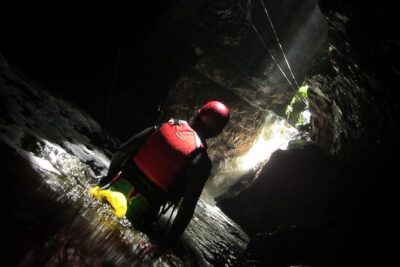
Standard Canyoning Trip in The Crags, South Africa
Read our review →Browse the lists this tour appears in