
Reviewed · CITY TOURS
Durban City Sightseeing Tour
Durban is a city of big conversations, and this guided tour helps you hear them. You get an efficient, half-day loop that connects Zulu roots, colonial-era change, and Indian influence in a way that actually makes sense on the street. You also roll right along the famous Golden Mile beachfront, where you may spot traditional healers gathering seawater and Indian women walking the shore in saris.
I especially like two things. First, the expert guide style, with stories that turn Durban City Hall and the surrounding areas into something more than scenery. Second, the Botanic Gardens stop, where the planting mix from Asia, Africa, and America makes the 1849 setting feel surprisingly alive.
One possible drawback: not all major stops are included in your ticket. Phansi Museum admission is extra, and it is closed to visitors on weekends, so your route timing may feel a bit different depending on the day. Also, food and drinks are not included unless specified.
In This Review
- Key points to know before you go
- Durban in Three Hours, With Real Stops That Make Sense
- Golden Mile Beachfront and Durban City Hall Stories
- Warwick Triangle: African and Indian Market Energy in the Morning
- Phansi Museum: Where Zulu Craft and Southern African Art Take Over
- Durban Botanic Gardens: Founded in 1849, Still a Living Classroom
- Indian Influence and Bunny Chow: Food as a Cultural Shortcut
- Moses Mabhida Stadium Views: Optional Cable Car, Big Payoff
- Price and Logistics: What You Pay For, What Costs Extra
- Guides and Drivers: Why People Rate This Tour So Highly
- Who This Tour Fits Best, and Who Might Want Something Longer
- Should You Book This Durban City Sightseeing Tour?
Key points to know before you go
- Small group limit (up to 8 travelers), which keeps the pace friendly and questions easy
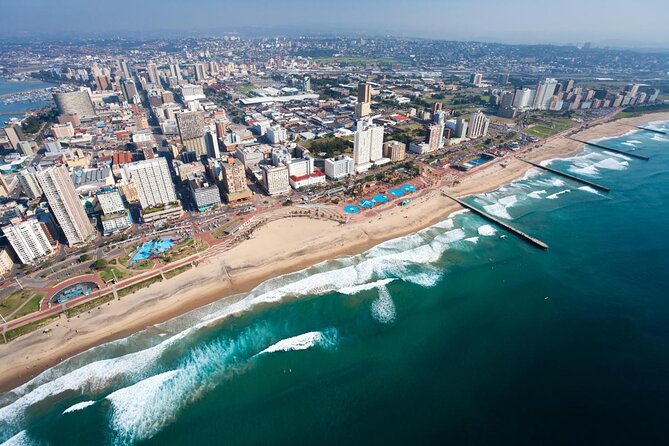
- Golden Mile beachfront drive with real-life Durban moments you can see from the vehicle
- Botanic Gardens include admission, plus a guided walk through highlights like the orchid house
- Phansi Museum adds context for Zulu beadwork, clay pots, and other Southern African artifacts (admission extra)
- Warwick Triangle African and Indian Market stop for food culture, crafts, and everyday sights
- Moses Mabhida Stadium cable car is optional, so you can choose views based on your budget and energy
Durban in Three Hours, With Real Stops That Make Sense
A good city tour does one job well: it helps you get your bearings fast. This one does that by mixing quick drives with two strong guided stops, plus a market moment that is less museum and more day-to-day Durban.
The tour lasts about 3 hours and starts at 9:00 am. You also get hotel pickup and drop-off, which matters in a city where a slow start can eat your morning. Even if you are only in Durban for a short visit, you finish with a clearer map in your head, not just photos on your phone.
The big theme is Durban’s identity, shaped by people arriving at different times. Zulu communities, colonial settlers, and Indian immigrants who came in the 19th century as indentured servants all left lasting marks. Your guide ties that together with what you see outside the car, what you learn at the stops, and what you can choose to eat or not eat.
More City Tours in Durban & KwaZulu-Natal
- Durban: City Sightseeing and Walking Tour
★ 4.6 · 98 reviews - Durban: Top 10 City Sights and Walking Tour
★ 4.1 · 69 reviews - Durban City Sightseeing and Walking Tour
★ 4.5 · 59 reviews
Golden Mile Beachfront and Durban City Hall Stories
The route begins with pickup from your central area, with the meeting point at Hilton Durban, 12 to 14 Walnut Road. After you head out, the tour leans into one of Durban’s best introductions: the Golden Mile.
From the vehicle, you may catch small but memorable scenes along the beachfront. One moment you might notice is traditional healers at the water’s edge collecting seawater in bottles to use as medicine. Another is Indian women in saris walking along the shore, enjoying the sunshine. These are quick glimpses, but they are the point. They show you Durban is not themed for tourists. It is lived-in.
Then you pass Durban City Hall, and this is where the guide storytelling really matters. The tour is not just about naming landmarks. It gives you background that makes the buildings feel tied to real decisions people made, not just dates on a plaque. It also sets up the rest of the morning, because the same city that looks coastal and cheerful also has layers of migration and policy behind it.
If you are the kind of traveler who likes a logical thread, you will appreciate how the tour uses the car time. It is not filler. It is setup.
Warwick Triangle: African and Indian Market Energy in the Morning
After the drive, you get a market stop at Warwick Triangle, described as an African and Indian Market visit. This is a practical way to learn what the city eats and crafts, even if you do not have much time.
This stop also helps with the tour’s central story: how Indian influence shows up in daily life, not only in big-ticket attractions. You will get sights and smells you can connect to the cuisine later on. And if you like to snack while you travel, this is a natural moment to do it, since food and drinks are not included on the tour unless noted separately.
One tip: use the market stop as your choose-your-own-adventure window. If you already feel like you have a plan for lunch later, browse and taste lightly. If you want to go all in, save your appetite for the bunny chow moment that comes during the tour experience.
Phansi Museum: Where Zulu Craft and Southern African Art Take Over
Next comes Phansi Museum, and this is one of the stops most people will remember because it is focused and specific. The museum houses what is described as the largest publicly accessible collection of Southern African artifacts and traditions, including Zulu beadwork, headrests, Zulu clay pots, and other treasures.
The tour experience here is guided. You do not just wander. You get an explanation of what you are looking at, which helps you avoid the common problem of museum visits turning into a quick walk with no retention.
Two practical notes to keep your expectations steady:
- Phansi Museum admission is not included in your tour price.
- The museum is closed on weekends. If you booked for a Saturday or Sunday, you should plan for a different day flow and expect less museum time.
If you enjoy craft traditions, this stop delivers. It is also a strong match if you want Zulu culture context that goes beyond tourist-level summaries. The beadwork and pottery are visual, but the guide can help you understand why these objects matter.
A few more Durban trips worth comparing
- Durban: 30-Minute Harbor Boat Cruise
★ 4.7 · 665 reviews - Durban: 1-Hour Boat Cruise from Wilson’s Wharf
★ 4.7 · 496 reviews - Durban Point Waterfront: Luxury Canal Boat Cruise
★ 4.4 · 298 reviews - Durban: Pontoon Boat Harbor Cruise
★ 4.4 · 182 reviews
Durban Botanic Gardens: Founded in 1849, Still a Living Classroom
Then you arrive at the Durban Botanic Gardens, and this is where the included ticket becomes a real value add. Admission is included, and you get about the time needed to walk the gardens with your guide instead of rushing through on your own.
The gardens were established in 1849, and the plant collection is described as a mix of African, American, and Asian origin. You get the neat effect of seeing multiple climates and growth styles in one place, without needing to plan separate day trips.
Highlights include the orchid house, plus the gardens’ massive trees. In other cities, gardens can feel like a pleasant pause. Here, because of the way it is connected to Durban’s identity and trade-era plant movement, it becomes part of the bigger story.
A practical drawback: this is morning timing, and gardens can still be warm in Durban. If you run hot, bring water and a sun hat. If you get cool easily, consider a light layer, since mornings can shift.
Indian Influence and Bunny Chow: Food as a Cultural Shortcut
One of the tour’s best ways of making history stick is food. During the experience, you learn about the influence of Indian immigrants on Durban’s history, including how it shaped cuisine.
You are also told you can sample South African bunny chow. Bunny chow is one of those dishes that seems like it should be only about taste, but it is also a cultural clue. The idea behind it, and the way it is served and sold, speaks to how food adapts when communities create home in a new place.
Here is the balance point: the tour data says food and drinks are not included unless specified. So treat any sampling as a possible extra unless your exact option includes it. Still, even if you decide not to eat, the talk around the dish helps you understand what you will see and taste around the city later.
And yes, the praise you may find from past visitors often singles out bunny chow as a highlight. That tells you this is not a random mention. The cuisine angle is one of the tour’s most memorable takeaways.
Moses Mabhida Stadium Views: Optional Cable Car, Big Payoff
For the views, you get a stop connected to Moses Mabhida Stadium. You can take a cable car ride to the top at your own expense. This is the kind of optional add-on that works well for a mixed group.
If you love skyline views, it is worth considering. If you just want a lighter finish after museums and gardens, you can skip it and still return to the main sights you already got.
Either way, the tour ends back at your original pickup point. You finish with a sense of how Durban looks from above, which is helpful when you later plan a beach walk, a harbor visit, or a separate day trip.
Price and Logistics: What You Pay For, What Costs Extra
The price is $52.59 per person for about three hours. For a guided half-day that includes pickup, drop-off, a professional guide, and admission for the Botanic Gardens, this is not a bad deal.
But here is the practical part. You should budget for extras:
- Phansi Museum admission is not included
- Cable car at Moses Mabhida Stadium is at your own expense
- Food and drinks are not included unless specified
So the real question is not only the listed price. It is how likely you are to pay for the museum entry and the cable car, plus what you want to eat.
The good news: the tour is not trying to force every extra cost on you. You can choose how much you want to spend on the day’s final views.
Also note the group size and pace: the tour has a maximum of 8 travelers. That usually keeps things moving without feeling crowded. And the minimum requirement is 2 people, so it is designed to operate with small groups.
Guides and Drivers: Why People Rate This Tour So Highly
This tour tends to get strong praise for people, not just places. Past visitors mention guides who are friendly and organized, with guides such as Wendy, Thompson, Leon, Paul, and a Zulu guide named Togo. There is also a common theme of an informed, helpful driver.
One review highlights the guide helping someone who became ill during the tour, which is a real-world reminder that tours are not just about sightseeing. Having staff who respond with understanding makes a difference when plans shift.
If you care about learning without the lecture vibe, this is the type of tour where a good guide can steer your day. It is especially noticeable in the museums and in the storytelling around Durban City Hall and the cultural background behind the places you visit.
Who This Tour Fits Best, and Who Might Want Something Longer
I think this tour is a strong match if you:
- are visiting Durban for the first time and want a clear intro
- prefer a guided structure over figuring everything out alone
- like culture stops that are specific, such as Zulu craft at Phansi Museum
- want some beach atmosphere without dedicating your whole day to one stretch
You might want a different option if you:
- plan to visit on a weekend, since Phansi Museum is closed
- hate paying for multiple add-ons, because museum and cable car both cost extra
- want a full-day beach and relaxation schedule, since this is about 3 hours and designed as a city orientation
Should You Book This Durban City Sightseeing Tour?
If you want a practical introduction to Durban, I would book it. The biggest reasons are simple: hotel pickup, a small group, Botanic Gardens admission included, and a guide who connects the dots between Zulu, colonial, and Indian influence.
The only time I would pause is if your dates are on a weekend and you were hoping to see Phansi Museum. In that case, you may still get plenty out of the gardens, beachfront drive, and market stop, but your expectations for the museum portion should be flexible.
If you are the kind of traveler who likes a half-day plan you can trust, this one gives you a clean story of Durban, plus a couple of optional upgrades for views and extra experiences.
Newest around Durban
- Zululand 5 Day Private Safari from Durban★ 5.0 · 4 reviews
- Zulu Cultural Experience – Tour to the village of iSithumba and PheZulu★ 5.0 · 4 reviews
- Zulu Cultural Experience: Zulu Village + Tribal Markets + Traditional Zulu Food★ 5.0 · 5 reviews
- Valley of a Thousand Hills – Durban★ 5.0 · 3 reviews
- Full Day-Drakensberg-MandelaCaptureSite-HowickFalls-MidlandsMeander from Durban★ 3.5 · 11 reviews
- Drakensberg, Nelson Mandela Capture S & Howick Falls – 2 Day Tour from Durban★ 5.0 · 3 reviews
- Hluhluwe Imfolozi Game Reserve & Phezulu Safari Park from Durban★ 5.0 · 4 reviews
- Durban: Journey along the Epic Sani Pass & Lesotho Tour★ 5.0 · 7 reviews
City Tours, compared.
Cape Town Hop-On Hop-Off City Tour with Optional Cruise
Read our review →

Johannesburg Hop-On Hop-Off City Tour with Soweto Option
Read our review →
Jo’berg in 1 Day: Soweto, Apartheid Museum & City Tour
Read our review →
Cape Town City Pass: Save Over 50% on 80+ Top Attractions
Read our review →
Hop-On Hop-Off Bus, City Tour and Apartheid Museum
Read our review →
Browse the lists this tour appears in