
Reviewed · SOWETO & TOWNSHIP TOURS
Guided Bicycle Tour of Soweto with Lunch
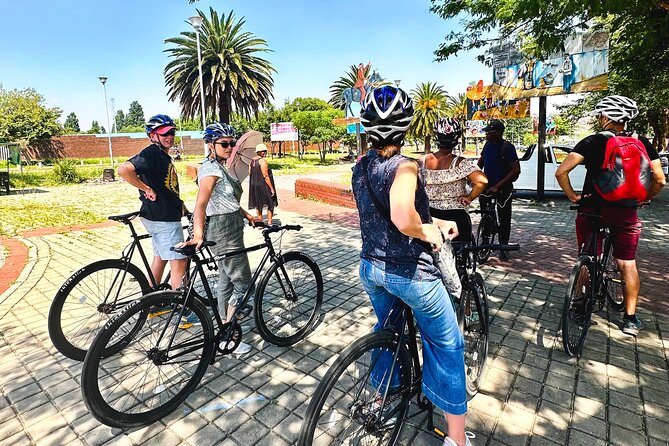
Two wheels, and Soweto tells its story. This guided bicycle tour keeps you close to the street-level reality while you cover key apartheid-era sites, including Vilakazi Street and the area around Mandela’s home. I love that you learn more than dates, you get people and daily life, and I love that you stay fueled with a deep-filled kota sandwich lunch. The main thing to consider is that Soweto has hills, so you’ll want to be ready for a workout, and it helps if your bike has gears.
I also like the way the tour is paced. With stops like Phomolong, Mzimhlophe, and the Hector Pieterson Museum, you get short, focused context instead of a long lecture. Guides such as Thabo and Themba come through with clear explanations and a human tone that makes history feel present, not distant.
At about 4 hours total, and capped at 15 people, you can fit this into a Johannesburg day without burning it all on logistics. Morning or afternoon departures help you match your energy level, but remember that some entrances, like Mandela House, cost extra.
In This Review
- Key Things You’ll Notice on This Soweto Bike Tour
- Why Soweto on a Bike Fits a Half-Day Schedule
- Price, Timing, and What You’re Paying For
- Meeting at 7346 Kumalo St: Start Point and First Impressions
- The Hilly Reality: Biking Comfort and Gear Considerations
- Stop by Stop: What Each Place Adds to the Story
- Stop 1: Phomolong, family generations and Soweto’s change
- Stop 2: Mzimhlophe, the former women’s hostel for domestic workers
- Stop 3: Nkungu Street and Mama Lillian Mgoyi
- Stop 4: Hector Pieterson Museum and Memorial, 1976 youth uprising
- Stop 5: Orlando Stadium, history plus modern sports scale
- Stop 6: Mandela House, what you see and what you pay for
- Stop 7: Vilakazi Street, Mandela and Tutu linked to one address
- Stop 8: Orlando Police Department, institutions and the city’s evolution
- Lunch Break: Kota Sandwich Power, Soweto-Style
- What Guides Do Well, Beyond Facts
- Who This Tour Is Best For
- Should You Book This Soweto Bike Tour?
- FAQ
- How long is the Guided Bicycle Tour of Soweto with Lunch?
- What is included in the price?
- Where does the tour start and end?
- Are entrance fees included for Mandela House?
- Is Orlando Stadium admission included?
- How many people are in the group?
- What is the cancellation policy?
Key Things You’ll Notice on This Soweto Bike Tour

- Vilakazi Street and Mandela House in one loop: You cycle past Nelson Mandela’s home area and cover the stories linked to this famous street.
- Mzimhlophe for domestic workers’ life under apartheid: You visit the former women’s residential hostel connected to labor in Johannesburg suburbs.
- Mama Lillian Mgoyi and the fight against pass laws: Nkungu Street brings the women’s anti-apartheid story to the foreground.
- Hector Pieterson Museum and Memorial, 1976 youth uprising: A respectful stop that puts faces to the turning point.
- Orlando Stadium, from 1959 to the R280 million rebuild: You get a sports landmark with political and cultural weight.
- Small group ride with safety-focused guidance: Reviews highlight guides who make you feel safe and welcome on the road.
Why Soweto on a Bike Fits a Half-Day Schedule
Soweto is the kind of place where walking can feel too slow, and driving can feel too disconnected. On a bike, you move with the neighborhood, not just above it. You’ll cover more ground than you could on foot, but you stay close enough to notice everyday details that help the history land.
This tour also does something smart with time. Stops are mostly short, then you’re back on the bike moving through the township. That rhythm makes it easier to absorb what you’re seeing without getting mentally exhausted.
And because it’s guided, you’re not just photographing walls. You’re getting context for why each place matters, including the roles of women who helped bring apartheid down, not only the famous men you may already know.
More Township Tours in Johannesburg
- Johannesburg: Hop-On Hop-Off Bus with Optional Soweto Tour
★ 4.6 · 985 reviews - Soweto /Johannesburg and Apartheid Museum Guided Full Day Tour
★ 5.0 · 932 reviews - Johannesburg Hop-On Hop-Off City Tour with Soweto Option
★ 4.5 · 768 reviews
Price, Timing, and What You’re Paying For
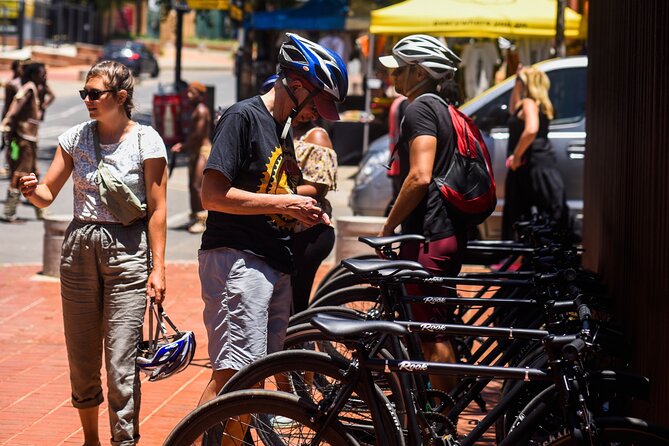
At $45.70 per person for about four hours, this isn’t a splurge, but it’s not a bargain either. The value comes from three things: a guide, a bike setup, and a meal.
You get:
- Bicycle and helmet
- Bottled water
- Lunch: a traditional kota sandwich (sold as Local Burger (Kota))
Then there are a couple of extras you should budget for. Mandela House has an entrance fee (R60) and is not included. Orlando Stadium is also listed as not included. So, if you’re trying to predict your total cost, plan for that add-on before you go.
Booking timing is pretty normal, with an average of about 11 days in advance. For the best chance of a slot at your preferred time, I’d book ahead and line up the rest of your Johannesburg day around it.
Meeting at 7346 Kumalo St: Start Point and First Impressions
The tour meets at 7346 Kumalo St, Orlando West, Johannesburg, 1804 and ends back at the meeting point. Pick-up and drop-off are not included, so you’ll want to plan how you’ll get there on your own.
Because the meeting point is described as near public transportation, you can usually keep this simple. Still, Soweto days can get busy on the road, so aim to arrive a bit early to avoid stress before you mount the bike.
The group size limit is 15 travelers. That matters more than you’d think. Smaller groups mean you’re more likely to get a guide who watches the pace, checks in on the brakes, and keeps the group together when the road gets hilly.
The Hilly Reality: Biking Comfort and Gear Considerations
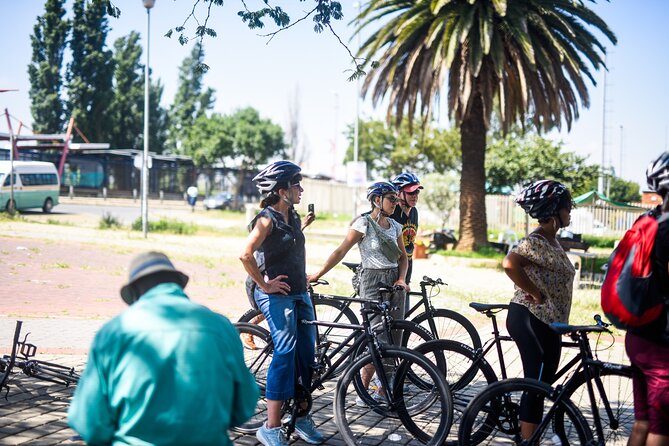
Here’s the part you should take seriously: Soweto has hills. Multiple guides have been praised for safety and careful pacing, but the route itself includes climbs, so physical comfort is still on you.
One review notes that bikes were upgraded since earlier visits and now may include gears that make hills easier. Other feedback still flags the ride as a workout and mentions single-speed bikes in the past. So I suggest treating this as a hill route until you know your exact bike setup.
Practical tips:
- Bring sunscreen and a cap, especially for exposed stretches
- Wear comfortable cycling shoes or sneakers
- If you’re unsure, ask about gears when you book, because it can change the whole experience
If you love active travel and you’re okay with a steady climb, you’ll likely enjoy how the bike lets you feel the neighborhood pace. If you prefer flat, easy walking only, this might feel harder than you expected.
Same province, a very different day:
- From Johannesburg: Pilanesberg Nature Reserve Game Safari
★ 4.8 · 1,327 reviews - Full Day Ultimate Pilanesberg National Park Safari from Johannesburg or Pretoria
★ 4.5 · 718 reviews - Half-Day Tour of Soweto Tour
★ 4.5 · 712 reviews - Soweto: Walking Tour with a Local Guide and Lunch
★ 4.9 · 648 reviews
Stop by Stop: What Each Place Adds to the Story
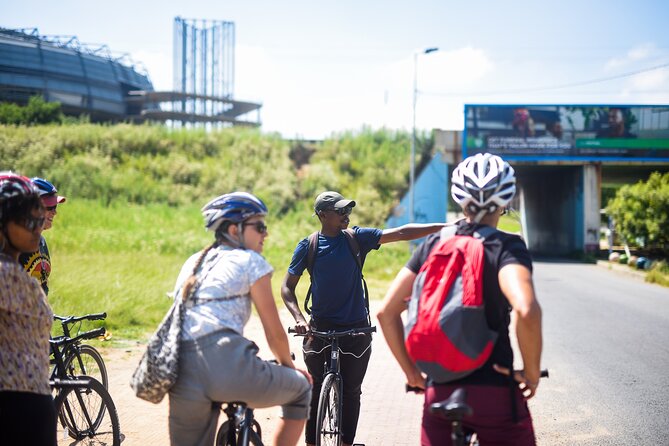
Stop 1: Phomolong, family generations and Soweto’s change
Phomolong is the first stop, about 15 minutes. The focus here is generational stories, showing how apartheid affected people across age groups, then pointing to how Soweto has changed since.
This is a useful start because it sets the tone. You’re not jumping straight to museums. You’re learning how the system shaped everyday life, then you’ll move toward the specific landmarks that represent major historical moments.
A drawback to watch for at this kind of first stop: if you’re very short on patience for storytelling, you might want to lean into curiosity and take it as a foundation. The payoff comes later.
Stop 2: Mzimhlophe, the former women’s hostel for domestic workers
Mzimhlophe takes about 30 minutes and is one of the most distinctive stops. You’ll visit the former women’s residential hostel in Soweto, tied to domestic workers who worked in Johannesburg suburbs.
This stop matters because it shifts the spotlight from politics-only history to social systems. You see how forced labor and separation affected women’s daily routines, safety, and community life. It’s also where the story of apartheid starts to feel personal fast.
The good news: this segment is long enough for a real explanation, but short enough that it doesn’t drag the tour out.
Stop 3: Nkungu Street and Mama Lillian Mgoyi
Nkungu Street is about 10 minutes, but it’s a heavy hitter. You visit Mama Lillian Mgoyi’s home. She’s described as an anti-apartheid activist, President of the Women’s League, and one of the leaders of a women’s march of 20,000 women to the Union Buildings in Pretoria.
The key detail is the protest. The women marched against apartheid rules that required women to carry passbooks as part of pass laws.
This stop is powerful for a simple reason. It’s not a plaque from a distance. You’re in the area tied to a real person’s life and activism. That grounding makes the larger apartheid narrative more human and less abstract.
Stop 4: Hector Pieterson Museum and Memorial, 1976 youth uprising
Next is the Hector Pieterson Museum and Memorial, about 30 minutes, focused on the 1976 youth uprising. The point here is remembrance, and the tour gives you a guided framework for what you’re seeing.
This stop is often the emotional centerpiece of Soweto tours. You’ll likely want a calm pace and time to look closely at the memorial space. Even with a guide, it helps to slow down your phone camera reflex and just take it in.
If you prefer light and upbeat sightseeing, this is not that type of stop. But it’s also one of the most important ones if you want the day to mean something.
Stop 5: Orlando Stadium, history plus modern sports scale
Orlando Stadium is about 10 minutes on this route, and it’s described with specific facts. The stadium dates back to 1959, was demolished, then rebuilt from scratch at a cost of R280 million. The rebuilt venue has a capacity of 37,139 and includes multiple hospitality suites and other facilities like conference rooms and a gymnasium.
The tour also frames Orlando Stadium as a football hub, connected to local giants and major competitions.
I like this stop because it reminds you that sports can be more than entertainment during political struggle. It can be community identity, pride, and gathering space, even when the broader system is oppressive.
Stop 6: Mandela House, what you see and what you pay for
Mandela House is about 30 minutes. It’s listed as not included for admission, and the ticket is given as R60.
This is a “go in prepared” stop. If you’re excited to see the house, you’ll want that cash or card plan sorted before you arrive. The tour gives you time to connect what you learned earlier about apartheid and liberation with the personal story tied to Mandela.
If you’re trying to keep costs tightly controlled, decide in advance whether Mandela House is a must for you. It’s a distinct, high-interest site, so it often becomes a yes.
Stop 7: Vilakazi Street, Mandela and Tutu linked to one address
Vilakazi Street is about 40 minutes, and it’s highlighted for having two Nobel Peace Prize winners associated with it. This is one of the most famous road names in Soweto, and seeing it by bike helps you understand why it’s so iconic.
The stretch gives you time to process a different kind of history. Instead of only looking backward to apartheid structures, you see a present-day street where multiple strands of South Africa’s story sit side by side.
In the day’s context, it works as a bridge. You’ve gone through struggle and youth uprising. Now you’re in the place where later recognition and global attention met local reality.
Stop 8: Orlando Police Department, institutions and the city’s evolution
Orlando Police Department is a shorter visit, about 10 minutes. The tour points out the OPD formed in 1875, evolved with Johannesburg’s growth, and now employs over 800 sworn officers and more than 150 civilian employees.
This is a good reality check stop. It shows how systems of power and governance did not simply disappear after apartheid. You’re looking at institutions that kept adapting to meet city needs.
Lunch Break: Kota Sandwich Power, Soweto-Style
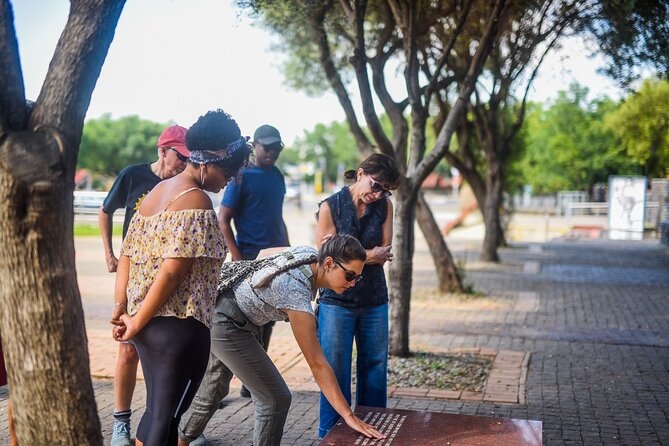
Lunch is included, and it’s the traditional kota sandwich served by Local Burger (Kota). This is not a side dish. In a hilly bike tour, food is fuel, and the kota is filling.
You’ll typically eat after you’ve gathered some momentum from earlier stops. It’s also a chance to slow down and talk to your guide about what you saw. Guides such as Themba are often praised for making the day feel welcoming rather than rigid. Lunch helps create that tone.
You also get bottled water with the tour. I still suggest bringing a reusable bottle or extra water if you burn through it easily, but at least you’re not starting the day dry.
If you have dietary restrictions, you’ll want to confirm options directly with the operator when you book. The core meal is a kota, so be clear about what you can and cannot eat.
What Guides Do Well, Beyond Facts
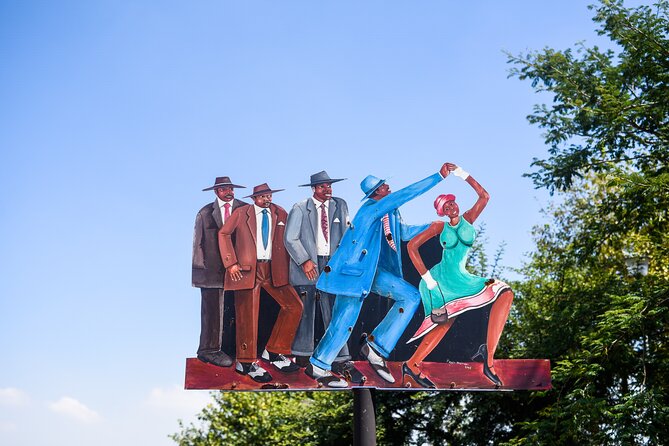
The biggest recurring praise is about the guides, not just the sites. Names that come up include Thabo, Themba, Temba, Tchbo, Trent, Mulalo, and Murulla Mohuma. Across those different names, the pattern is consistent: clear explanations, a careful approach to safety, and a friendly attitude that makes you feel like a visitor, not a spectator.
You’ll likely get guidance on pacing and group handling, especially when climbing. And you’ll probably learn cultural details that don’t fit neatly into museum labels.
One smart approach the best guides use is mixing big history with smaller moments. That’s how you end the tour feeling you understand the place, not just the timeline.
Who This Tour Is Best For

This bike tour is a great fit if you want a structured introduction to Soweto and you’re okay with active travel.
You’ll probably enjoy it if:
- You like history but want it tied to real neighborhoods
- You want to see more than a walking route can cover
- You enjoy guided storytelling with a personable tone
- You’re comfortable with hills and can manage a steady pace
It may be less ideal if:
- You dislike physical effort and want mostly flat sightseeing
- You need fully gear-supported climbing and your bike might not have it, depending on the setup that day
- You get overwhelmed by heavy memorial stops without time to process
Should You Book This Soweto Bike Tour?
If you want a high-impact half-day in Johannesburg that blends places, people, and context, I think this is a strong booking. The combination of small-group cycling, guided stops at major anti-apartheid sites, and an included kota lunch makes it good value for a first-time Soweto visit.
I’d book it with one practical mindset: treat it as a hill ride with an educational backbone. Ask about bike gears before you go if you’re worried about climbs. If you show up rested, bring sunscreen, and follow your guide’s pace, you’ll get an experience that feels personal, not rushed.
FAQ
How long is the Guided Bicycle Tour of Soweto with Lunch?
The tour is approximately 4 hours long.
What is included in the price?
The price includes a bicycle and helmet, bottled water, and lunch (a traditional kota sandwich).
Where does the tour start and end?
You start at 7346 Kumalo St, Orlando West, Johannesburg, 1804, South Africa, and the tour ends back at the same meeting point.
Are entrance fees included for Mandela House?
No. Mandela House has an entrance fee of R60, and it is not included in the tour price.
Is Orlando Stadium admission included?
No. Orlando Stadium is listed as admission not included, and additional costs may apply.
How many people are in the group?
The tour has a maximum of 15 travelers.
What is the cancellation policy?
Free cancellation is available up to 24 hours in advance for a full refund. If you cancel less than 24 hours before the start time, the amount paid is not refunded.
Newest around Johannesburg
- Soweto Township Tour★ 4.4 · 4 reviews
- Soweto Tuk-Tuk Food & Beer Tour★ 5.0 · 9 reviews
- Soweto Tour; Mandela House; Vilakazi Street; Market Culture★ 5.0 · 6 reviews
- Private Soweto,Mandela House,Apartheid Museum,Constitution★ 4.6 · 15 reviews
- Soweto: Sip & Paint Walking Tour & Take Home a Canvas★ 4.8 · 7 reviews
- Soweto: Hector Pieterson Memorial, to Orlando Towers Tour★ 4.0 · 31 reviews
- Soweto & Johannesburg and Apartheid Museum★ 4.7 · 41 reviews
- Soweto and apartheid museum tour(Half-day)★ 5.0 · 4 reviews
Soweto & Township Tours, compared.


Soweto /Johannesburg and Apartheid Museum Guided Full Day Tour
Read our review →
Johannesburg Hop-On Hop-Off City Tour with Soweto Option
Read our review →

Jo’berg in 1 Day: Soweto, Apartheid Museum & City Tour
Read our review →Browse the lists this tour appears in