
Reviewed · APARTHEID HISTORY TOURS
Half Day Soweto and Apartheid Museum Guided Tour
History hits hard in this half-day sprint. This guided trip strings together Soweto street corners and the Apartheid Museum, with a Mandela House tour that turns facts into faces. I especially like the tight route that keeps you moving and the private-guide setup that gives you room to ask questions. The only real drawback is the subject matter is heavy, and the museum time is limited.
You start with pickup and a comfortable, air-conditioned vehicle, plus bottled water to make the day feel easy on your body even when it gets emotionally intense. The tour uses a mobile ticket, so you are not juggling paper while you are trying to keep track of timelines and names. And because it is private transportation, your group stays together instead of waiting around for a big bus shuffle.
What I like most is the balance of famous sites and regular places. You pass through parts of Johannesburg like Houghton Estate and Munro Drive for context, then you head into Soweto for everyday landmarks like Vilakazi Street and the Chris Hani Baragwanath Academic Hospital, before you end with Mandela’s home and a museum built around resistance.
In This Review
- Key highlights to know before you go
- The big idea: why this tour feels like a complete story in 5 hours
- Pickup and pacing: what 5 hours feels like on the ground
- Johannesburg warm-up: Houghton Estate and Munro Drive set the stage
- Houghton Estate, Mandela’s house link
- Munro Drive, a viewpoint for the city map
- Passing landmarks like FNB Stadium: why the road still matters
- Entering Soweto through Diepkloof and Baragwanath Hospital
- Diepkloof Park: a look at class and housing patterns
- Chris Hani Baragwanath Academic Hospital: public health at scale
- The cooling towers pause: panoramic views above township life
- Vilakazi Street and time near Sakhumzi: where history lives in daily life
- Mandela House Museum: 30 minutes that give you a human anchor
- Apartheid Museum: where the story gets specific and stays with you
- How to get the most from your 2 hours
- A note on emotional load
- Guides and vehicle setup: why private helps on a sensitive route
- Price and value: is $85.06 per person a fair deal?
- Who should book this tour, and who might want a different format
- Should you book this half-day Soweto and Apartheid Museum tour?
- FAQ
- How long is the tour?
- Where does the tour start?
- Is this tour private?
- What is included in the price?
- Is lunch included?
- How much time do you spend at the Apartheid Museum?
- Do you get a guided visit at Mandela House?
- What other stops are part of the itinerary besides the museums?
- Are admission tickets needed for all stops?
- Can I cancel and get a refund?
Key highlights to know before you go
- Apartheid Museum gets real time: about 2 hours, with 22 exhibition areas and film footage plus photos and artifacts.
- Mandela House includes a guided visit: about 30 minutes in the home once tied to Nelson Mandela.
- A fast, logical route: the plan moves from Johannesburg context into Soweto without wasting your day in long drives.
- Soweto is more than one story: you also see places tied to community life, not just monuments.
- Comfort basics are included: air-conditioned vehicle, private transport, and bottled water help you stay focused.
- Vilakazi Street is built for walking stories: you have time near the street where both Mandela and Desmond Tutu lived.
The big idea: why this tour feels like a complete story in 5 hours

This is a half-day format, so it is not trying to cover everything. Instead, it builds a sequence that makes sense: first you get oriented in Johannesburg, then you land in Soweto where apartheid policies shaped daily life, and then you use two museum experiences to connect events to real people.
I like that the route keeps nudging you toward “why this matters.” You do not just stare at plaques. You see where people lived, where people resisted, and where the system showed up in housing, schooling, and public institutions. Even the stops that look “quick” on the schedule are doing job work, giving you context for what you later see inside the museum.
More Museum Tours in Pretoria
- Johannesburg Full-Day Tour(Soweto/Jo-Burg & Apartheid Museum)
★ 5.0 · 110 reviews - Soweto and Apartheid Museum Guided Tour
★ 5.0 · 38 reviews - Soweto & Apartheid Museum Tour
★ 5.0 · 20 reviews
Pickup and pacing: what 5 hours feels like on the ground
The tour runs about 5 hours, and it is built around a simple rhythm: short orientation stops, a couple of longer culture stops, and two museum moments that command attention.
You’ll start with pickup at your hotel, followed by a general introduction and overview of the area (around 20 minutes). That early briefing matters more than it sounds, because apartheid history is packed with dates, laws, and names. When your guide sets a map in your head, the museum stops hit harder in a good way, because you can place what you are seeing.
The scheduling is efficient, not rushed in a chaotic way. Still, you should plan your mindset: you are on a guided clock. If you tend to want to linger, you may feel the time limit at the museum. That does not mean it is inadequate, it just means you have to choose what to focus on.
Practical detail: it is private, so you are not waiting for other pickup points or getting bounced between entrances. That is a major reason the day feels smoother than a multi-group tour.
Johannesburg warm-up: Houghton Estate and Munro Drive set the stage
The tour begins in Johannesburg with a quick orientation, then moves into stops that anchor big political names and city geography.
Houghton Estate, Mandela’s house link
Houghton Estate is one of the more affluent areas, and the itinerary notes the connection to Nelson Mandela. It includes time to see a house associated with Mandela during his presidency and where he died in December 2013.
I like this stop because it gives you a contrast point. You can mentally hold two images at once: the leadership side that many people remember, and the brutal reality that apartheid forced on the majority. It makes the later museum content feel less abstract.
More Township Tours in Pretoria
- Johannesburg and Soweto tour
★ 5.0 · 231 reviews - Soweto Half Day Tour
★ 5.0 · 231 reviews - Soweto walking tour with a taxi ride
★ 4.5 · 42 reviews - Soweto, Kliptown, Eldorado Park Tour
★ 5.0 · 41 reviews
Munro Drive, a viewpoint for the city map
Munro Drive is described as a national monument built by Italian prisoners of war, captured during World War II. The stop also offers a scenic viewpoint over the northern suburbs of Johannesburg and the world’s largest man-made subtropical forest.
This is not just a photo stop. When you look out over the city, you get a better sense of scale, and you start to understand why policy and power felt so far-reaching. Geography helps you “place” stories.
Passing landmarks like FNB Stadium: why the road still matters
You also drive past FNB Stadium, noted as the largest football stadium in Africa, and tied to the 2010 FIFA World Cup opening ceremony, matches, and final.
This might look like filler at first glance. But it does a simple job: it shows that Johannesburg is not frozen in one historical period. You are moving through a living city where big events keep happening, even as apartheid history shaped who had access to the country’s benefits.
If you love seeing how modern South Africa sits on top of older layers, you will appreciate these road segments. If you hate anything that feels like a drive-by, you might wish for more time here, but the rest of the itinerary gives you plenty of “inside” moments.
Entering Soweto through Diepkloof and Baragwanath Hospital
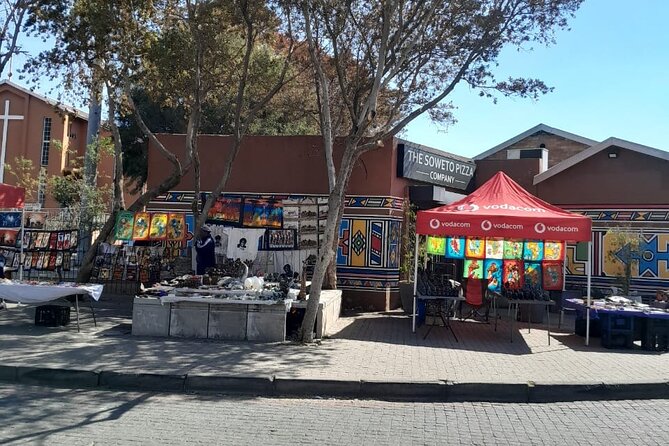
Once you transition into Soweto, the itinerary shifts from city context to community reality. Two of the most meaningful stops here are brief, but they point you in the right direction.
Diepkloof Park: a look at class and housing patterns
Diepkloof is described as a warm welcome to Soweto, divided into sections. Diepkloof Extension is noted as more upmarket within Soweto, with professionals and formal, owner-built larger houses. The tour also flags that house prices in this area are higher than in other Soweto suburbs.
This matters because apartheid did not only restrict movement and education. It shaped where different groups could live and what “normal” life looked like. Even a short stop here helps you understand why Soweto is not one uniform picture.
Chris Hani Baragwanath Academic Hospital: public health at scale
The tour drive-passes the Chris Hani Baragwanath Academic Hospital, described as the third largest hospital in the world, with around 173 acres, about 3200 beds, and thousands of staff. You get to see the hospital view and hear the stories behind it as you ride.
Even if you only take it in from the roadside, the scale gives you a new kind of context. It is a reminder that communities built under apartheid pressure still had to run essential systems. If you’re the kind of traveler who wants to see more than memorials, this stop is a good fit.
The cooling towers pause: panoramic views above township life
There is a stop at the two cooling towers, described as a prominent Soweto landmark. They are now used as an entertainment center that includes a famous bungee jump and a barbecue restaurant. The itinerary also says you get a chance to see panoramic views of the township from the top of the 100m tall towers.
This is one of those stops that can feel strange in the best way. You go from the emotional weight of apartheid history to a viewpoint that lets you understand space and scale. It also adds a break in pace, which you will likely need after the museum later in the day.
Tip for making this worthwhile: treat the viewpoint as a “map moment.” Look out, identify what you can, then connect what you see to what you will learn in the museum exhibits about how apartheid policy affected where people lived and how communities formed.
Vilakazi Street and time near Sakhumzi: where history lives in daily life

Vilakazi Street is described as the thriving heart of Soweto and one of South Africa’s best-known streets. It also carries a rare claim: it is noted as the only street in the world connected with two Nobel Laureates as residents, Nelson Mandela and Archbishop Emeritus Desmond Tutu.
That kind of fact can sound like trivia until you spend time on the street itself. The itinerary frames the electricity of Vilakazi Street as coming from the people who live there now, each with their own stories.
There is also an option for a food stop around here. The itinerary notes Sakhumzi Restaurant on Vilakazi Street near the Mandela House Museum and describes it as popular for a Soweto-style buffet with traditional dishes such as umngqusho (samp and beans) and mogodu (tripe).
Since lunch is not included on this tour, this is where you can solve that problem. If you want to keep your day smooth, eat here or plan a quick meal that fits the time schedule. If you tend to skip meals during intense museum days, bring the energy strategy forward, because you will want it for the museum afterward.
Mandela House Museum: 30 minutes that give you a human anchor
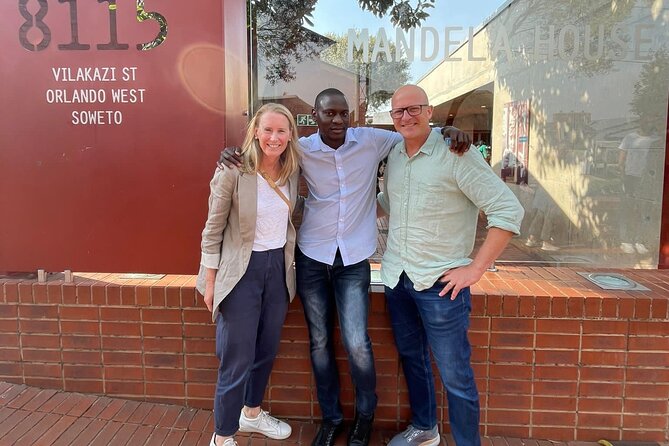
Mandela House is a centerpiece stop, with a site guide welcoming you and taking you on a guided tour of the museum inside Nelson Mandela’s home. You have time to take pictures from inside and around the house, and the museum is described as exhibiting artifacts, telling stories through sound, film, interpretive panels, and guided tours.
I like this stop because it creates a human anchor. When you have seen images of apartheid suffering, a museum inside a home can feel like a change in pace. But it still points back to the same theme: power, freedom, and what it costs to get there.
Also, the itinerary includes a briefing tied to the 1976 Soweto student uprising. It is described as a museum named after a victim, a thirteen-year-old boy, and it is framed as a symbol of resistance against the brutality of the apartheid regime. The guide shares this history as you drive past a related memorial.
Even if you only get a short view from the road, that briefing can reframe what you think you already know about apartheid. It is not only laws and dates. It is students, families, fear, and courage, all in one tight timeline.
Apartheid Museum: where the story gets specific and stays with you
Now for the heavy hitter: the Apartheid Museum. The tour includes the entrance and gives you about 2 hours there, and the museum is described as having 22 individual exhibition areas covering different time periods under apartheid rule.
The exhibits are described as well done, including provocative film footage, photographs, text panels, and artifacts. The key detail for your planning is that the museum is designed around human stories, not just policy summaries.
How to get the most from your 2 hours
With only about 2 hours, you should pick a strategy. You can’t read every panel and watch every video. So decide what you want most:
- If you want the clearest timeline, focus on sections that cover major transitions in apartheid rule.
- If you want the strongest emotional impact, spend time in areas that highlight personal accounts and what people endured.
- If you want balance, split your time between film footage and artifact displays.
The itinerary also frames the experience as a chance to process shock and walk away with relief, because you are on the terrain where truth spoke to power. That framing is not just inspirational language. It matches what many people feel when a museum gives them both the brutality and the outcome, and then lets you return to daylight with a clearer sense of why the country changed.
A note on emotional load
This is the part where you should be honest with yourself. If you get overwhelmed easily by grief, violence, or graphic emotional storytelling, you might want to keep your expectations modest. Plan to take short breaks inside the museum and step back when you need air.
And bring patience for the films. The museum includes dramatic film footages, so you may find that even when you are walking, you are also watching. That can be draining, but it is often where the stories land hardest.
Guides and vehicle setup: why private helps on a sensitive route
The tour includes an air-conditioned vehicle, private transportation, and bottled water. That sounds basic, but it changes your experience. When you are moving between neighborhoods and museums, heat and fatigue can turn a thoughtful day into a cranky one.
The private group setup also matters on a day like this. It gives your guide flexibility with pacing and questions. In the past, guides such as Lucky, Abe, Nhlanhla, and Lekki have been specifically highlighted for being engaging, friendly, and focused on safety and clarity. If your guide leans into the story with good structure, the museum time will feel far more coherent.
One practical tip: if you want better photos, ask your guide where you can step aside for shots at each stop. On a route like this, good photo spots are often tied to safe viewing areas and not every angle is equally easy from a sidewalk or roadside.
Price and value: is $85.06 per person a fair deal?
At $85.06 per person for a half-day around 5 hours, the value depends on what you would otherwise do on your own.
Here’s where the math is helped by what is included:
- Apartheid Museum admission is included, and you are there for about 2 hours with access to 22 exhibition areas.
- Mandela House admission is included, and you get about 30 minutes with a site guide.
- You also have an air-conditioned vehicle, private transportation, and bottled water.
Many independent days in Johannesburg and Soweto turn into a mix of ride-hailing, tickets, and time lost trying to find the right entrance. Even if you are a confident traveler, a guided route can save stress. This itinerary is built to get you from orientation, to Soweto context, to museum depth, without forcing you to stitch it together yourself.
What you do not get:
- Lunch is not included.
- Coffee and or tea is not included.
So you should plan a meal stop, like the option near Vilakazi Street, or bring your own snack strategy to keep energy steady.
Who should book this tour, and who might want a different format
This is a strong choice if:
- You want a guided day that combines Soweto landmarks with two museum experiences.
- You like structure and you want someone to explain what you are looking at while you’re on the move.
- You prefer private group comfort over long shared-vehicle logistics.
It might be less ideal if:
- You need a lighter day emotionally, because the museum content is framed around oppression and brutality.
- You want to spend extra time reading every exhibit panel, since about 2 hours in the museum is fixed time.
- You are traveling with very small kids or anyone who struggles with intense museum viewing, since the stops are packed into a tight schedule.
If you want the best fit, think of it as an orientation plus depth combo. You are not trying to do everything in one day. You are trying to understand the big arc and come away with a clear, human picture.
Should you book this half-day Soweto and Apartheid Museum tour?
Book it if you want a focused, guided introduction to apartheid through the right mix of places: Johannesburg context, Soweto community landmarks, Mandela’s home, and the Apartheid Museum with its 22 exhibition areas.
Skip it or consider a longer version if you know you will regret limited time at the museum, or if you need a gentler pace and more breaks. Also, plan your meal because lunch is not included, and you do not want to be hungry while you are processing tough content.
My bottom line: for $85.06, the inclusion of both museum experiences, plus guided time at Mandela House and admission at the Apartheid Museum, makes this one of those days that can feel like more than the hours on your clock. If you go in ready to learn and ready to feel, it gives you a clear story you can carry home.
FAQ
How long is the tour?
The tour is about 5 hours.
Where does the tour start?
The itinerary includes pickup at your hotel, with an initial introduction of the area.
Is this tour private?
Yes. It is a private tour/activity, and only your group participates.
What is included in the price?
Included are an air-conditioned vehicle, private transportation, bottled water, and admission tickets for the Apartheid Museum and Mandela House Museum.
Is lunch included?
No. Lunch is not included.
How much time do you spend at the Apartheid Museum?
The tour lists about 2 hours at the Apartheid Museum.
Do you get a guided visit at Mandela House?
Yes. A site guide welcomes you and provides a guided tour, with about 30 minutes allocated.
What other stops are part of the itinerary besides the museums?
You drive or stop at locations including Houghton Estate, Munro Drive, FNB Stadium, Diepkloof Park, Chris Hani Baragwanath Academic Hospital, the cooling towers viewpoint, Vilakazi Street, and a memorial briefing connected to the 1976 Soweto student uprising.
Are admission tickets needed for all stops?
Admission ticket details vary by stop. The Apartheid Museum and Mandela House Museum are included, while several other stops are listed as free.
Can I cancel and get a refund?
The policy states free cancellation is available if you cancel at least 24 hours in advance for a full refund.
More Museum Visits in Pretoria
- Johannesburg,Soweto & Apartheid museum tour
★ 5.0 · 10 reviews - Johannesburg & Apartheid Museum Tour
★ 5.0 · 9 reviews - Full Day Johannesburg , Apartheid Museum and Soweto Tour – 8hrs
★ 4.5 · 7 reviews - Soweto and Apartheid Museum Day Tour
★ 5.0 · 7 reviews
More Apartheid History Tours in Pretoria
- Apartheid History of South Africa (Full day Experience with lunch
★ 4.5 · 24 reviews - Soweto & Apartheid Museum Guided Tour
★ 5.0 · 18 reviews - Soweto, Apartheid Museum & Constitution Hill Day Tour
★ 5.0 · 12 reviews - Soweto and Apartheid Museum
★ 4.5 · 11 reviews
Newest around Pretoria
- Half Day E-Biking with Wildlife Watching in Pretoria★ 5.0 · 23 reviews
- Aha Lesedi Cultural Village tour★ 5.0 · 4 reviews
- Soweto, Kliptown, Eldorado Park Tour★ 5.0 · 41 reviews
- Traditional Tribal Village Tour★ 5.0 · 6 reviews
- Daily Pilanesberg National Park Private Shuttle Services★ 5.0 · 10 reviews
- Apartheid museum, Soweto and Joburg highlights tour★ 5.0 · 6 reviews
- Johannesburg,Soweto & Apartheid museum tour★ 5.0 · 10 reviews
- Full Day Johannesburg , Apartheid Museum and Soweto Tour – 8hrs★ 4.5 · 7 reviews
Apartheid History Tours, compared.

Soweto /Johannesburg and Apartheid Museum Guided Full Day Tour
Read our review →
Jo’berg in 1 Day: Soweto, Apartheid Museum & City Tour
Read our review →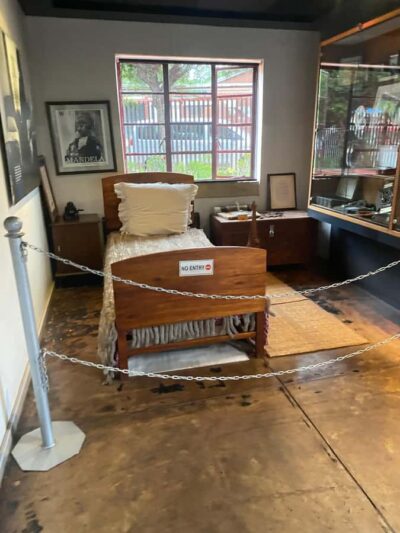
Full-Day Tour with Soweto and Apartheid Museum
Read our review →
Full-Day Soweto, Apartheid Museum and Lunch Tour
Read our review →
Half Guided Day Tour of Soweto And Apartheid Museum
Read our review →
Ultimate Johannesburg Soweto Experience with Apartheid Museum
Read our review →
Hop-On Hop-Off Bus, City Tour and Apartheid Museum
Read our review →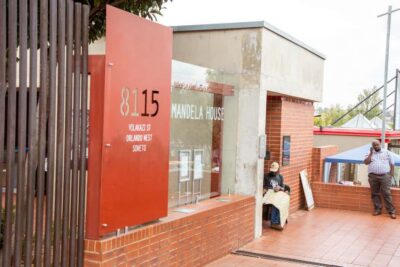
Johannesburg and Soweto Apartheid Full Day Tour w/Lunch
Read our review →Browse the lists this tour appears in