
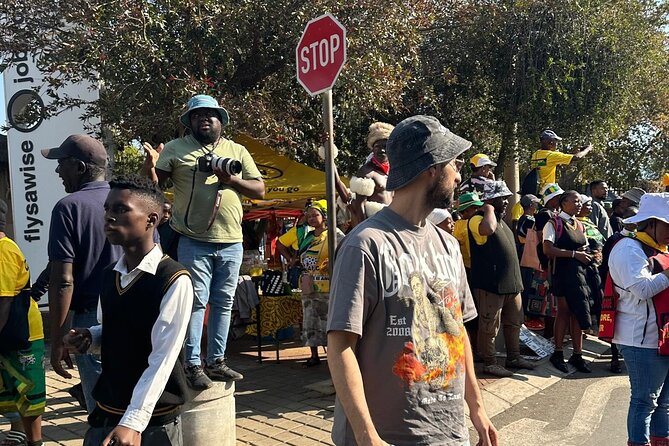
Reviewed · SOWETO & TOWNSHIP TOURS
Historical and Cultural Interactive Experience of Soweto
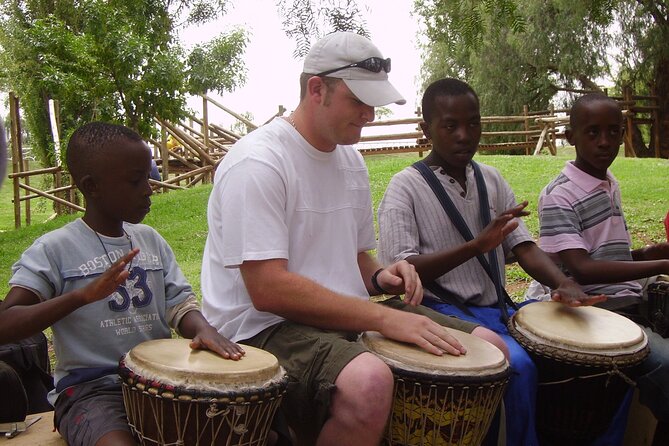
Soweto, told through people, not just plaques. This historical and cultural stop makes the big landmarks feel personal, with time built around real community moments, like tea in a local home, chatting at a tavern, and shared laughs with kindergarten kids. I especially like the way the route anchors you at Mandela House and Hector Pieterson Museum, then carries that context into daily life.
I like that the day stays flexible, shaped around your interests instead of a rigid script. And since you get hotel pickup plus an air-conditioned vehicle, you can focus on the story, not logistics. One consideration: the tour mixes landmark visits with human interactions that are meant to be spontaneous, so if you want only museum-style viewing, this may feel more warm and informal than strictly structured.
Budget-wise, it is generally good value for the sights included, but you should know the optional traditional healer visit is an extra R300 per person and is paid in cash to the healer. If you are short on cash, or uncomfortable with the idea, skip it and still get a full, meaningful route.
In This Review
- Key takeaways before you go
- A human-first route through Soweto, not a checklist
- FNB Stadium: the Calabash wow-stop before the deeper story
- Walter Sisulu Square: Freedom Charter, 1955, and the neighborhood reality
- Hector Pieterson Museum: the protest that traveled around the world
- Mandela House: 14 years lived here, 27 years ended there
- Vilakazi Street: where Nobel legacy meets everyday commerce
- Optional traditional healer visit: spiritual insight with a home setting
- What you get for the price, and why it can be fair value
- Who this tour suits best (and who might want a different plan)
- Should you book this Soweto experience?
- FAQ
- How long is the Soweto tour?
- What is the price per person?
- Is hotel pickup included?
- Is lunch included?
- What museum entries are included?
- Do I need a mobile ticket?
- Is the traditional healer visit included?
- What are the operating hours?
- Is this a private tour?
Key takeaways before you go
- Mandela House and Hector Pieterson Museum are included with guided time inside
- Walter Sisulu Square connects directly to the Freedom Charter story
- FNB Stadium is the quick wow-stop, the Calabash shape tied to 2010 World Cup
- Vilakazi Street adds modern Soweto energy, with shopping and food stops
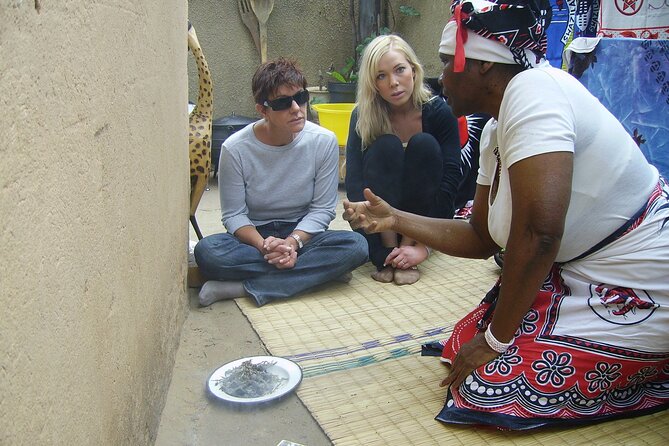
- Optional traditional healer visit includes a home visit, costs extra (R300 cash pp)
A human-first route through Soweto, not a checklist

This tour works because it refuses to treat Soweto like a set of photos. Yes, you will visit landmark sites tied to apartheid and the struggle for freedom. But you also get chances for normal, everyday connection, like sitting for tea at a local home or meeting people in community spaces. The idea is simple: you learn the facts, then you feel what those facts mean in daily life.
In practice, that means the guide is the real driver of the experience. You are not just moving between buildings. You are listening, asking questions, and adjusting the day based on what you care about most. Several groups have been guided by people such as Jazz and Zandile, and the common theme is warmth paired with clear explanations that connect past and present.
One small drawback is how different it feels from a textbook tour. The best parts can be the human moments that are not fully predictable. If you need perfectly timed, fully scripted content with zero surprises, you might prefer a more formal museum-only plan.
More History Tours in Johannesburg
- Soweto Township Cultural Tour incl Apartheid Museum and Nelson Mandela House
★ 5.0 · 30 reviews - Cradle of Humankind World Heritage Site
★ 5.0 · 15 reviews - Johannesburg: Soweto History Tour with Hotel Pickup
★ 4.8 · 14 reviews
FNB Stadium: the Calabash wow-stop before the deeper story
Your day starts with pickup around 10:00, then you head to FNB Stadium. This is not just a famous venue. It also hits you with design and symbolism. The stadium was given a facelift for the 2010 FIFA World Cup, and the design concept is the calabash, the African pot shape. It is an 87,436-seater, and it is often fondly referred to as the African Pot or Soccer City (its earlier name).
Why this matters on a history tour: it gives you a quick, visual sense of modern South Africa’s scale and ambition before you jump into heavier themes. It is also a good breather. You get a first stop with a free admission ticket and about 30 minutes, which helps you get your bearings fast.
Practical tip: wear comfortable shoes and keep your phone charged. Stadium exteriors and angles are where you get the best photos, and you will want to move without rushing.
Walter Sisulu Square: Freedom Charter, 1955, and the neighborhood reality
Next up is Walter Sisulu Square, where the Congress of the People met on 26 June 1955 to draft the Freedom Charter. This document laid out an alternative vision to apartheid policies, with emphasis on a non-racial society and individual rights. The Freedom Charter remains a cornerstone of African National Congress policy, and many people connect it to the foundation of South Africa’s later 1996 constitution.
The square is now a national heritage site. That gives you the official weight of the story. But you also do not stay in theory. The tour note that Kliptown, an informal settlement, is a stone’s throw away helps you hold two realities at once: the language of rights on paper and the lived, everyday limits many communities still face, like limited running water and poor sanitation.
Why you will probably appreciate this stop: it makes the Freedom Charter feel less like history homework and more like a statement that still matters. You leave thinking about what changed, what did not, and what people fought to guarantee.
Timing note: you usually get about 45 minutes here, so you can read what you need without feeling trapped.
Hector Pieterson Museum: the protest that traveled around the world
Hector Pieterson Museum and Memorial is the emotional core of the route. The museum is named for Hector, who was only 12 at the time. He was the first to be killed during the student protests in Soweto on 16 June 1976.
This story has one reason it is so widely known: a photograph taken by Sam Nzima shows Hector being carried, and it spread globally. That image helped spark outrage and roused anti-apartheid sentiments around the world. The protests began as a fight over language and education, specifically against using Afrikaans as the medium of instruction instead of students’ own languages and English.
In a good guided context, this stop does more than show artifacts. It helps you understand the chain reaction. One policy decision can become a tipping point when students have no real voice. That is why the museum name is more than a memorial. It is a marker for the moment a local protest became international pressure.
You get about one hour here, and admission is included. If you like to pause and read slowly, you may want to take your time at the most graphic or intense sections first, so you are not rushed later.
More Township Tours in Johannesburg
- Johannesburg: Hop-On Hop-Off Bus with Optional Soweto Tour
★ 4.6 · 985 reviews - Soweto /Johannesburg and Apartheid Museum Guided Full Day Tour
★ 5.0 · 932 reviews - Johannesburg Hop-On Hop-Off City Tour with Soweto Option
★ 4.5 · 768 reviews - Half-Day Tour of Soweto Tour
★ 4.5 · 712 reviews
Mandela House: 14 years lived here, 27 years ended there
From there, you head to Mandela House, where Nelson Mandela lived on and off for more than 14 years. The tour includes a guided look inside the house, and it is built around two family chapters: his first wife Evelyn Ntoko Mase and his second wife Winnie Madikizela-Mandela. You also learn about the difficult period when Winnie was left raising their daughters, Zenani and Zindzi.
What makes this stop hit hard is how personal it feels once you hear the timeline. Mandela returned here in 1990 after his release from 27 years in prison, as described in his autobiography, The Long Walk to Freedom. The tour emphasizes that return as a turning point, and you can feel the difference between a house as a building and a house as a center of someone’s world.
This is a 45-minute stop with admission included. That is enough time to understand the major story beats without turning it into a marathon.
Practical tip: bring a bit of emotional space. This is one of those places where you do not just look, you absorb. You might want to hold off on major shopping stops until after this one, so your focus stays clear.
Vilakazi Street: where Nobel legacy meets everyday commerce
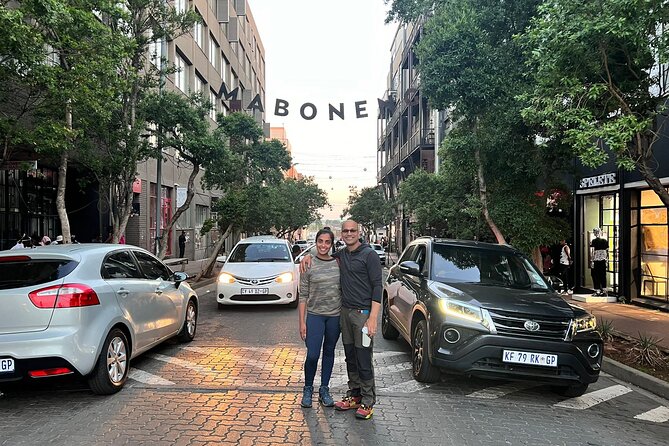
Then you move to Vilakazi Street, which is one of the most recognizable parts of Soweto. It is famous for a simple reason: it is the only street in the world known for having two Nobel Laureates as residents, Nelson Mandela and Archbishop Emeritus Desmond Tutu.
But the point is not only the names on plaques. The tour frames Vilakazi Street as living, working community space. There is an entrepreneurial spirit, with small shops selling accessories, African-inspired fashion, and homeware. There are also performers who sing and dance, adding street energy that feels current rather than frozen in time.
Food matters here too. You will find restaurants that serve Soweto-style buffets, with a variety of proudly South African choices. Lunch is not included in the tour price, so you will decide on the day if you want to buy food here or just snack. Still, this stop is one of the easiest places to turn your history day into a real meal.
Timing note: the schedule lists Vilakazi Street as a final one-hour explore stop.
Optional traditional healer visit: spiritual insight with a home setting
One of the most distinctive parts is the option to visit a traditional healer. This is not automatic. It is an optional extra of R300 per person, and it is paid in cash directly to the healer.
What you are told to expect: the healer connects with ancestors for messages meant for you. You also get a home visit, because the healer works from home.
This can be meaningful for the right person. If you are curious about how cultures carry spiritual beliefs alongside daily life, it can add a new layer to what you learned at the monuments. If you prefer strictly historical sites with no spiritual framing, you might pass and keep the day focused.
Practical tip: if you think you might do it, bring the cash. Also, be ready for a different kind of interaction than museum listening. The healer visit is personal by nature, so your comfort level matters.
What you get for the price, and why it can be fair value
The price is listed as $90.81 per person, and the tour lasts about 4 to 5 hours. For that length, you get pickup, an air-conditioned vehicle, bottled water, and all fees and taxes. You also get included admission at Hector Pieterson Museum and Mandela House.
Some admissions are free at other stops, like the FNB Stadium, Walter Sisulu Square, and Vilakazi Street. That combination helps keep the total cost reasonable compared to tours that charge for every single entry.
The one clear cost add-on is the optional traditional healer visit (R300 cash pp). Lunch is also not included. If you plan to eat on Vilakazi Street, factor that in.
So is it good value? It is a strong option if you want guided meaning at the top sites and you are open to human connection as part of the program. If you only care about one or two sites and you want a purely self-paced route, you might compare against other Soweto tours. But for a guided, story-heavy half-day, this pricing usually makes sense.
Who this tour suits best (and who might want a different plan)
This works especially well for:
- History and culture lovers who want context at the big memorials, not just photos
- People who like asking questions and talking with the guide
- Older teens and adults who can handle emotional topics like 1976 protests
- Anyone who wants a balance of landmark stops plus community life
It might be less ideal for:
- People who want a fully museum-only experience with zero social interaction
- Anyone who is not comfortable with the optional healer visit concept and would rather keep costs fixed
Should you book this Soweto experience?
I would book it if you want Soweto to feel like a place with living people, not just a list of historical points. The mix of FNB Stadium, Freedom Charter context at Walter Sisulu Square, the 1976 story at Hector Pieterson Museum, and the personal space of Mandela House gives you a strong arc. Add Vilakazi Street at the end, and you get a day that closes with current Soweto energy.
If you are on the fence, decide based on two things: your comfort with spontaneous human interactions, and whether you are interested enough to bring cash for the optional traditional healer visit. If yes to both, this is a meaningful half-day with real guidance and a warm human tone.
FAQ
How long is the Soweto tour?
It runs for about 4 to 5 hours.
What is the price per person?
The price is $90.81 per person.
Is hotel pickup included?
Yes, pickup from your hotel is offered.
Is lunch included?
No, lunch is not included.
What museum entries are included?
Admission is included for Hector Pieterson Museum and Mandela House. Other stops like FNB Stadium, Walter Sisulu Square, and Vilakazi Street list admission as free.
Do I need a mobile ticket?
Yes, a mobile ticket is included.
Is the traditional healer visit included?
No. The traditional healer visit is optional, costs R300 per person, and is paid in cash to the healer.
What are the operating hours?
Tours run daily from 10:00 AM to 3:00 PM.
Is this a private tour?
Yes, it is private, and only your group participates.
Newest around Johannesburg
- Zulu Food Cooking & Dining Experience with a local Chef★ 4.4 · 5 reviews
- Private Soweto Tour 5 hours approximately from Johannesburg or Pretoria.★ 4.5 · 9 reviews
- bicycle tour soweto★ 4.5 · 20 reviews
- Two day Kruger National Park Safari from Johannesburg★ 5.0 · 19 reviews
- Sun City Day Tour From Johannesburg★ 4.5 · 6 reviews
- Taste of Africa★ 5.0 · 9 reviews
- Full-day Johannesburg Bike Or Walking tour – With Transport★ 5.0 · 10 reviews
- Soweto Township Tours★ 4.5 · 6 reviews
Soweto & Township Tours, compared.


Soweto /Johannesburg and Apartheid Museum Guided Full Day Tour
Read our review →
Johannesburg Hop-On Hop-Off City Tour with Soweto Option
Read our review →


Jo’berg in 1 Day: Soweto, Apartheid Museum & City Tour
Read our review →Browse the lists this tour appears in