
Reviewed · SOWETO & TOWNSHIP TOURS
History Bicycle Tour of Soweto
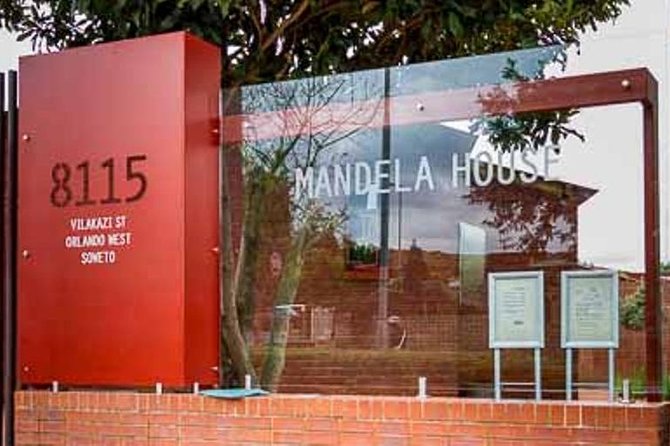
Soweto feels close up on a bike. I loved seeing the Nelson Mandela house and the Regina Mundi church in the flesh, not just on a map, while a local guide explained how daily life and Apartheid-era events collided here. The one big thing to plan for is the heat and hills paired with basic bikes, which can feel like a workout.
This is a history-heavy ride, but it is also very practical. You start at the Hector Pieterson Memorial in Orlando West, roll through key neighborhood stops tied to the struggle for black South Africans against Apartheid, and then you get a chance to visit the Hector Pieterson Museum on your own after the cycling portion.
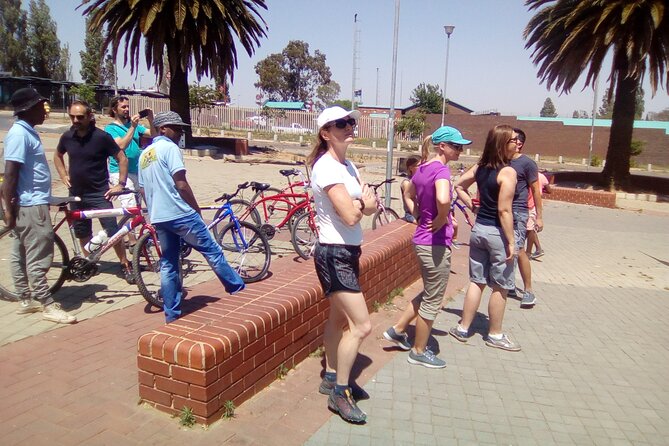
You will want to come ready for a hands-on tour. Helmet and bicycle use are included, but hotel pickup is not, and one review flagged that some bikes can be in rough shape, so take a minute to check fit and brakes before you roll.
In This Review
- Key highlights worth aiming for
- Entering Soweto from the Hector Pieterson Memorial
- What you see in 4 hours: Mandela, Tutu, churches, and everyday places
- Orlando West High School and the 1976 uprising
- Regina Mundi and the squatter camp stop: places tied to people
- Bike reality check: heat, hills, and basic equipment
- Price and logistics: is $40.91 good value?
- Scheduling your day: museum time after the ride
- Should you book this Soweto bicycle tour?
- FAQ
- How long is the History Bicycle Tour of Soweto?
- Where does the tour start?
- What is included in the price?
- Is hotel pickup or drop-off included?
- How many people are in a group?
- Is cancellation free?
Key highlights worth aiming for
- Mandela and Desmond Tutu sites placed in the story of Soweto, not tacked on at the end
- Orlando West High School and 1976 context around Hector Pieterson and the student uprising
- Regina Mundi church and other landmark stops that connect buildings to people’s lives
- Tough terrain and real riding time in a 4-hour format that moves you through the neighborhood
- Small maximum group size that helps the guide keep an eye on everyone
Entering Soweto from the Hector Pieterson Memorial
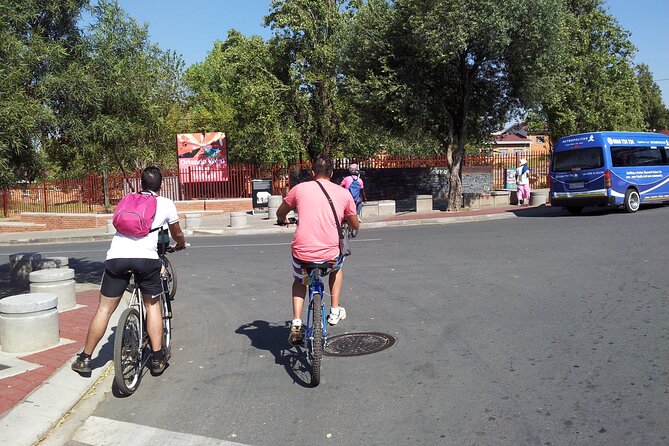
Your tour starts at the Hector Pieterson Memorial in Orlando West, the kind of place that sets the emotional tone fast. From there, you cycle into Soweto and begin seeing how one neighborhood can hold decades of struggle, community survival, and change.
What I like about this beginning is that it does not feel like a random sightseeing loop. The guide frames what you will see next, including how Soweto first came together as a township in 1904, so the stops you hit later do not feel disconnected.
You will also notice the tour’s rhythm early on. It is not a slow pedal and photo-only plan. It is a guided ride with stops where the explanation matters, and you’ll cover enough ground that you can feel like you are moving through the neighborhood, not just circling it.
More Township Tours in Pretoria
- Soweto Half Day Tour
★ 5.0 · 231 reviews - Johannesburg and Soweto tour
★ 5.0 · 231 reviews - Johannesburg Full-Day Tour(Soweto/Jo-Burg & Apartheid Museum)
★ 5.0 · 110 reviews
What you see in 4 hours: Mandela, Tutu, churches, and everyday places
In four hours, the aim is balance: major historical moments, plus the daily-life texture that makes history human. As you cycle, you are set up to see a mix of religious sites, community institutions, and homes tied to major figures.
Here are some of the stops and themes you should expect:
- The ride includes an orientation to where the township was first established in 1904, which helps you understand why so many later events unfolded in the same geography.
- You’ll pass by places tied to education and resistance, including Orlando West High School later in the tour.
- You’ll see community structures such as a mineworkers’ hostel and an orphanage. These are important because they show what life looked like for people who had very little control over government policy.
- You’ll also visit multiple churches. One of the best-known stops is the Regina Mundi church, which the tour highlights for its role in the broader Apartheid-era story.
- The tour includes the home where Nelson Mandela once lived and also points you toward the house connected with Archbishop Desmond Tutu. These stops work well because they anchor famous names to specific streets and specific surroundings.
This mix is what makes the tour feel worth your time. Many guided tours give you a list of famous sites. This one pushes harder to explain why those sites mattered, and you keep seeing that theme as you move from place to place.
One more plus: the tour covers the good, bad, and ugly side of Soweto’s story, including the difficult realities alongside the community strength. You will see references to a squatter camp too, which is one of the reminders that Soweto was shaped not only by politics, but by housing pressure and inequality.
Orlando West High School and the 1976 uprising

A major moment on this ride is the stop at Orlando West High School. This is where the tour slows down to connect the street-level scene to a specific turning point: the student uprising in 1976 that led to the death of Hector Pieterson.
Even if you already know the name, this kind of stop helps you connect dates to places. You are not just hearing a summary. You are learning how the events of 1976 played out across real institutions, with real young people at the center.
The tour also points you toward the Hector Pieterson Memorial area and then, after cycling, you can visit the Hector Pieterson Museum on your own. That is a smart design. The bike portion gives you the storyline, then the museum lets you take your time, reread, and absorb at your pace.
If you like learning with context, you’ll probably appreciate the pacing here. It is history as a route, not history as a lecture you have to sit through.
Regina Mundi and the squatter camp stop: places tied to people
Some landmarks are famous because cameras love them. Others are famous because they were central to people surviving, organizing, and resisting. Regina Mundi church falls into the second category, and the tour makes sure you understand why that matters.
You also stop to see a squatter camp. I’m glad the tour includes it, because it keeps the conversation grounded in what governments and forced removals meant for ordinary families. Without that type of stop, the story can drift toward only the political spotlight. Here, you are reminded that daily life included instability, scarce services, and hard choices.
One of the benefits of doing these stops by bike is that you get the spatial sense. You are cycling through the neighborhood instead of only standing at a point of interest. That means when the guide explains connections between places, you can mentally map them to real distances and surrounding streets.
It will not be a comfortable topic for everyone, and you may feel it more intensely because you are literally riding through the same environment where people experienced those events. But that is also why the tour can hit so hard in a good way.
Same province, a very different day:
- Ultimate Johannesburg Tour
★ 5.0 · 200 reviews - Johannesburg: Pretoria and Cullinan Diamond Mine Tour
★ 4.7 · 165 reviews - Taste of Africa Food tasting Experience
★ 4.5 · 138 reviews - Harties Cableway Experience Ticket
★ 4.5 · 119 reviews
Bike reality check: heat, hills, and basic equipment
Here is the part you should take seriously before you book: the ride is not just an easy cruise.
Multiple reviews mention intense heat. That is consistent with the experience you should expect in South Africa, especially when your ride includes uphill sections. I recommend treating this as a sun-and-sweat day, not a mild morning activity.
Bring a full hat if you can. One review specifically called out the difference between having a cap and having stronger sun protection, plus heavy sunscreen. If you burn easily, plan your sun routine like you are going to the beach.
You should also be prepared for hills. The tour description includes that you see the township over the course of the ride, and the feedback points to old-school uphill biking. Even with a guided pace, you’re still riding a bicycle, not being transported in a vehicle.
Finally, a safety and comfort note. One review reported bikes in very poor condition, including warped wheels and no brakes, plus difficulty adjusting seats for a child. That is not universal across all reviews, but it is enough that you should handle bike setup like a checklist.
Do this before you leave the start area:
- Ask to test the brakes before you commit to the ride
- Check that the seat height fits you comfortably
- If anything feels loose or unsafe, say something right away
If the equipment feels off, do not tough it out. You’re going to a historically meaningful place, and you deserve a safe, comfortable way to get there.
Price and logistics: is $40.91 good value?
At about $40.91 per person for roughly 4 hours, you are paying for guided interpretation plus the bicycle and helmet. For many visitors, that price is a decent deal because you are buying context, not just transportation.
A few details help justify the value:
- You get a local guide, which matters a lot on a topic where street-level context changes everything.
- Helmet use is included. That lowers what you need to pack.
- The group is capped at a maximum of 10 travelers, which usually means the guide can manage pace and attention better than larger groups.
- You are not paying for hotel pickup, but you are also not paying a huge “private driver” fee.
The practical flip side is that you need to make your own way to the start. Hotel pickup and drop-off are not included, so build in time to reach the Hector Pieterson Memorial area.
Also, keep your expectations realistic about bike quality. The price makes sense if the bikes are rideable and maintained, but one bad equipment experience can ruin the whole day. Your best defense is bike-checking early and dressing for heat.
If you like structured, guided routes with real stops, this feels like a good buy. If you want a gentle, comfortable sightseeing ride with minimal effort, you might find it more demanding than you planned.
Scheduling your day: museum time after the ride
A nice feature of this tour format is the sequencing. You cycle through the key areas, then you visit the Hector Pieterson Museum on your own after the bike portion.
That matters because it lets you switch modes. While riding, the focus is on movement and guided explanation. Afterward, the museum is where you can slow down, read at length, and fill in gaps without keeping up with a group.
If you’re pairing this with other Johannesburg area plans, give yourself breathing room afterward. You’ll likely be warm from the ride, and museum time often turns into a longer stop than people expect.
There is also a cafe finish. The tour concludes at Coffee and Cream cafe, and the booking notes also indicate the activity ends back at the meeting point area. Either way, plan to return near the start so you’re not stranded when you’re done.
Should you book this Soweto bicycle tour?
Book it if you want history that has street-level shape. I think this tour works best for people who like guided storytelling, meaningful landmarks, and a physically active way to see Soweto beyond the headlines.
I would hesitate if:
- You cannot handle heat or hills
- You’re counting on perfectly maintained bikes and smooth, easy riding
- You are bringing a child and need strong confidence about seat adjustability and bike condition
If you do book, you’ll set yourself up for success by arriving prepared for sun and by checking bike safety and fit before rolling. With that done, this can be one of those Johannesburg-area experiences where you leave with names and dates, but also with a sense of where they happened and why the places still matter.
FAQ
How long is the History Bicycle Tour of Soweto?
The tour is about 4 hours.
Where does the tour start?
It starts at the Hector Pieterson Memorial on Khumalo Rd in Orlando West (8287 Khumalo Rd, Orlando West, Johannesburg, 1804).
What is included in the price?
The tour includes a local guide, use of a bicycle, and use of a helmet.
Is hotel pickup or drop-off included?
No, hotel pickup and drop-off are not included.
How many people are in a group?
The tour has a maximum of 10 travelers.
Is cancellation free?
Yes, you can cancel for a full refund. Free cancellation is available up to 24 hours before the experience’s start time.
More History Tours in Pretoria
- Apartheid History of South Africa (Full day Experience with lunch
★ 4.5 · 24 reviews - Cape Town: Art, Culture & History Walking Tour
★ 4.9 · 392 reviews - Stellenbosch: Guided Historical Walking Tour
★ 4.7 · 283 reviews - Stellenbosch: Historical Bike Tour & Wine Tasting
★ 4.9 · 248 reviews
Newest around Pretoria
- Half Day E-Biking with Wildlife Watching in Pretoria★ 5.0 · 23 reviews
- Aha Lesedi Cultural Village tour★ 5.0 · 4 reviews
- Soweto, Kliptown, Eldorado Park Tour★ 5.0 · 41 reviews
- Traditional Tribal Village Tour★ 5.0 · 6 reviews
- Johannesburg,Soweto & Apartheid museum tour★ 5.0 · 10 reviews
- Daily Pilanesberg National Park Private Shuttle Services★ 5.0 · 10 reviews
- Apartheid museum, Soweto and Joburg highlights tour★ 5.0 · 6 reviews
- Full Day Johannesburg , Apartheid Museum and Soweto Tour – 8hrs★ 4.5 · 7 reviews
Soweto & Township Tours, compared.


Soweto /Johannesburg and Apartheid Museum Guided Full Day Tour
Read our review →
Johannesburg Hop-On Hop-Off City Tour with Soweto Option
Read our review →


Jo’berg in 1 Day: Soweto, Apartheid Museum & City Tour
Read our review →Browse the lists this tour appears in