
Reviewed · SOWETO & TOWNSHIP TOURS
Johannesburg and Soweto Tour in French
Soweto is one long, moving lesson. This private French-speaking tour strings together the places that explain how Soweto shaped modern South Africa, with real-time commentary about the 1976 student uprising and the culture around it. You also get the comfort of scheduled stops, so the day stays focused instead of turning into a research project.
What I like most is the private guide who gives context as you go, from Hector Pieterson to Mandela House and the churches and squares tied to resistance. I also like that private transportation is included, so you spend less time zigzagging through traffic and more time at the sites that matter most to your understanding.
One consideration: several of the key sites do not have admission included. That means you may want to budget for tickets along the way, in addition to lunch, which is not included.
In This Review
- Key things to know before you go
- A French-speaking private Soweto day that actually saves time
- Your schedule: 7 to 8 hours, with set visits and real ticket differences
- Stop by stop: Hector Pieterson Memorial, where 1976 begins
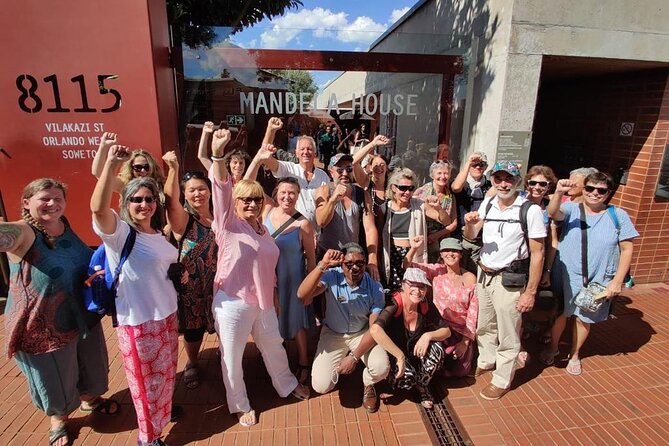
- Mandela House on Vilakazi Street, and why this home feels personal
- Regina Mundi, the church that became refuge
- Walter Sisulu Square in Kliptown, the Freedom Charter in context
- A quick break at FNB Stadium and the Soweto cooling towers
- Constitution Hill Human Rights Precinct: names you recognize, cells you can see
- Apartheid Museum for about 2 hours: the rise and fall explained
- Price and value: what $92.35 covers, and what it does not
- The guides and drivers: flexibility and real conversation
- Practical tips so your day stays comfortable and clear
- Who should book this Soweto and Johannesburg tour
- Should you book? My take
Key things to know before you go

- French-speaking private guide: you get explanations tied to each stop, not just a drive-by.
- Hector Pieterson Memorial: a direct entry point into the 1976 student uprising story.
- Mandela House on Vilakazi Street: included admission helps you use that time efficiently.
- Regina Mundi and Walter Sisulu Square: you see important locations beyond the big museums.
- Constitution Hill plus Apartheid Museum: two major human-rights and apartheid sites, with Apartheid Museum admission included.
- FNB Stadium and Soweto cooling towers: big landmarks that add variety to a heavy day.
A French-speaking private Soweto day that actually saves time
If your goal is to understand Soweto without getting lost in logistics, this tour fits the bill. The route is built around the most meaningful stops, and the guide handles the story as you move from place to place. That matters because Soweto can feel like a patchwork of streets and landmarks unless someone connects the dots for you.
A second practical win is the pacing. The tour lasts about 7 to 8 hours, and the plan keeps you from spending that whole time in transit or searching for directions. With private transportation included, you also avoid some of the extra walking that can wear you out before the most important sites.
French language also changes the experience in a big way. Even if your French is good only for basic conversation, having a guide explain history in French lets you keep up without constantly translating in your head. In a day focused on serious topics, clarity is the difference between learning and just watching.
More Township Tours in Johannesburg
- Johannesburg: Hop-On Hop-Off Bus with Optional Soweto Tour
★ 4.6 · 985 reviews - Soweto /Johannesburg and Apartheid Museum Guided Full Day Tour
★ 5.0 · 932 reviews - Johannesburg Hop-On Hop-Off City Tour with Soweto Option
★ 4.5 · 768 reviews
Your schedule: 7 to 8 hours, with set visits and real ticket differences
The tour runs through the day, typically between 9:00 AM and 5:00 PM. Your total time on the ground depends on traffic and your pace, but the itinerary uses fixed visit windows, including:
- Hector Pieterson Memorial (about 30 minutes)
- Mandela House (about 45 minutes)
- Regina Mundi (about 30 minutes)
- Walter Sisulu Square in Kliptown (about 30 minutes)
- FNB Stadium (about 10 minutes)
- Constitution Hill Human Rights Precinct (about 30 minutes)
- Apartheid Museum (about 2 hours)
This structure helps you fit a lot into one outing. The tradeoff is that it is still a full day. You will likely want comfortable shoes and a realistic expectation that some parts of the route are emotionally intense.
Ticket inclusion is mixed. Mandela House and the Apartheid Museum include admission. Some other major stops do not. FNB Stadium is listed as free. That means you should keep a little cash or card handy for extras, even though the tour price covers the guided day and transportation.
Stop by stop: Hector Pieterson Memorial, where 1976 begins
The day kicks off at the Hector Pieterson Memorial and Museum. This is the place that sets the tone. In 1976, the student uprising began in Soweto and spread across South Africa, and this memorial is designed to help you understand why those events mattered.
You get about 30 minutes here, with admission ticket not included. That is enough time to grasp the essentials and read the key context panels if you are attentive. If you are the type who likes to take photos and skim slowly, you might feel slightly rushed in that half hour. On the other hand, a shorter visit can be useful because the story keeps moving, and the guide’s commentary helps you connect what you see to what you visit next.
A practical tip for this stop: come ready to look closely, not just take pictures. This memorial is about memory and meaning, and your guide’s framing will help you interpret what you are seeing.
Mandela House on Vilakazi Street, and why this home feels personal

Next you are in Vilakazi Street for Mandela House. The tour uses this stop to make Nelson Mandela’s story feel concrete, since Mandela lived here with his first wife Evelyn and later with his second wife Winnie Mandela. You also see family photographs and learn how the house fits into the larger narrative of his life and South Africa’s political changes.
This stop includes admission, and you get about 45 minutes. That longer window compared with other sites gives you time to slow down a bit. It also helps if you want to read carefully rather than rushing toward the next location.
What makes this visit especially meaningful is the way the tour brings you from public upheaval into a more intimate setting. You are still dealing with history, but now it is tied to family life. That contrast tends to stick, because it reminds you that political events were lived by real people, in ordinary homes.
Same province, a very different day:
- From Johannesburg: Pilanesberg Nature Reserve Game Safari
★ 4.8 · 1,327 reviews - Full Day Ultimate Pilanesberg National Park Safari from Johannesburg or Pretoria
★ 4.5 · 718 reviews - Half-Day Tour of Soweto Tour
★ 4.5 · 712 reviews - Soweto: Walking Tour with a Local Guide and Lunch
★ 4.9 · 648 reviews
Regina Mundi, the church that became refuge
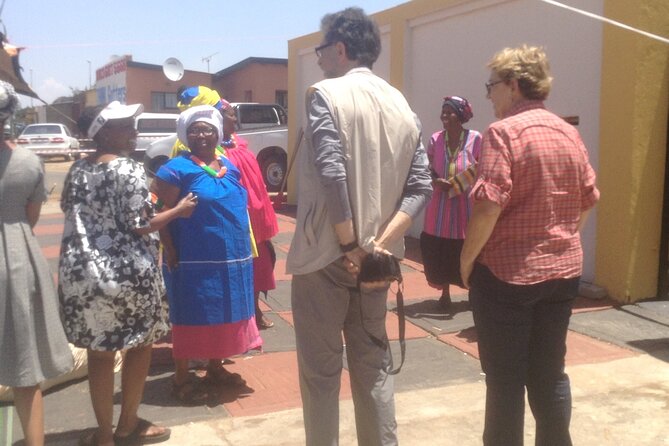
Regina Mundi is next, described as the parliament of Soweto and noted as the biggest Catholic church in the country. During the 1976 student uprising, students came here to hide from the police, which is a heavy detail. The guide’s role is important at this stop because a church is not automatically where visitors expect to see resistance history.
Admission ticket is not included, and the visit lasts about 30 minutes. If you do not plan to buy tickets until you arrive, you might need to handle that quickly, so you are not losing time once you get there.
This is a good example of why the tour works as a circuit. You are not just collecting famous names. You are seeing how daily life, faith, and community spaces became part of the struggle.
Walter Sisulu Square in Kliptown, the Freedom Charter in context
Then you head to Walter Sisulu Square in Kliptown, described as the oldest multicultural area in Jo’burg. The key link here is 1955, when the Freedom Charter was voted in this area.
This stop is about 30 minutes, with admission ticket not included. It is shorter than the museum visits, so the guide’s explanation becomes even more important. You want to walk away with the idea that the Freedom Charter did not appear out of nowhere. It was built through political organizing and community discussions.
If you are wondering why some stops are shorter, here is the logic: museums and memorials take time. Squares, streets, and sites like this one help you place those museum stories in a real geographic and social setting.
A quick break at FNB Stadium and the Soweto cooling towers
The tour includes a brief stop at FNB Stadium, also known as Soccer City, home of the FIFA World Cup 2010. The visit time is about 10 minutes and admission is free. This is not the emotional anchor of the day, but it does add variety.
You also get a look at the Soweto cooling towers, built in 1951 to supply electricity to Johannesburg. Today they are used for bungee jumping from a platform between the top of the two towers.
I actually like this kind of landmark pause late in the day. After multiple sites connected to oppression and protest, shifting to a recognizable modern landmark can give your mind room to breathe. It also helps you remember that Soweto is not only the past. It is lived-in, changing, and full of contemporary references too.
Constitution Hill Human Rights Precinct: names you recognize, cells you can see
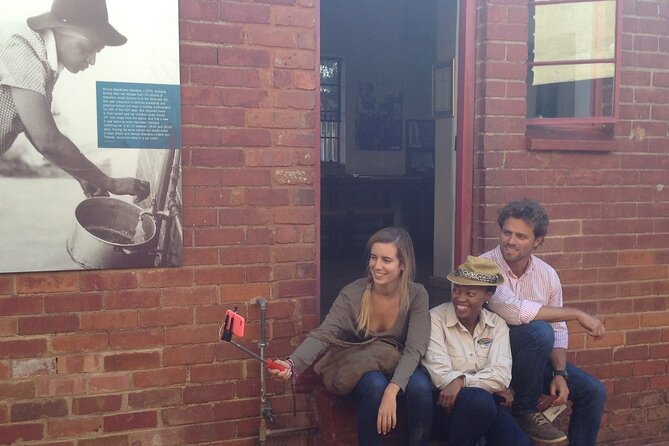
Next comes Constitution Hill Human Rights Precinct, one of the most powerful parts of the route. This precinct is described as a living museum, tied to prisons and detention sites including the Old Fort, Women’s Jail, and Number. It also highlights how famous South Africans were imprisoned there, including Nelson Mandela, Mahatma Gandhi, Joe Slovo, Albertina Sisulu, Winnie Madikizela-Mandela, and Fatima Meer.
The tour visit here is about 30 minutes, and admission ticket is not included. This is a short window for a place this intense, so you will want the guide’s commentary to do the heavy lifting. It is also the moment where the tour’s “private” angle matters most. A good guide can steer you toward what to notice so you do not just feel overwhelmed by the scale and the names.
One small caution: Constitution Hill can feel emotionally dense. If you are sensitive to incarceration stories, pace yourself. Focus on how the precinct is presented as a broader story about human rights, not just individual suffering.
Apartheid Museum for about 2 hours: the rise and fall explained
The final big anchor is the Apartheid Museum. It is described as the first of its kind and as an illustration of the rise and fall of apartheid. You spend about 2 hours here, with admission included.
This length is ideal. Two hours gives you time to absorb the narrative instead of sprinting through panels. You also benefit from the design approach described in the tour notes, created by an architectural consortium and built on a seven-hectare stand, with the museum presented as a strong example of design and space.
If your mind is tired from earlier stops, this museum helps bring everything into a structured timeline. You can see the broader system behind the personal and local stories you encountered at memorials, churches, and homes.
Price and value: what $92.35 covers, and what it does not
At about $92.35 per person, the value is mostly in three areas: a private guide, private transportation, and a route designed to hit the key sites without you spending half a day organizing your own day.
You should mentally separate the “tour experience” from “site admissions.” The guide plus transportation are included. Mandela House and the Apartheid Museum admission are included too. But other stops list admission ticket not included, and lunch is not included.
So the actual cost depends on what you choose to pay at the stops that require tickets. That is the main reason I consider ticket budgeting the biggest practical downside. If you do not plan for it, you might feel surprised during the day.
Also, this is a private tour. That usually means better control of pacing and questions. In the best cases, the day feels like it was built around you, not around a factory schedule.
The guides and drivers: flexibility and real conversation
One of the most praised parts of this experience is the quality of the guide and the smoothness with the driver. I saw strong notes about guides being passionate, friendly, patient, and ready to answer questions.
Ibrahim comes up as a guide who was attentive and good at explaining. Another highlight includes a French guide described as excellent at bringing the day’s places together with history and humor. Some people also praised guide U for having excellent humor and for adapting when needed.
There is also mention of driver Basil, and of the team being willing to modify parts of the program based on your requests, traffic, and site crowds. That kind of flexibility is not always guaranteed on paper, but it is the kind of detail that makes the experience feel smoother in real life.
If language matters to you, pick this when you can commit to a French-speaking day. If you need English or want a bilingual guide, you should clarify that before booking, since the tour is offered in French.
Practical tips so your day stays comfortable and clear
Because the tour is long and some sites include admission while others do not, your best strategy is simple: plan for small extra payments and keep the day organized.
Here are a few practical pointers that match how this itinerary runs:
- Bring what you need for lunch on your own, since lunch is not included.
- Expect mixed ticket situations, with Mandela House and the Apartheid Museum covered but other sites not included.
- Dress for walking and indoor museum time, since you will spend around 2 hours at the Apartheid Museum plus visits at memorial and church sites.
- If you care about photos, know that short stops like 10 minutes at FNB Stadium and 30 minutes at others can feel tight.
One more practical consideration that deserves an honest mention: there was at least one unhappy case where an operator did not show up and stopped responding. That is rare, but it is real. Before departure, keep your confirmation details accessible and confirm that your pickup is in place. If you do not hear back in a timely way, take action quickly rather than waiting until you are already at the meeting point.
Who should book this Soweto and Johannesburg tour
This is a strong fit if you want:
- A French-speaking guide who explains the history behind each site
- A private day with transportation included, so you are not fighting directions or wasting time
- A route that covers both iconic memorials and less obvious locations like Regina Mundi and Walter Sisulu Square
It also suits you if you like structure. With set visit times, you can see a lot without turning the day into endless decision-making.
I would consider a different option if you are looking for long, unhurried museum wandering at every stop. This tour is packed. It is designed to inform, not to provide hours of free time in each location.
Should you book? My take
I think this tour is worth it when you want a guided, coherent story of Soweto and Johannesburg, in French, with private transportation doing the heavy lifting. The stop selection is focused, and the guide experience is repeatedly praised for clarity, warmth, humor, and adaptability.
The only big reasons to pause are the mixed admission situation and the emotional intensity of Constitution Hill and the memorial stops. If you are good with that, and you plan for tickets where they are not included and for lunch on your own, you will likely come away with a far better grasp of the events and places that shaped South Africa.
If you want to understand the country in one day without guessing your way through logistics, this is a smart booking. Just budget a little for on-site admissions, and keep your expectations aligned with a full 7 to 8 hour circuit.
Newest around Johannesburg
- Zulu Food Cooking & Dining Experience with a local Chef★ 4.4 · 5 reviews
- Private Soweto Tour 5 hours approximately from Johannesburg or Pretoria.★ 4.5 · 9 reviews
- bicycle tour soweto★ 4.5 · 20 reviews
- Two day Kruger National Park Safari from Johannesburg★ 5.0 · 19 reviews
- Sun City Day Tour From Johannesburg★ 4.5 · 6 reviews
- Taste of Africa★ 5.0 · 9 reviews
- Full-day Johannesburg Bike Or Walking tour – With Transport★ 5.0 · 10 reviews
- Soweto Township Tours★ 4.5 · 6 reviews
Soweto & Township Tours, compared.


Soweto /Johannesburg and Apartheid Museum Guided Full Day Tour
Read our review →
Johannesburg Hop-On Hop-Off City Tour with Soweto Option
Read our review →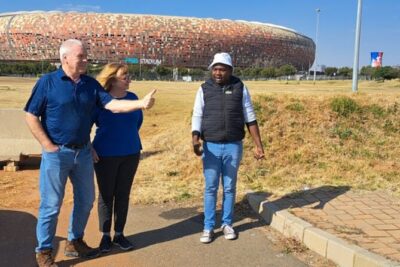

Jo’berg in 1 Day: Soweto, Apartheid Museum & City Tour
Read our review →Browse the lists this tour appears in