Reviewed · APARTHEID HISTORY TOURS
Johannesburg Historical, Apartheid Museum & Soweto
Johannesburg hits fast, in the right order. What makes this tour so useful is the private air-conditioned vehicle that gets you between major sites without the usual stop-start chaos, and the way it pairs Apartheid Museum learning with hands-on neighborhood sights in Soweto. One catch to plan for: Apartheid Museum entry is not included, so you’ll want to budget extra for tickets and time.
I also like that the pace is built for real understanding, not just photos. In the reviews, guides like Lesiba stand out for sharing context about the city’s neighborhoods and for staying flexible with what you want to focus on, while communicating clearly ahead of pickup.
In This Review
- Key Things I’d Prioritize Before You Go
- A Time-Saving Route Through Johannesburg and Soweto
- Constitution Hill: From Notorious Prisons to the Constitutional Court
- The Preserved Mine Stope Under Standard Bank, and Why It Still Matters
- Maboneng Precinct, and the Idea of a Place of Light
- Apartheid Museum: Give It Real Time
- Johannesburg City Anchors: Views, Architecture, and Gold-Era Clues
- Soweto on Vilakazi Street: Mandela and Tutu in One Place
- Mandela House: A Small Home with Huge Context
- Hector Pieterson Memorial: The Moment History Cuts Deep
- Mzimhlophe Station, Elephant Houses, and Other Soweto-Layer Stops
- What You Actually Pay For: Tickets, Time, and Value
- Who This Tour Fits Best (And Who Might Want Something Else)
- Should You Book This Johannesburg Historical, Apartheid Museum & Soweto Tour?
- FAQ
- How long is the Johannesburg Historical, Apartheid Museum & Soweto tour?
- Is pickup offered?
- Is this a private tour?
- What is the price per person?
- What is included in the tour price?
- Are admission tickets included for the main museums?
- Is lunch included?
- Which days and hours does the tour run?
- Is free cancellation available?
- Is a mobile ticket used?
Key Things I’d Prioritize Before You Go
- Private, air-conditioned transport: helps you cover more ground with less hassle.
- Constitution Hill included ticket: one of Johannesburg’s most meaningful historical stops.
- Soweto landmarks in one run: Vilakazi Street, Mandela House, and memorials.
- Maboneng Precinct time-saving stop: see a reworked inner-city area called Place of Light.
- Apartheid Museum is ticketed separately: plan for that extra cost.
A Time-Saving Route Through Johannesburg and Soweto
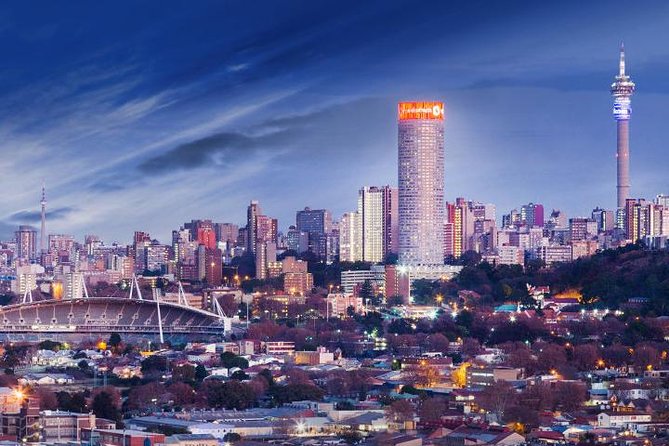
If you only have part of a day, Johannesburg can feel like a set of islands. Neighborhoods are far apart, roads can be slow, and public transport is not the fastest way to string together major history stops. This is why I like this private format. You get pickup, then move between sites in an air-conditioned vehicle with bottled water included.
The duration can run from 1 to 7 hours, so you can match it to your schedule. If you’re time-crunched, the value is in choosing the most important anchors. If you have longer, you can let the day feel less like a sprint and more like a guided story.
This is also a private tour, meaning it’s only your group. That matters here, because Johannesburg history is intense. You’ll get the chance to ask questions without competing with a large crowd.
More History Tours in Johannesburg
- Soweto Township Cultural Tour incl Apartheid Museum and Nelson Mandela House
★ 5.0 · 30 reviews - Cradle of Humankind World Heritage Site
★ 5.0 · 15 reviews - Johannesburg: Soweto History Tour with Hotel Pickup
★ 4.8 · 14 reviews
Constitution Hill: From Notorious Prisons to the Constitutional Court
Constitution Hill Human Rights Precinct is one of those places that makes Johannesburg’s modern identity impossible to ignore. It sits on a ridge overlooking central Johannesburg, on the edge between Hillbrow and Braamfontein. The setting is part of the impact, because you can look out over the city while learning about the institutions that helped shape the country’s hardest chapters.
What you’re doing here is more than reading panels. The precinct brings together Johannesburg’s notorious prisons, now museums, and the Constitutional Court building, a symbol of South Africa’s post-apartheid democracy. That contrast is the point. The place forces you to hold two ideas at once: the reality of confinement, and the push toward rights and legal change.
The tour includes admission for Constitution Hill, which is a big practical win. If you were doing this on your own, you’d be juggling transport plus tickets. Here, you do it as part of a planned day.
Practical note: plan to spend at least your set time at the site. If you try to cram it in while also racing to other stops, you’ll miss the emotional weight of the collection.
The Preserved Mine Stope Under Standard Bank, and Why It Still Matters
Before you even get to the prison museums, there’s a great early “wait, what?” stop that puts Johannesburg’s origins on the table. When Standard Bank was preparing the foundations for its headquarters in the 1980s, builders uncovered the entrance to a long-forgotten mine stope dating back to the city’s earliest gold-mining days.
Instead of covering it up, the site was preserved and it’s now open daily to visitors. It’s named after Ignatius Phillip Ferreira, a farmer, soldier, and prospector who joined the Gauteng gold rush in 1886. He left Grahamstown in the Eastern Cape, helped found one of the area’s earliest mining camps in July 1886, and then struck gold just three months later.
This stop matters because it connects the dots. Johannesburg did not become a city by accident, and apartheid history did not happen in a vacuum. Mining shaped the city’s growth, labor systems, and wealth patterns. Even if you’re mainly interested in 20th-century politics, this “deep roots” moment helps you see where the power structures began.
If you like small, specific details, this is one of the most memorable parts of the day because it’s unusual and not just another city-view stop.
Maboneng Precinct, and the Idea of a Place of Light

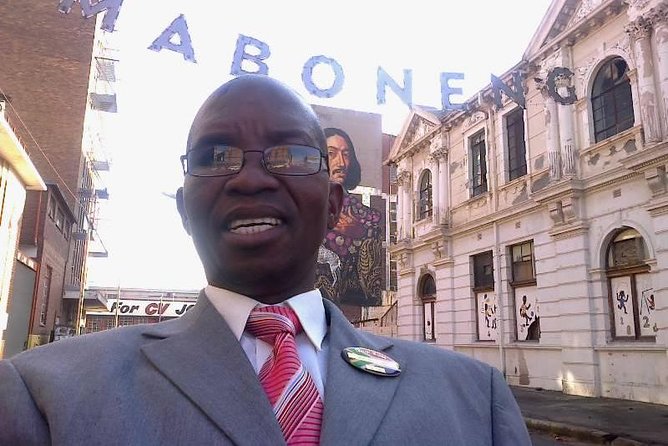
After you’ve got the hard history moving, you’ll get a very different feel in Maboneng Precinct. The name Maboneng is a Sotho word meaning Place of Light. That’s not just branding. It refers to the precinct’s goal of turning an area that was blighted by urban decay and crime into a safer, more active place to live, work, and play.
Maboneng is often compared to other gentrified creative quarters around the world, like Shoreditch or Brooklyn. You don’t need those comparisons, though. The more helpful way to read it is as a case study in reinvention and who benefits from it. You can walk away with questions like: who moved in, who was displaced, and how does a neighborhood recover when its reputation has been damaged for years?
A practical win: you don’t have to do hours of planning. This tour gives you a focused window to see what the precinct is about, without having to piece together transport and timing on your own. Admission at this stop is free.
More Museum Tours in Johannesburg
- Soweto /Johannesburg and Apartheid Museum Guided Full Day Tour
★ 5.0 · 932 reviews - Jo’berg in 1 Day: Soweto, Apartheid Museum & City Tour
★ 4.8 · 524 reviews - Johannesburg: Full-Day Tour with Soweto and Apartheid Museum
★ 4.8 · 478 reviews - Full-Day Soweto, Apartheid Museum and Lunch Tour
★ 5.0 · 410 reviews
Apartheid Museum: Give It Real Time
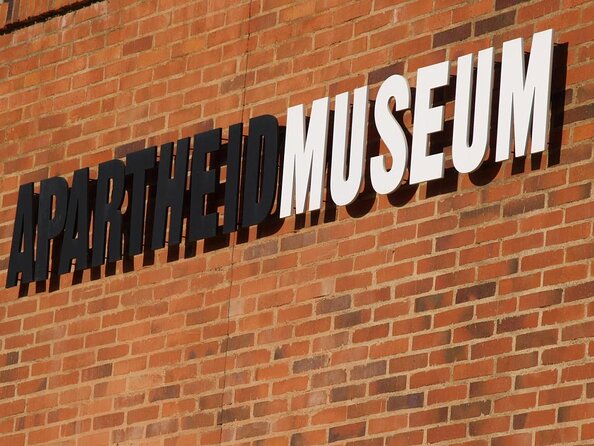
The Apartheid Museum is the moral center of the day, and it deserves a calm approach. The museum is described as the first of its kind, telling the rise and fall of apartheid. Even if you’ve read books or watched documentaries, the museum experience tends to hit harder in person because it grounds the story in artifacts, documentation, and personal accounts.
Here’s the one drawback to plan for: the Apartheid Museum admission is not included. So you’ll want to check your ticket timing and budget for entry before the day starts. The tour’s schedule gives you time, but you still shouldn’t treat it like a quick photo stop.
I’d also recommend bringing a mental rule: one exhibit at a time. If you race through, you lose context. If you slow down, the museum starts to feel like a guided understanding of how apartheid worked day to day, not only as a political system on paper.
Johannesburg City Anchors: Views, Architecture, and Gold-Era Clues
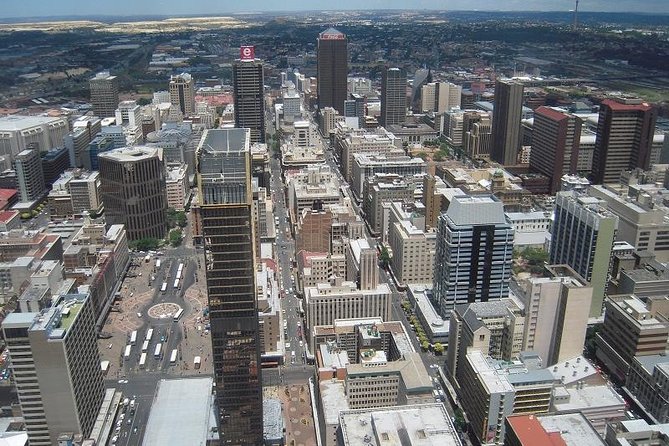
You also get time for city highlights that help you orient yourself. The tour includes stops associated with the Top of Africa building and Nelson Mandela Square. These are good points to reset your bearings. Even if you don’t spend long inside, a quick view of central landmarks helps connect the dots between the neighborhoods you’ll later drive through.
There are also shorter stops built around city history, like a stamp battery. A stamp battery, or stamp mill, crushes gold-bearing rock brought from underground. It sounds technical, but it matters because it shows how gold extraction was physically done, not just conceptually described.
If you enjoy the “how things worked” angle, these small history items can be surprisingly satisfying. If you’d rather focus strictly on memorials and politics, think of these as supporting chapters, not the main plot.
A good strategy for this part of the day is to let the guide frame each site with one clear takeaway. That’s where a strong guide earns their keep, and in the reviews, Lesiba is praised for sharing details as he moves you between places.
Soweto on Vilakazi Street: Mandela and Tutu in One Place
When you reach Soweto, the tone shifts from museum-based learning to place-based memory. Vilakazi Street is a standout stop because it’s described as the only street in the world with two Nobel laureates as residents: Nelson Mandela and Archbishop Emeritus Desmond Tutu.
That fact alone is worth the short stop time, but the real value is how it feels to be there as a living neighborhood. It’s not a set. It’s people’s everyday environment. The tour approach is to point you to meaningful locations while keeping the day grounded in what’s around you now.
If you like walking at a human pace, this is the part where you can slow your camera and just look. There are stories tied to homes, churches, and the surrounding life of the street.
Mandela House: A Small Home with Huge Context
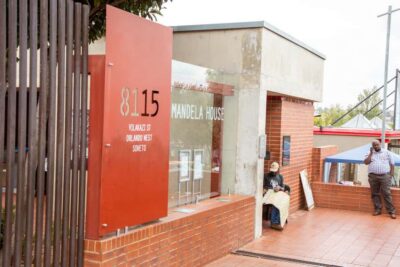
Mandela House is where the history becomes personal. It’s at 8115 Vilakazi Street, and the museum is focused on the small face-brick house where the Mandela family lived from 1946 to the 1990s.
What I like here is the scale. Instead of only seeing apartheid as a massive political story, you see it from a household perspective. The house is described as celebrating his life through artwork, which means the museum experience may feel less like a formal lecture and more like a curated set of reflections.
Admission is included for Mandela House, which helps you keep your day’s costs under control. Just remember: because it’s a museum in a home setting, the pacing can feel different than outdoor memorials. Let the space do its work.
Hector Pieterson Memorial: The Moment History Cuts Deep
The Hector Pieterson Memorial commemorates 12-year-old Hector, who was killed on June 16, described as the first child to die by a police bullet. He is buried in Avalon Cemetery, where many apartheid victims are also buried.
This stop is emotionally heavy. There’s no way to make it light. The value is in how the memorial links a single story to a broader cycle of violence and resistance. Even if the rest of the day is moving at a fast pace, give this site your full attention for the set time.
If memorials affect you deeply, that’s not a flaw. It’s the point. Just don’t pack more stops immediately after. In this itinerary, you’ll still keep moving, so treat this as the moment you slow your own internal pace.
Mzimhlophe Station, Elephant Houses, and Other Soweto-Layer Stops
A distinctive part of this tour is that it doesn’t only do the headline sites. It also includes smaller Soweto stops that add texture.
One stop references demonstrations at Mzimhlophe station in the context of the Treason Trial. It notes that there were protests to highlight injustices of the South African government. The same area is also described as home to unique Elephant Houses.
Even if you only get a brief window, the lesson is important: apartheid-era events were not distant. They happened in specific public places, tied to movement, transit, and gathering.
The tour also includes stops connected to other Soweto and Johannesburg neighborhoods, like Diepkloof Park and Orlando Towers, plus shorter viewing moments. Diepkloof is described as characterized by hostels built to house large numbers of single male migrant workers, which is a reminder of how labor policies shaped where people lived. Orlando Towers includes cooling towers and connects to one of the world’s epic bungee jump features, which is a good example of how modern life repurposes industrial spaces.
On the same broader run, there’s also mention of a colored township colloquially called Bulte, meaning Hills, with mine dumps surrounding the township. The name Bulte is described as coined by residents as an endearment.
These extra stops are the difference between a tour that only teaches dates and a tour that teaches how systems influenced daily life.
What You Actually Pay For: Tickets, Time, and Value
At $107.48 per person, the biggest value isn’t just the sightseeing list. It’s the combination of private air-conditioned transport, pickup, bottled water, and admission for at least some major stops.
From the information provided, admission is included for Constitution Hill and Mandela House. Apartheid Museum admission is not included. Other stops are either explicitly free (like Maboneng Precinct and some quick city items) or marked as admission ticket not included.
So how do you plan for the financial side? Do this math in your head:
- Count the included admissions: you’re already covered at Constitution Hill and Mandela House.
- Budget extra for the Apartheid Museum ticket.
- Add optional lunch if you want it. Lunch is not included, but it can be added. Snacks and alcoholic beverages are not included either.
Time-wise, the day can stretch up to 7 hours. That range is useful because it likely reflects how long you spend inside museums. If you’re the kind of person who reads carefully and sits with exhibits, you’ll feel more comfortable booking the longer end of the duration.
If you prefer tight timelines and quick stops, the shorter end makes more sense, but you’ll still want to treat Constitution Hill and the Apartheid Museum as your main commitments.
Who This Tour Fits Best (And Who Might Want Something Else)
This tour fits you if:
- You want to cover Johannesburg + Soweto landmarks in one day without stitching together transport.
- You’re interested in apartheid history but also want to see how the city changed, including inner-city renewal areas like Maboneng Precinct.
- You like learning from a guide with local context. In reviews, Lesiba is praised for being well connected in Soweto, for communicating ahead, and for staying flexible with the focus of the day.
You might want a different option if:
- You’re very budget-sensitive about museum entry fees. The Apartheid Museum is not included.
- You hate emotional memorial sites. Hector Pieterson Memorial is not a light stop.
Should You Book This Johannesburg Historical, Apartheid Museum & Soweto Tour?
I’d book this if you want a structured, time-efficient day that still respects what matters most. Constitution Hill gives you a strong start with included admission, then the route shifts into Maboneng for a look at reinvention, and finishes in Soweto with Mandela and memorial stops.
The key reason it feels like good value is the private setup, especially the air-conditioned vehicle with pickup. Johannesburg is not a city where you want to burn time guessing routes between neighborhoods.
Just go in with two expectations: Apartheid Museum costs extra, and some stops are emotionally intense. If that sounds like your kind of learning, you’ll likely find this day hits the right balance of history and real places.
FAQ
How long is the Johannesburg Historical, Apartheid Museum & Soweto tour?
The duration is listed as 1 to 7 hours, approximately.
Is pickup offered?
Yes, pickup is offered.
Is this a private tour?
Yes. It is a private tour/activity, and only your group will participate.
What is the price per person?
The price is $107.48 per person.
What is included in the tour price?
The tour includes all fees and taxes, an air-conditioned vehicle, and bottled water. Lunch can be added.
Are admission tickets included for the main museums?
Constitution Hill Human Rights Precinct and Mandela House have admission tickets included. The Apartheid Museum admission is not included, and several other stops are listed as free or with admission ticket not included.
Is lunch included?
Lunch is not included by default. It can be added, and snacks are not included.
Which days and hours does the tour run?
The listed opening hours are Monday to Tuesday, 8:30 AM to 1:30 PM, during the date range 11/22/2023 to 06/24/2026.
Is free cancellation available?
Yes. You can cancel up to 24 hours in advance for a full refund.
Is a mobile ticket used?
Yes, mobile ticket is listed as a feature.
More Apartheid History Tours in Johannesburg
- Half Guided Day Tour of Soweto And Apartheid Museum
★ 5.0 · 356 reviews - Ultimate Johannesburg Soweto Experience with Apartheid Museum
★ 5.0 · 313 reviews - Soweto: Hop-On Hop-Off Bus, City Tour and Apartheid Museum
★ 4.5 · 250 reviews - Johannesburg and Soweto Apartheid Full Day Tour w/Lunch
★ 4.9 · 219 reviews
More Township Tours in Johannesburg
- Johannesburg: Hop-On Hop-Off Bus with Optional Soweto Tour
★ 4.6 · 985 reviews - Johannesburg Hop-On Hop-Off City Tour with Soweto Option
★ 4.5 · 768 reviews - Half-Day Tour of Soweto Tour
★ 4.5 · 712 reviews - Soweto: Walking Tour with a Local Guide and Lunch
★ 4.9 · 648 reviews
Newest around Johannesburg
- Soweto Township Tour★ 4.4 · 4 reviews
- Soweto Tuk-Tuk Food & Beer Tour★ 5.0 · 9 reviews
- Soweto Tour; Mandela House; Vilakazi Street; Market Culture★ 5.0 · 6 reviews
- Private Soweto,Mandela House,Apartheid Museum,Constitution★ 4.6 · 15 reviews
- Soweto: Sip & Paint Walking Tour & Take Home a Canvas★ 4.8 · 7 reviews
- Soweto: Hector Pieterson Memorial, to Orlando Towers Tour★ 4.0 · 31 reviews
- Soweto & Johannesburg and Apartheid Museum★ 4.7 · 41 reviews
- Soweto and apartheid museum tour(Half-day)★ 5.0 · 4 reviews
Apartheid History Tours, compared.

Soweto /Johannesburg and Apartheid Museum Guided Full Day Tour
Read our review →
Jo’berg in 1 Day: Soweto, Apartheid Museum & City Tour
Read our review →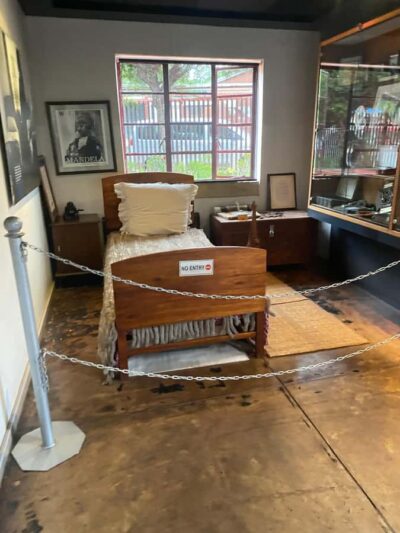
Full-Day Tour with Soweto and Apartheid Museum
Read our review →
Full-Day Soweto, Apartheid Museum and Lunch Tour
Read our review →
Half Guided Day Tour of Soweto And Apartheid Museum
Read our review →
Ultimate Johannesburg Soweto Experience with Apartheid Museum
Read our review →
Hop-On Hop-Off Bus, City Tour and Apartheid Museum
Read our review →