
Reviewed · JOHANNESBURG TOURS
Johannesburg: The Evolution of Maboneng (Place of Light)
A mural walk that reads like a city diary. Maboneng, Johannesburg’s Place of Light, has changed fast over the last couple decades, and this 2-hour walk shows you the before, the during, and the new. You’ll spot street art murals, heritage facades, and redevelopment projects that turn blank walls into real public conversations.
What I like most is how the tour connects art to everyday city life. I love the chance to meet the makers of the neighborhood story, especially around stops like Kwa Mai-Mai Traditional Healers Market and The Collectors Treasure where you can browse, ask questions, and slow down.
One drawback to keep in mind: it’s a walking tour first, and timing matters. If you want lots of heavy shopping time or lots of indoor time, you might find it more like a guided neighborhood stroll than a nonstop “event” day, and the price can feel high if you’re expecting more.
In This Review
- Key things to know before you go
- Maboneng, or Place of Light, in plain words
- Starting at Curiocity Backpackers on Fox Street
- New architecture and old Johannesburg in the same frame
- The Cosmopolitan heritage building, built in 1899
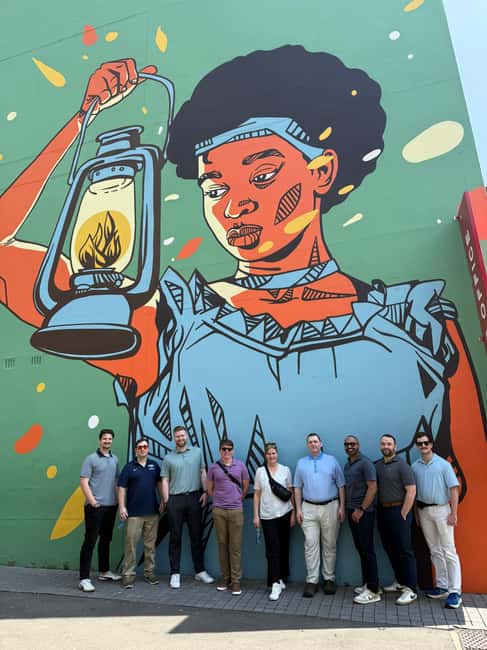
- Street art murals as a public language: Mandela and Nelson Makamo
- Drive-lines Development and upcycled shipping containers
- Arts On Main, William Kentridge, and the Center for the Les Good Idea
- Kwa Mai-Mai Traditional Healers Market, a real local stop
- The Collectors Treasure, South Africa’s big second-hand bookstore
- Rooftop light and a Joburg skyline sun-downer
- Price and pacing: is $42 worth it for you?
- Who should book this Maboneng walking tour
- Should you book? My take
- FAQ
- How long is the Maboneng: The Evolution of Maboneng tour?
- What does the tour cost?
- Where does the tour start and end?
- What language is the tour conducted in?
- What should I bring?
- Is the tour suitable for people with limited mobility or pregnancy?
- What stops and themes should I expect during the walk?
Key things to know before you go
- Maboneng means Place of Light, and the tour shows why the name fits
- Heritage stops like The Cosmopolitan (1899 building, hotel and bar from 1902)
- Street art is the guide, with murals including Mandela and Nelson Makamo’s open-air museum feel
- Real redevelopment at Drive-lines Development using upcycled shipping containers for affordable housing
- Arts On Main connects you with William Kentridge and his foundation space
- Bring comfortable shoes, because you’ll be on foot for the full 2 hours
Maboneng, or Place of Light, in plain words
Maboneng is an inner-city area on Johannesburg’s eastern side that has been reshaped over roughly the last 20 years. The name itself matters: Maboneng is a SeSotho phrase meaning a place of light, and you feel that theme in the way walls, buildings, and public spaces have been reworked.
The value here is not just the art. It’s how the art, the history, and the redevelopment projects sit next to each other, close enough that you can compare the different eras in real time.
A few more Johannesburg trips worth comparing
- From Johannesburg: Pilanesberg Nature Reserve Game Safari
★ 4.8 · 1,327 reviews - Johannesburg: Hop-On Hop-Off Bus with Optional Soweto Tour
★ 4.6 · 985 reviews - Soweto /Johannesburg and Apartheid Museum Guided Full Day Tour
★ 5.0 · 932 reviews
Starting at Curiocity Backpackers on Fox Street
You meet at Curiocity Backpackers, 302 Fox St, Jeppestown. This is a practical start point, and it helps you transition from the broader city area into the specific Maboneng precinct with a local guide setting the tone.
The tour is in English, and you’ll follow a guide-led route designed for walking. The format matters because you’re not just collecting photos, you’re also getting the context that helps the murals and buildings make sense as you pass them.
New architecture and old Johannesburg in the same frame
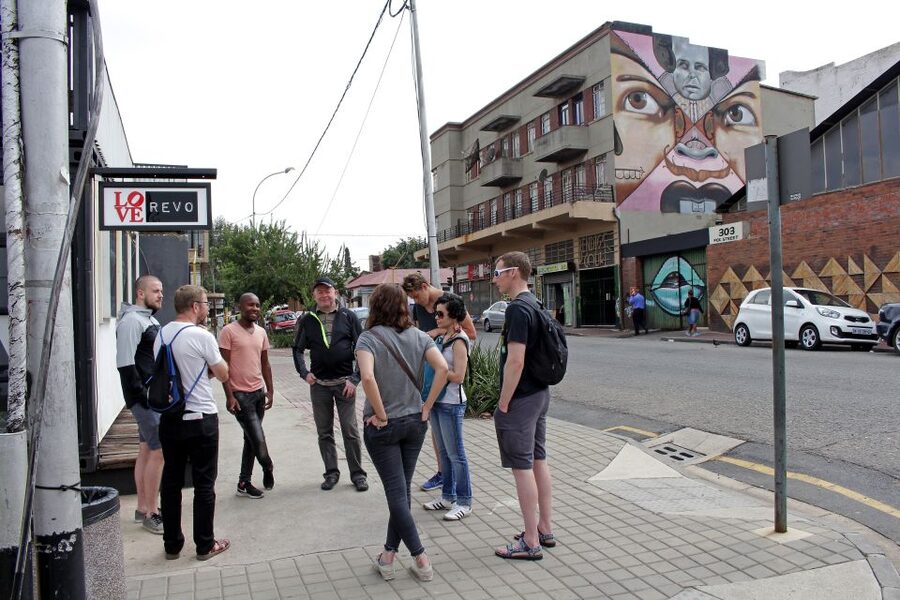
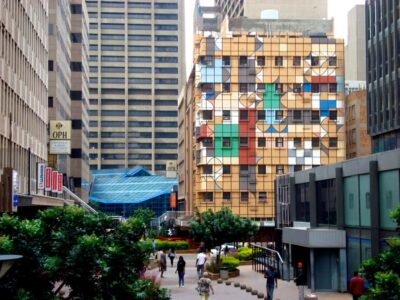
One of the first things you’ll do is walk past fresh-looking developments beside older inner-city fabric. That mix is part of the story: Johannesburg’s growth did not happen in a straight line, and Maboneng’s “evolution” is visible block by block.
I like this approach because it keeps you from treating street art as decoration only. Instead, you start noticing how design choices, street-level activity, and building reuse all send messages about who a place is for.
The Cosmopolitan heritage building, built in 1899
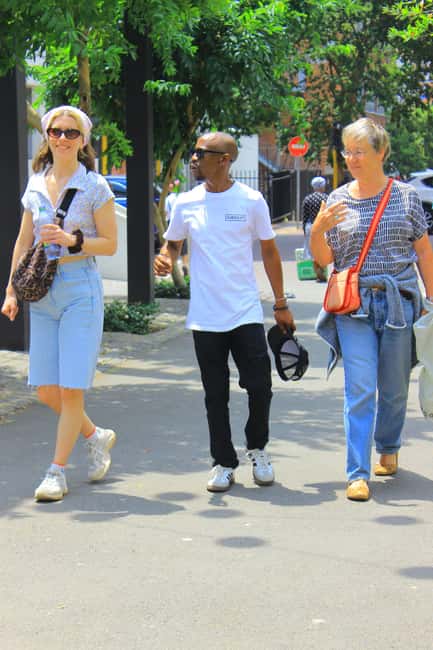
A key landmark stop is The Cosmopolitan, one of downtown Johannesburg’s elegant heritage buildings. The building dates to 1899, and it opened as a hotel and bar in 1902.
If walls could talk, this one would talk nonstop. Even if you’re not an architecture nerd, you’ll appreciate the way heritage structures create a strong sense of time. The stop gives you a reference point for what you’re seeing around it, especially when you compare it to the newer urban developments nearby.
Same province, a very different day:
- Johannesburg Hop-On Hop-Off City Tour with Soweto Option
★ 4.5 · 768 reviews - Full Day Ultimate Pilanesberg National Park Safari from Johannesburg or Pretoria
★ 4.5 · 718 reviews - Half-Day Tour of Soweto Tour
★ 4.5 · 712 reviews - Soweto: Walking Tour with a Local Guide and Lunch
★ 4.9 · 648 reviews
Street art murals as a public language: Mandela and Nelson Makamo
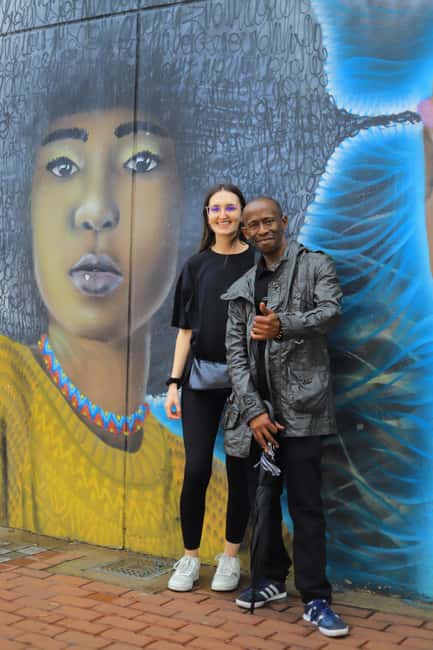
Maboneng is famous for public art, and this is where the tour feels most “alive.” You’ll walk toward major mural areas, including the Mandela mural, often associated with the leader-boxer story. It’s the kind of artwork that sparks questions, and your guide’s job is to connect what you see to the meanings behind it.
Then comes the open-air museum feel created by Nelson Makamo’s murals. The big takeaway for me is that murals in this precinct do more than beautify. They break up hard street edges and make the area easier to read, especially when barriers or blank walls would otherwise make you feel like you’re just passing through.
Drive-lines Development and upcycled shipping containers
One of the most practical stops in the route is Drive-lines Development, a newer urban development built using upcycled shipping containers as affordable housing. You get to see an actual redevelopment model, not just talk about one.
Why it matters: it shows how creative solutions are being used to address space and affordability in an inner-city setting. This is where the tour’s title really clicks, because you’re watching entrepreneurship and urban renewal happen on the ground.
If you’re the type who likes to understand how neighborhoods change, this is the moment to pay attention. Look beyond the concept and notice the street-level vibe around it.
Arts On Main, William Kentridge, and the Center for the Les Good Idea
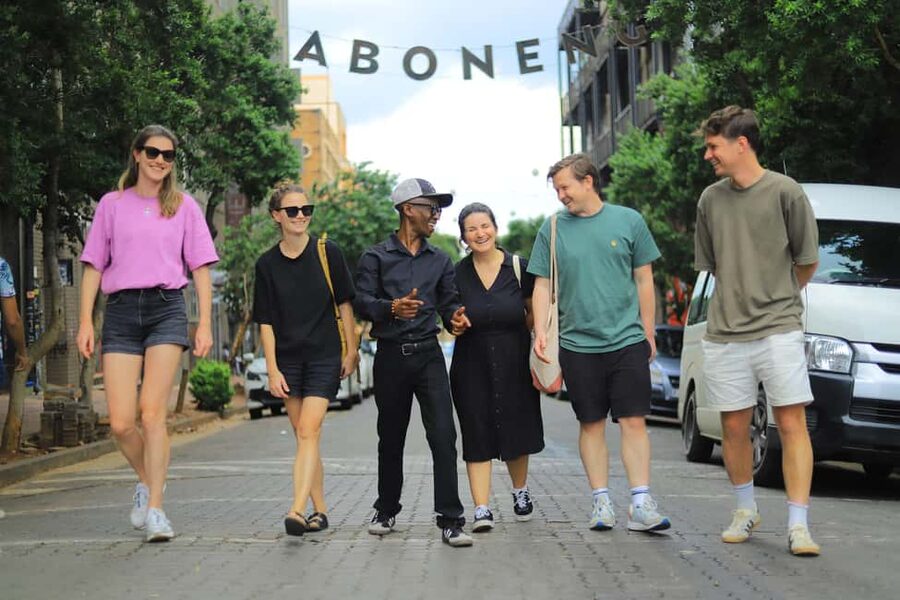
Next up is Arts On Main, a cultural hub strongly tied to artist William Kentridge. The stop also points you to his foundation space, the Center For The Les Good Idea.
Even if you only catch a glimpse from the outside or a small viewing moment during the tour time, Arts On Main gives you a sense of scale. This is Johannesburg’s art world showing up in a neighborhood setting, not tucked away somewhere separate.
I like pairing this stop with the earlier murals because it changes your perspective. Street art and studio-level art start to feel like parts of the same ecosystem, both shaping public conversation.
Kwa Mai-Mai Traditional Healers Market, a real local stop
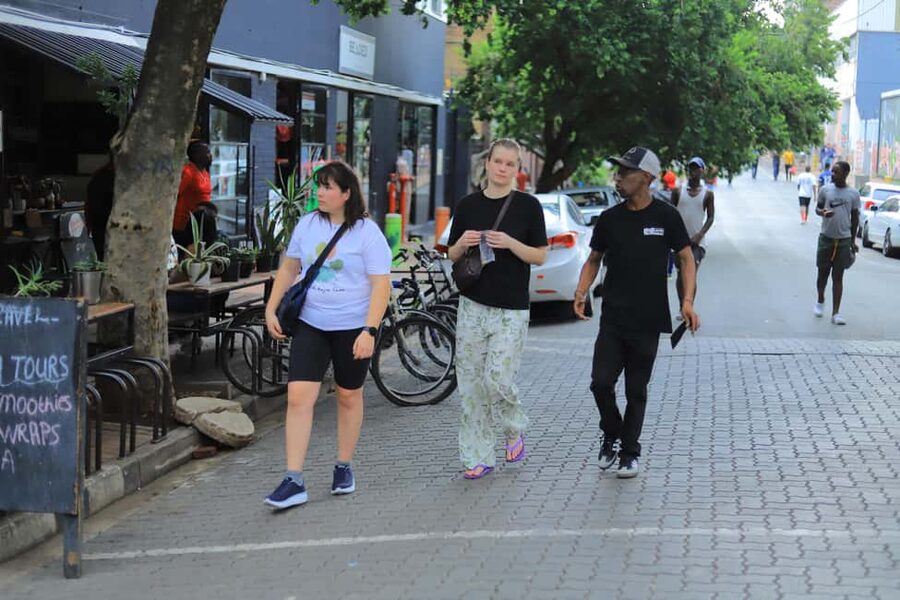
The tour includes a visit to the Kwa Mai-Mai Traditional Healers Market, said to be one of the oldest in the city. This is where you slow down a bit, because it’s less about quick photos and more about understanding a living cultural practice.
You’ll encounter sangomas, traditional healers, along with traditional clothing and medicines. The market is also a place to learn the tone of the area: respectful, practical, and focused on services people rely on.
A quick note for your visit: treat this market like a real workplace. Ask before you take photos, and keep your browsing respectful. You don’t need to buy anything to make the stop worthwhile, but having cash on hand can help if you want to shop.
The Collectors Treasure, South Africa’s big second-hand bookstore
A highlight stop is The Collectors Treasure, described as the largest second-hand bookstore in the southern hemisphere. This is exactly the kind of place that turns a short tour into a memorable personal moment.
Think of it like a culture shortcut. A bookstore that size usually reflects the city’s curiosity and the way people keep returning to stories and information, even when formats and tastes change.
If you’re a reader, plan to spend a few minutes scanning categories and looking for Johannesburg or South African titles. If you’re not a big book shopper, the bookstore still works as a break from the street while staying inside Maboneng’s creative theme.
Rooftop light and a Joburg skyline sun-downer
If time allows, you finish with a sun-downer over looking the Johannesburg skyline. This kind of wrap-up is more than a nice view. It gives your brain a clean break, so the history, art, and new developments start fitting together as one story.
It’s also when you can take better photos with softer light, if the group pace allows. Keep your jacket handy if the weather turns, even in warmer seasons, because rooftops can feel cooler.
Price and pacing: is $42 worth it for you?
At $42 per person for a 2-hour walking tour, you’re paying for a guided route, local context, and access to specific cultural stops in the Maboneng area. In practice, the value depends on what you want from the experience.
If you want a safe, structured way to see street art with meaning, and you like history paired with current urban change, the price can feel fair. The tour also helps you hit multiple points in a short window, especially when you want both public art and practical stops like the healers market and the big second-hand bookstore.
Where it can feel pricey is if your expectations are heavy on market time, lots of indoor attractions, or a slow, lingering pace. This is designed as a walking tour, so comfortable shoes are not optional, and your time will likely be split between outdoor viewing and a few key stops.
Also note the “who it’s for” reality: the tour is not recommended for limited mobility. It is also not suitable for pregnant women. If you fall into either category, you’ll likely want a different format.
Who should book this Maboneng walking tour
This tour fits best if you:
- Like street art with context, not just pictures
- Want to see urban regeneration with real examples like upcycled shipping containers
- Enjoy cultural stops such as Arts On Main and a major second-hand bookstore
- Prefer a guided neighborhood walk that helps you feel oriented in an inner-city area
It might not be your best match if you need a fully seated experience, if you dislike walking, or if you expect long market browsing with lots of flexible downtime.
Should you book? My take
If your goal is to understand Maboneng, Johannesburg’s Place of Light, this is a strong way to do it in a short time. You get heritage, murals, redevelopment, and hands-on cultural stops, all threaded together by a local guide.
My advice: bring good shoes, wear weather-appropriate clothing, and set your expectations as a structured neighborhood walk with a few focused stops. If that sounds like your kind of day, then yes, book it.
FAQ
How long is the Maboneng: The Evolution of Maboneng tour?
It’s a 2-hour guided walking tour.
What does the tour cost?
The price listed is $42 per person.
Where does the tour start and end?
It starts at Curiocity Backpackers, 302 Fox St, Jeppestown, Johannesburg, 2043, South Africa. It ends back at the meeting point.
What language is the tour conducted in?
The tour is listed as being in English.
What should I bring?
Bring comfortable shoes and weather-appropriate clothing.
Is the tour suitable for people with limited mobility or pregnancy?
It is not recommended for people with limited mobility, and it is not suitable for people with mobility impairments. It is also not suitable for pregnant women.
What stops and themes should I expect during the walk?
You can expect Maboneng’s urban regeneration story, mural street art by local and international artists, heritage landmarks like The Cosmopolitan, redevelopment at Drive-lines Development, arts at Arts On Main, a visit to the Kwa Mai-Mai Traditional Healers Market, and time at The Collectors Treasure second-hand bookstore.
Newest around Johannesburg
- Soweto Township Tour★ 4.4 · 4 reviews
- Soweto Tuk-Tuk Food & Beer Tour★ 5.0 · 9 reviews
- Soweto Tour; Mandela House; Vilakazi Street; Market Culture★ 5.0 · 6 reviews
- Private Soweto,Mandela House,Apartheid Museum,Constitution★ 4.6 · 15 reviews
- Soweto: Sip & Paint Walking Tour & Take Home a Canvas★ 4.8 · 7 reviews
- Soweto & Johannesburg and Apartheid Museum★ 4.7 · 41 reviews
- Soweto: Hector Pieterson Memorial, to Orlando Towers Tour★ 4.0 · 31 reviews
- Soweto and apartheid museum tour(Half-day)★ 5.0 · 4 reviews
Johannesburg Tours, compared.



Soweto /Johannesburg and Apartheid Museum Guided Full Day Tour
Read our review →
Johannesburg Hop-On Hop-Off City Tour with Soweto Option
Read our review →
Full Day Ultimate Pilanesberg National Park Safari from Johannesburg or Pretoria
Read our review →
Jo’berg in 1 Day: Soweto, Apartheid Museum & City Tour
Read our review →Browse the lists this tour appears in