
Reviewed · CULTURAL VILLAGE TOURS
Lesedi Cultural Village Tour
Johannesburg can feel all concrete and traffic, so this half-day tour gives you a fast way into traditional life. At the heart of it is Lesedi Cultural Village, where you get a guided walk through village areas and then a live dance and drumming segment.
I especially like the small group size, which keeps questions from getting lost and makes the whole day feel more like a conversation than a cattle line. I also like the straightforward structure: guided storytelling on the way, a visit to multiple village settings, then a performance.
One thing to keep your expectations calibrated: this is a cultural village set up for visitors, not a private, everyday village you would drop into unannounced. If you’re hoping for a hands-on look at daily life in a remote homestead, you may find it a bit more staged and commercial than you expected.
In This Review
- Key points before you go
- Price and what you’re paying for at Lesedi Cultural Village
- Getting there: pickup, comfort, and how the half-day actually feels
- The schedule at a glance: songs, five village areas, and the show
- Inside Lesedi Cultural Village: five village areas and the storytelling layer
- The Zulu warrior segment: why it’s included and what to watch for
- The drum lessons and dance performance: the part most people remember
- Lunch at Lesedi: what’s available and how to plan for it
- Craft market time: support locals and find small souvenirs
- The guide makes the difference: Tshepo, Solly, Simba, and Nathi
- Who should book this tour, and who might want to skip it
- Practical tips so you get the most from your visit
- Should you book Lesedi Cultural Village Tour?
- FAQ
- How long is the Lesedi Cultural Village Tour?
- What time does the tour start?
- Where does the tour take place?
- Is pickup and drop-off included?
- How much does the tour cost?
- What is included in the ticket price?
- Is lunch included?
- Are drinks included?
- How many people are on the tour?
- What is the cancellation policy?
- What should I wear?
Key points before you go
- Small-group experience with a maximum of about 15 people, so the guide can actually talk to you
- Village walk plus performance, including a drum and dance show after the route through the village areas
- Pickup and drop-off included, which saves time in a city where getting around can eat your day
- Entrance fees are covered, so the big costs are already handled when you book
- Lunch is optional and not included, so plan for extra spending if you want the buffet
Price and what you’re paying for at Lesedi Cultural Village
This tour is priced at $94.90 per person, which sounds like more than a typical city bus trip. The value comes from what’s wrapped into the ticket: entrance fees, the guided program, and the dance performance, plus an air-conditioned vehicle and a bottle of water.
Your money mostly covers access and timing. You’re not just buying a ticket to walk around, you’re getting a planned flow with someone to interpret what you’re seeing and when to show up for the show segment.
The main trade-off is that not everything is included. Drinks and lunch are not part of the tour price, and dinner is not included either. In practice, you should treat the ticket as the cultural program cost, then budget a bit extra for the food and anything you buy at the craft market.
More Cultural Village Tours in Johannesburg
- Lesedi Cultural Village and Cradle of Humankind Tour
★ 5.0 · 48 reviews - Lesedi Cultural Village
★ 5.0 · 45 reviews - Johannesburg: Lesedi Cultural Village Experience
★ 4.6 · 43 reviews
Getting there: pickup, comfort, and how the half-day actually feels
The tour starts at 10:00 am and runs about 5 to 6 hours. That time window matters because you’re traveling in and out of Johannesburg, then spending focused time at the cultural site.
Pickup is offered, and drop-off happens back at your hotel. For me, that’s a big deal in Johannesburg, because it removes the stress of figuring out transport when you’re on a schedule.
You’ll ride in an air-conditioned vehicle, and you’ll have water. That helps if the weather is warm, or if you just want the day to feel easy from the moment you’re collected.
One small note from real-world timing: in at least some cases, pickup has run late. If you have plans after the tour, give yourself buffer time and keep the rest of your day flexible.
The schedule at a glance: songs, five village areas, and the show
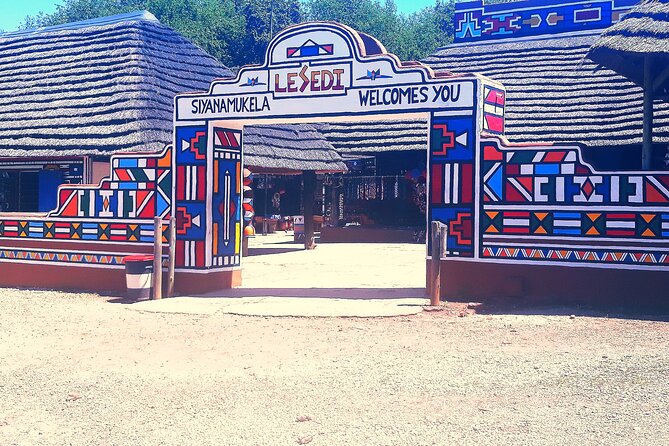
The heart of the program happens at Lesedi Cultural Village. The day is built around an arrival welcome, a guided walk through village areas, and then the performance segment.
After you arrive, you should expect a welcome with local traditional songs before the show. Then you’ll move through the village settings on foot, with interpretation along the way, including interaction points such as the Zulu warrior component.
The timing typically flows like this: walk and learning first, performance second. If you like structure, it’s nice. If you get tired in crowds, it’s also helpful that the group stays small.
Inside Lesedi Cultural Village: five village areas and the storytelling layer
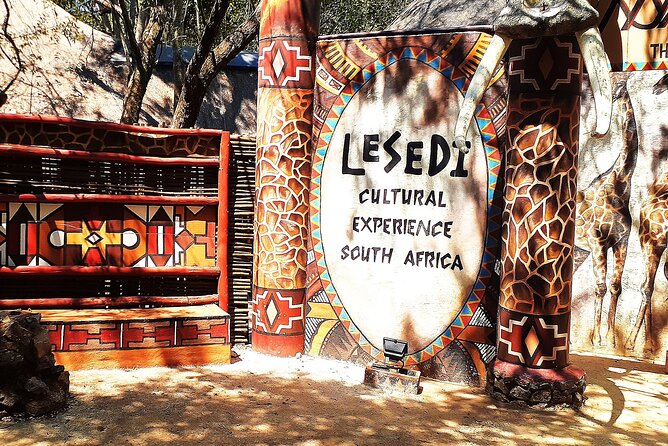
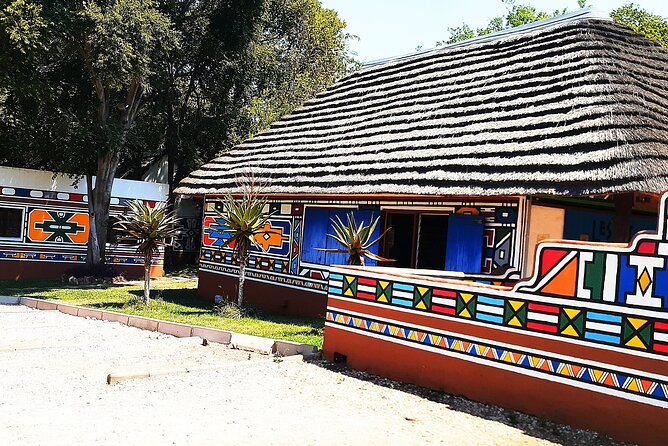
Lesedi Cultural Village is set up so you can learn about several southern African cultures in one visit. You’ll get the chance to visit five village areas, with guidance that turns the visit into more than just photos.
Walking between areas is part of the experience. You’re not stuck in one spot waiting for a slideshow. Instead, you move through different village settings and hear the context from your guide as you go.
What makes this work well for many people is that it gives you a starting framework. You leave with names, customs, and cultural cues that you can then recognize later when you hear them in South Africa’s broader cultural landscape.
The potential drawback is also connected to that same structure. Because it’s designed for visitors, the experience is interpretive rather than purely observational. If you were hoping for a full view of day-to-day life, you might feel the difference between a staged presentation and the kind of authenticity you’d get from spending time in an actual household.
More cultural village visits in Johannesburg:
- Johannesburg: Cradle of Human Kind & Lesedi Cultural Village
★ 4.6 · 31 reviews - Johannesburg: Lion Park Safari and Cultural Village Tour
★ 4.8 · 12 reviews - Cradle Of Humankind, Lesedi Cultural Village & Lion’s Park
★ 4.7 · 10 reviews - Lesedi Cultural Village with lunch or dinner cultural food
★ 4.6 · 9 reviews
The Zulu warrior segment: why it’s included and what to watch for
One of the standout elements is the presence of the Zulu warrior component tied to the village walk. It’s the kind of moment that helps the program move from abstract culture talk into something you can see and ask questions about.
When this segment is handled well by the guide, it becomes a quick way to understand how groups present roles, traditions, and storytelling through physical presence and performance.
What you should watch for is how the guide explains it. The biggest payoff comes when the explanation connects the symbolism to everyday cultural meaning rather than treating the presentation as pure entertainment. Guides such as Tshepo and Nathi have been praised for the way they explain what you’re seeing, and that explanation layer tends to make the whole walk more meaningful.
The drum lessons and dance performance: the part most people remember
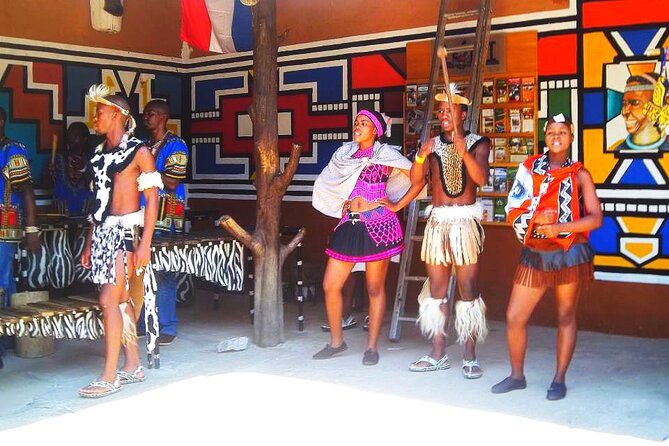
The live show is a major reason this tour earns such strong scores. You’ll get a dance performance after the village walk, and people often highlight the drum lessons and African dance as the lasting memory.
This is also where the tour energy rises. The performers bring movement and rhythm to the cultural themes you just heard about. Even if you’re not sure what each dance gesture means, you can feel the skill and coordination.
In a few accounts, the dancing and drumming felt like something you could not forget, and that matches the design of the program: it uses the show to turn information into a physical experience.
If you want to enjoy it more, be ready to watch closely during the rhythm and call-and-response moments, then ask questions afterward if your guide offers that chance.
Lunch at Lesedi: what’s available and how to plan for it
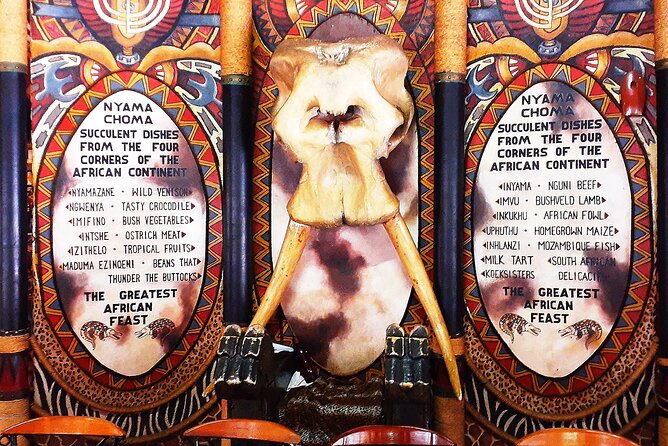
Lunch is available after the show, but it’s not included in the tour price. The food is described as native traditional dishes, and there’s also mention of a buffet option after the performance.
Because lunch is not part of the base price, you should plan for extra spending if you’re hungry after the dancing. The upside is that you’re fed right after the show, so you can keep the day flowing instead of searching for a restaurant somewhere else.
The other practical tip: if you’re the type who likes to buy souvenirs and craft items, finishing lunch first can help you shop with less time pressure. Some visitors also mention buying handmade souvenirs after the village tour, so you’ll likely want to keep some spending room in your day.
Craft market time: support locals and find small souvenirs
A craft market is available after you’ve eaten. This is your chance to purchase hand-made craft items related to what you saw and heard.
In terms of value, this is where your money becomes more flexible. You can skip it entirely if you’re not shopping, or you can treat it as the cultural “souvenir” layer that makes the day feel more personal.
Just remember: the tour experience itself is what you’re paying for, not a guaranteed bundle of shopping opportunities. If you expected a separate souvenir stall in every village area, you might find the setup more centralized, with more of the shopping concentrated after the performance.
The guide makes the difference: Tshepo, Solly, Simba, and Nathi
On tours like this, the guide can turn a schedule into a story. A lot of praise points to guides who explain the tribes clearly on the drive in and then keep the on-site walk lively.
Names that show up with strong recommendations include Tshepo, Solly, Simba, Nathi, Bobo, and Solly again in different contexts. Even when the cultural program is the star, these people seem to help you connect the dots, especially during the walk-through portion before the show.
If you’re booking and you get one of these guides, you’re likely in good hands for pacing and interpretation. If you do not recognize the name, no panic. The best guides do the same basic things: they tell you what you’re looking at, they answer questions directly, and they keep the day moving without rushing you.
Who should book this tour, and who might want to skip it
I’d steer you toward this tour if you want an efficient introduction to multiple southern African cultural traditions in one half-day, without having to plan transport or figure out entrance logistics.
It’s especially good for:
- First-timers in Johannesburg who want a cultural anchor outside the city
- People who enjoy live performance, drumming, and dance as part of learning
- Families and mixed-age groups, because the structure is easy to follow and the show is a natural focal point
- Travelers who like small groups and clear guidance, since the tour size stays capped around 15
I’d also give it extra thought if:
- You’re expecting a fully unscripted look at village life, with minimal staging
- You’re sensitive to the feeling of a tourist-oriented cultural site
- You don’t want to pay for lunch and drinks on top of your ticket
That doesn’t mean it’s bad. It just means you’ll enjoy it more if you view it as a cultural presentation and guided introduction, not a substitute for longer, community-based travel.
Practical tips so you get the most from your visit
Dress is casual, so you don’t need to pack anything formal. Wear comfortable shoes for walking between village areas, and bring a light layer if you run cold in vehicles.
Bring your attention, not just your camera. When you listen for the guide’s explanations and then watch how performers demonstrate rhythm, movement, and roles, the whole day adds up faster.
Finally, budget for the parts marked as extra. Drinks are not included, and lunch is not included in the base price. If you want the full post-show meal, plan it ahead so you do not end up making decisions when you’re hungry.
Should you book Lesedi Cultural Village Tour?
If you want a clear, well-structured cultural day in Johannesburg, I think this is a strong booking. The combination of small group size, guided village walk, and a live drum and dance show gives you a satisfying experience without the hassle of planning transport or paying entrance fees separately.
Book it if you like guided storytelling and live performance, and if you’re okay treating lunch and drinks as extra add-ons. Consider skipping or swapping if your top priority is seeing real, everyday village life with minimal staging.
FAQ
How long is the Lesedi Cultural Village Tour?
The tour runs about 5 to 6 hours.
What time does the tour start?
The start time is 10:00 am.
Where does the tour take place?
It takes place in Johannesburg, South Africa, at Lesedi Cultural Village.
Is pickup and drop-off included?
Yes, pickup is offered and drop-off from your hotel is included.
How much does the tour cost?
The price is $94.90 per person.
What is included in the ticket price?
All fees and taxes are included, along with an air-conditioned vehicle and a bottle of water. Entrance fees and the dance performance are also included.
Is lunch included?
Lunch is not included in the price. Lunch is available after the show with traditional dishes.
Are drinks included?
No, drinks are not included.
How many people are on the tour?
The tour is limited to a maximum of about 15 travelers.
What is the cancellation policy?
You can cancel for a full refund up to 24 hours before the experience start time.
What should I wear?
The dress code is casual.
Newest around Johannesburg
- Soweto Township Tour★ 4.4 · 4 reviews
- Soweto Tuk-Tuk Food & Beer Tour★ 5.0 · 9 reviews
- Soweto Tour; Mandela House; Vilakazi Street; Market Culture★ 5.0 · 6 reviews
- Private Soweto,Mandela House,Apartheid Museum,Constitution★ 4.6 · 15 reviews
- Soweto: Sip & Paint Walking Tour & Take Home a Canvas★ 4.8 · 7 reviews
- Soweto: Hector Pieterson Memorial, to Orlando Towers Tour★ 4.0 · 31 reviews
- Soweto & Johannesburg and Apartheid Museum★ 4.7 · 41 reviews
- Soweto and apartheid museum tour(Half-day)★ 5.0 · 4 reviews
Cultural Village Tours, compared.
Lesedi Cultural Village and Cradle of Humankind Tour
Read our review →


Durban City & PheZulu Cultural Village Day Tour from Durban
Read our review →
Phezulu Cultural Village & Reptile Park Day Tour from Durban
Read our review →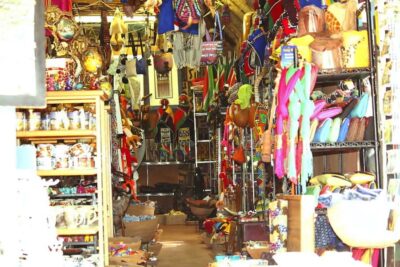

Browse the lists this tour appears in