
Reviewed · APARTHEID HISTORY TOURS
Full Day Soweto, Johannesburg and Apartheid Museum Guided Tour
Soweto and Johannesburg, stitched into one day. This guided route connects major apartheid-era sites with real street-level Soweto stops, and I like the punctual, safety-first vibe the guides are praised for. You get a comfortable ride, clear explanations, and time in the places that matter, not just quick photo stops, but the schedule is packed for a 7 to 8 hour day and lunch is not included.
I also like how the tour mixes big landmark stops with smaller, specific touches that make the city feel human. You’ll see Constitution Hill’s prison spaces and the Mandela House on guided time, then you’ll keep moving through Johannesburg’s neighborhoods, including an old gold rush relic preserved right under a bank building.
One possible drawback to plan for: some parts are brief and some are drive-bys, so if you want lots of free time to wander or linger, you may feel slightly rushed. Also, the experience depends on good weather, so build in a little flexibility if conditions are poor.
In This Review
- Key highlights you should care about
- How the day flows from Johannesburg viewpoints to Soweto real life
- Houghton Estate and the Mandela connection you can actually point to
- Munro Drive Viewpoint: WWII prisoners, Italian stonework, and big views
- Hillbrow drive-through: where migration and inequality show up fast
- Constitution Hill Human Rights Precinct: Old Fort, Women’s Jail, Number Four
- Johannesburg CBD, New Town, and the gold rush leftovers
- Standard Bank Ferreira Mine Stope: a forgotten entrance preserved
- Maboneng Precinct: where the inner city re-grows with art and shops
- Apartheid Museum: what you’ll feel, and how to pace the visit
- FNB Stadium and the Nelson Mandela Bridge feeling
- Soweto stops: Diepkloof Park, Baragwanath Hospital, and Orlando Towers
- Diepkloof Park and neighborhood class contrast
- Chris Hani Baragwanath Hospital drive-by
- Orlando Towers: cooling towers turned entertainment
- Vilakazi Street and Sakhumzi Restaurant: eating, Nobel Laureates, and local stories
- Mandela House: guided time in a former home turned heritage site
- Hector Pieterson Museum and Memorial: 1976 uprising through a focused, self-guided hour
- What’s the real value at $112.89 per person?
- Practical tips so the day feels good, not exhausting
- Should you book this guided Soweto, Johannesburg, and Apartheid Museum day?
- FAQ
- How long is the full day tour?
- Is hotel pickup and drop-off included?
- What admissions are included in the price?
- Is lunch included?
- Is this a private tour?
- Is the Hector Pieterson Museum guided?
- What about timing and the weather?
Key highlights you should care about
- Constitution Hill plus the Apartheid Museum: big, emotional sites with included entry time
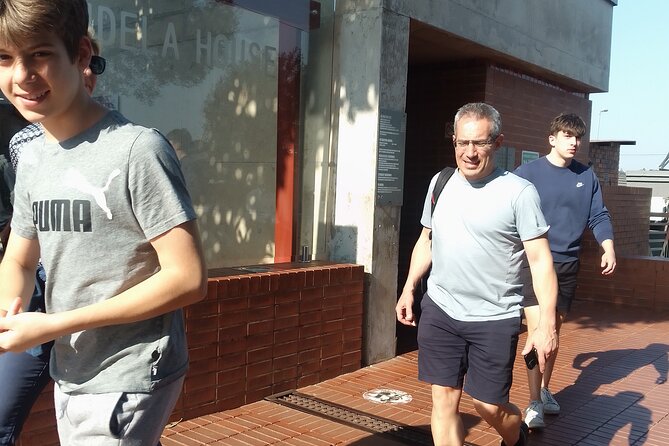
- Mandela House is guided: faster context so you know what you’re seeing
- Private tour with hotel pickup: you start from wherever you’re staying in Johannesburg or nearby Pretoria
- A practical mix of stops: viewpoints, downtown history, then Soweto streets like Vilakazi Street
- Small museum moments: the Ferreira mine entrance preserved inside the downtown area
- You’ll see Soweto leaders and stories in place: Mandela and Desmond Tutu tied to Vilakazi Street
How the day flows from Johannesburg viewpoints to Soweto real life
This is a full-day loop that starts with an orientation, then keeps widening your angle: affluent Johannesburg, highveld viewpoints, downtown gold rush leftovers, and finally Soweto. I like the rhythm because it gives you contrast. You’re not just reading about apartheid, you’re seeing how space, wealth, and power shaped everyday life.
The tour runs about 7 to 8 hours, and it’s set up as a private activity, meaning your group stays together. You also get bottled water and an air-conditioned vehicle, which matters in South Africa’s heat and in long museum time.
Expect a few “look and learn” stops where you might only be out briefly, and other stops where you get real time inside. The core emotional anchors are Constitution Hill and the Apartheid Museum, with guided access at Mandela House.
More Museum Tours in Pretoria
- Johannesburg Full-Day Tour(Soweto/Jo-Burg & Apartheid Museum)
★ 5.0 · 110 reviews - Soweto and Apartheid Museum Guided Tour
★ 5.0 · 38 reviews - Soweto & Apartheid Museum Tour
★ 5.0 · 20 reviews
Houghton Estate and the Mandela connection you can actually point to
You begin by heading to Houghton Estate, one of Johannesburg’s most affluent neighborhoods. The tour highlights Mandela’s connection to the area, including the house where Nelson Mandela lived during his presidency and where he died in December 2013.
What I like here is that it sets up a useful mental map early. It’s easy to think of apartheid as only prisons and laws. Stops like this remind you it also reshaped geography, who lived where, and who had access to political power.
In practical terms, this part is mostly about context and orientation. It’s a good warm-up before you hit the heavier sites later in the day.
Munro Drive Viewpoint: WWII prisoners, Italian stonework, and big views
Next up is the Munro Drive Viewpoint, built as a national monument by Italian prisoners of war captured during World War II. From here you get a scenic look over Johannesburg’s northern suburbs, including views connected to the world’s largest man-made subtropical forest.
This stop works well because it gives you a break from museum walls while still staying tied to history. It’s not just a pretty overlook. The viewpoint’s origin story is the kind of detail that makes a city feel layered.
The stop is short, about 10 minutes, and admission there is free. It’s the sort of quick stop you’ll appreciate more if the day gets emotional later.
Hillbrow drive-through: where migration and inequality show up fast
You pass through Hillbrow, described as the area where the impacts of influx are visible. The guide frames Johannesburg like a “New York of Africa” moment, a city that drew people from across the continent and within South Africa.
I find this kind of drive-by stop valuable because it helps you interpret what you’re seeing later. When you reach Soweto, you’ll better understand why these communities developed where they did, and why apartheid-era segregation still echoes in daily life.
This is not a long walk or a deep stop, so treat it as orientation. The point is to understand the city’s contrasts as you travel through them.
More Township Tours in Pretoria
- Soweto Half Day Tour
★ 5.0 · 231 reviews - Johannesburg and Soweto tour
★ 5.0 · 231 reviews - Soweto walking tour with a taxi ride
★ 4.5 · 42 reviews - Soweto, Kliptown, Eldorado Park Tour
★ 5.0 · 41 reviews
Constitution Hill Human Rights Precinct: Old Fort, Women’s Jail, Number Four
Constitution Hill is one of the biggest reasons to book this day. It’s presented as a living museum that follows South Africa’s journey to democracy, built around the fact that it was once a prison and military fort.
You spend about 1 hour here with entry included. The tour connects the site to major political figures once incarcerated there, including Nelson Mandela, Mahatma Gandhi, and Winnie Madikizela-Mandela (plus other political leaders). The highlights mentioned include spaces like the Old Fort, Women’s Jail, and Number Four.
What I like about this stop is how it’s structured for meaning. You’re not just looking at a building. You’re getting a guided story of incarceration and resistance in one place, with exhibitions and tours that keep the history grounded.
If you’re sensitive to heavy subject matter, plan your pace. Constitution Hill can hit hard, but it also gives you a line to the democratic changes that followed, which is a crucial emotional balance before you continue to Soweto.
Johannesburg CBD, New Town, and the gold rush leftovers
After Constitution Hill, you head through central Johannesburg for orientation. The tour describes the Johannesburg CBD as the epicenter of the gold rush era in the late 1800s, built on the highveld grassland setting, and also framed as a city marked by exclusion and segregation.
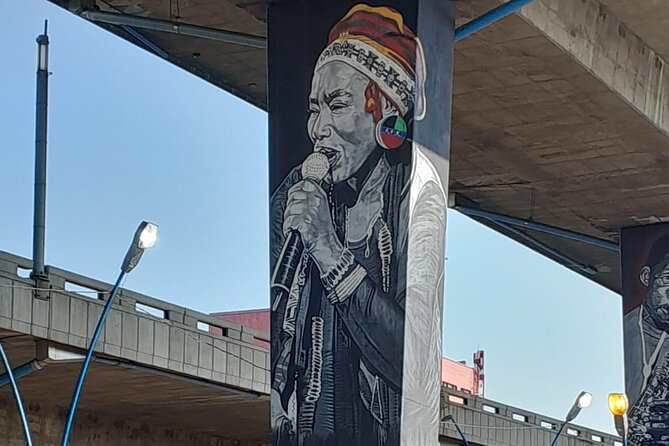
You drive over the Nelson Mandela Bridge on the way toward New Town, and your guide points out historic sites and heritage buildings. This is one of those moments where the city feels like it’s rewriting itself, in architecture and in names, while still holding older scars in the street layout.
The tour then includes time for exploring early mining history through a stop that includes relics like mining headgear and stamp mills plus information boards. This is not a full mining museum, but it’s a very workable introduction to how the gold rush shaped Johannesburg’s growth and inequality.
Standard Bank Ferreira Mine Stope: a forgotten entrance preserved
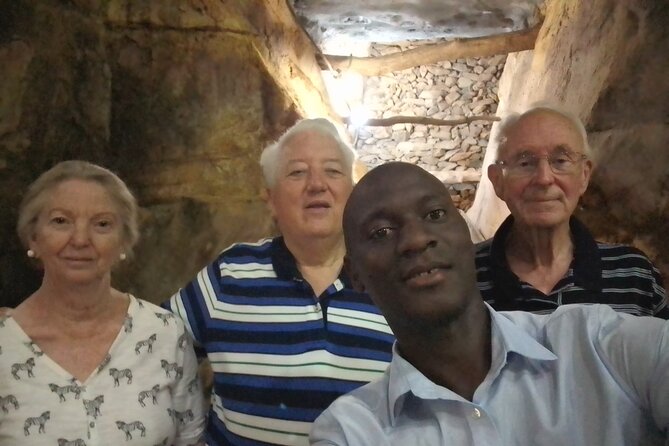
One of the coolest practical stops is the Standard Bank Ferreira Mine Stope. It’s located in the basement of the Standard Bank headquarters in downtown Johannesburg. The tour explains that a long-forgotten mine entrance was discovered during construction of the bank building, and the entrance was preserved as a small museum.
You get about 20 minutes, and admission here is free.
I like this stop because it’s surprising in the best way. It’s a reminder that Johannesburg history is not only “out there” in monuments. It can be under your feet, inside working buildings, in ways that still link to the gold mining system that fueled the city.
Maboneng Precinct: where the inner city re-grows with art and shops
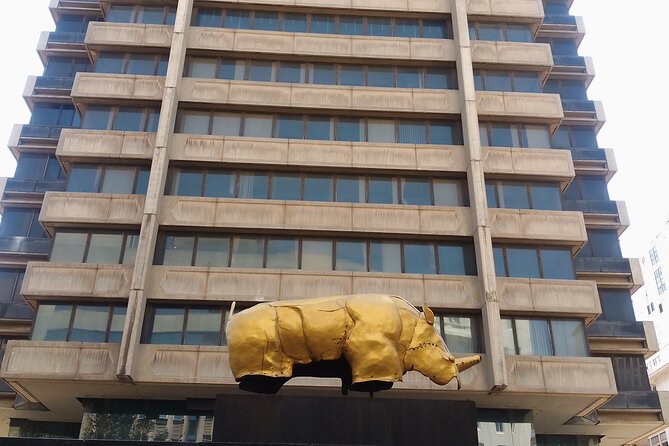
Next is Maboneng Precinct, described as a rejuvenated area that had once been abandoned. The precinct is a mix of restaurants, coffee shops, clothing boutiques, art galleries, and studio spaces, bringing people back into the inner city.
The stop is about 30 minutes, and admission is free.
I’m careful with this kind of stop because it’s easy to turn it into a “cool neighborhood” detour. But on this itinerary, it makes sense. After you see apartheid’s institutional machinery and Johannesburg’s mining roots, Maboneng becomes a way to ask: what came after? You don’t get a full political lecture here, but you see how the city repopulated itself through culture and commerce.
Apartheid Museum: what you’ll feel, and how to pace the visit
Now for the emotional centerpiece: the Apartheid Museum. The tour describes it as internationally recognized among the best museums of the 20th century, and it focuses on the rise and fall of South Africa’s system of segregation and oppression.
You spend about 2 hours 30 minutes inside, and entry is included.
Here’s the practical guidance embedded in the way the stop is described: this museum can be depressing and inspiring at the same time. It can be emotional, and it’s a lot to take in. The tour encourages you to allow time after you walk out to process what you witnessed, including that you might spend another half hour with your thoughts before moving on.
That’s good advice even if you think you’re tough. You’ll get more from the visit if you don’t rush the mental cleanup.
FNB Stadium and the Nelson Mandela Bridge feeling
You drive past the FNB Stadium, described as the largest football stadium in Africa and a key venue for the 2010 FIFA World Cup opening ceremony, matches, and final. The stop is brief, about 20 minutes, and admission is free.
It sounds like a lighter moment, but I like it as a breather that still keeps the political undercurrent in your mind. Big public events and national identity are part of post-apartheid change too, even if this is primarily a visual stop.
Soweto stops: Diepkloof Park, Baragwanath Hospital, and Orlando Towers
Once the tour reaches Soweto, the itinerary focuses on neighborhoods and real institutions, not just memorials.
Diepkloof Park and neighborhood class contrast
You get about 20 minutes in Diepkloof Park, described as divided into sections. Diepkloof Extension is framed as upmarket within Soweto, with professionals and formal owner-built houses. The description also notes higher house prices compared with other Soweto suburbs.
This is a key reminder that apartheid didn’t just create “one Soweto.” It created a patchwork of access, status, and community development that continued after apartheid.
Chris Hani Baragwanath Hospital drive-by
You also pass the Chris Hani Baragwanath Hospital, described as the third largest hospital in the world, covering about 173 acres with around 3200 beds and about 6,760 staff members. You only see it from the road as the guide explains stories tied to the hospital.
This stop is about scale. It gives you a sense of how public services operate in Soweto today. Since it’s a drive-by, it won’t replace a hospital visit, but it adds a real-world anchor to the day.
Orlando Towers: cooling towers turned entertainment
You then stop by Orlando Towers, the two cooling towers turned into an entertainment center with a bungee jump and a barbecue restaurant. You get about 20 minutes, and admission is not included.
If you’re not planning to buy a ticket for the activities, you can still enjoy the sight for its “industrial past, new uses” message. Just remember it’s more of a look-and-move stop than a long activity.
Vilakazi Street and Sakhumzi Restaurant: eating, Nobel Laureates, and local stories
The itinerary centers one of the best-known Soweto areas, Vilakazi Street. It’s specifically highlighted as the only street claimed to have had two Nobel Laureates living there: Nelson Mandela and Archbishop Emeritus Desmond Tutu.
This is paired with a stop at Sakhumzi Restaurant, on Vilakazi Street near the Mandela House Museum. The tour describes the restaurant as popular for a Soweto-style buffet featuring traditional dishes such as umngqusho (samp and beans) and mogodu (tripe), plus other options.
The time here is about 40 minutes, and admission for this stop is listed as free. But remember: your tour cost does not include lunch, and coffee or tea is also not included.
Practical advice: if you want to eat here, budget time and money. It’s often the easiest place on the route to handle a meal without losing the flow of the itinerary.
Mandela House: guided time in a former home turned heritage site
Next is the Mandela House. This stop includes a guided tour and admission, about 20 minutes.
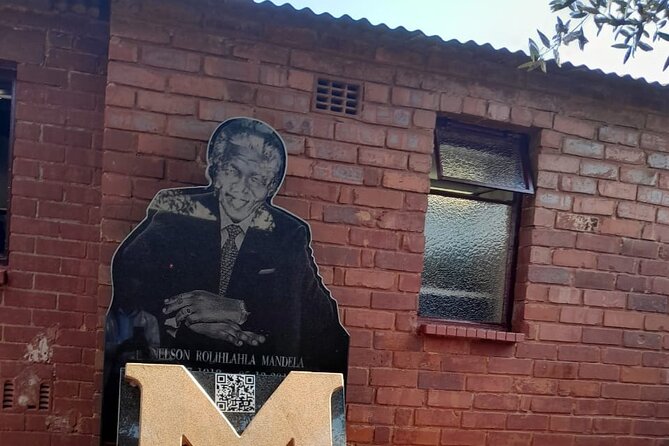
The description notes exhibits and artifacts in Mandela’s previous home, presented through guided tours, sound, film, and interpretive panels. It’s framed as one of South Africa’s most significant heritage sites, designed to tell stories connected to Mandela’s life.
I like that this is guided, because with a 20-minute time window, you need context fast. Even if you’ve read about Mandela before, a local explanation helps you connect the objects to the timeline.
Hector Pieterson Museum and Memorial: 1976 uprising through a focused, self-guided hour
The last major Soweto historical stop is the Hector Pieterson Museum and Memorial. This one is self guided, with about 40 minutes, and admission is not included.
The museum is described as chronicling the 1976 Soweto student uprising and named after a victim, a 13-year-old boy. It’s framed as a symbol of resistance against brutality under the apartheid regime.
Because you’re on your own here, you’ll get the most if you treat the time like a careful walk, not a sprint. Read signage, pause where things are upsetting, and consider taking a breath before you move to the next exhibit.
What’s the real value at $112.89 per person?
At $112.89 per person, you’re paying for a tight, organized day that includes transportation and key admissions. What you get for the money is not just driving around town.
The tour includes:
- Hotel pickup and drop-off in Johannesburg and Pretoria surroundings
- Private transportation in an air-conditioned vehicle
- Bottled water
- Entry included for Constitution Hill and Mandela House
- Entry included for the Apartheid Museum
You also get a structured set of stops where many other attractions have free admission (like Munro Drive Viewpoint, Ferreira Mine Stope, and Maboneng Precinct). That mix can save you time hunting down tickets and can reduce the stress of building a day plan yourself.
The biggest “value trade-off” is that the itinerary is time-managed. You have limited flexibility inside each stop. If you’re the type who loves long museum hours, you might feel the pressure of the schedule.
Practical tips so the day feels good, not exhausting
This is a day with heavy themes and a lot of movement, so plan your body and your expectations.
- Wear comfortable walking shoes. Even brief museum or memorial areas add up.
- Bring or buy your meal plan early. Lunch and hot drinks are not included, and one of your meal chances is around Vilakazi Street.
- Use the water included for small sips. It helps you stay present during the emotionally intense museum time.
- Keep an eye on the weather. The tour notes that it requires good weather, and poor conditions can cause a change of plans.
If you like your history with context and your city with practical orientation, this itinerary suits that style. If you prefer a slower pace with long independent exploration, you’ll need to be okay with shorter stops.
Should you book this guided Soweto, Johannesburg, and Apartheid Museum day?
I think this is a smart choice if you want a guided, structured day that links Johannesburg’s political history to Soweto’s living streets. The included time at Constitution Hill, the Apartheid Museum, and the guided Mandela House means you’re not piecing together the most important stops on your own.
I’d book it if:
- You have limited time in the region and want efficient coverage
- You care about understanding apartheid through specific places, not just general facts
- You like having a driver and guide manage routing, entrances, and pacing
I might skip or adjust expectations if:
- You want a long, slow museum day with lots of free roaming time
- You’re sensitive to intense historical content and need more rest breaks
- You’re traveling with a strict budget that cannot handle on-site food costs
If you do book, take advantage of the guide. Names like Nhlanhla (Lucky) come up for a reason, praised for being punctual, organized, informative, and for keeping the day running safely. In a packed itinerary like this, that kind of guidance can make a real difference.
FAQ
How long is the full day tour?
It runs about 7 to 8 hours.
Is hotel pickup and drop-off included?
Yes. You can get pickup and drop-off at hotels in Johannesburg and Pretoria surroundings.
What admissions are included in the price?
Entry is included for Constitution Hill, Mandela House, and the Apartheid Museum. Some other viewpoints and stops list free admission.
Is lunch included?
No. Lunch is not included, and coffee and/or tea are also not included.
Is this a private tour?
Yes, it’s private, and only your group participates.
Is the Hector Pieterson Museum guided?
No. Hector Pieterson Museum and Memorial is self guided, and admission is not included.
What about timing and the weather?
The tour notes it requires good weather, and if it cannot run due to poor conditions, you’ll be offered a different date or a full refund.
More Museum Visits in Pretoria
- Johannesburg,Soweto & Apartheid museum tour
★ 5.0 · 10 reviews - Johannesburg & Apartheid Museum Tour
★ 5.0 · 9 reviews - Half Day Soweto and Apartheid Museum Guided Tour
★ 4.5 · 9 reviews - Full Day Johannesburg , Apartheid Museum and Soweto Tour – 8hrs
★ 4.5 · 7 reviews
More Apartheid History Tours in Pretoria
- Apartheid History of South Africa (Full day Experience with lunch
★ 4.5 · 24 reviews - Soweto & Apartheid Museum Guided Tour
★ 5.0 · 18 reviews - Soweto, Apartheid Museum & Constitution Hill Day Tour
★ 5.0 · 12 reviews - Soweto and Apartheid Museum
★ 4.5 · 11 reviews
Newest around Pretoria
- Half Day E-Biking with Wildlife Watching in Pretoria★ 5.0 · 23 reviews
- Aha Lesedi Cultural Village tour★ 5.0 · 4 reviews
- Soweto, Kliptown, Eldorado Park Tour★ 5.0 · 41 reviews
- Traditional Tribal Village Tour★ 5.0 · 6 reviews
- Johannesburg,Soweto & Apartheid museum tour★ 5.0 · 10 reviews
- Daily Pilanesberg National Park Private Shuttle Services★ 5.0 · 10 reviews
- Apartheid museum, Soweto and Joburg highlights tour★ 5.0 · 6 reviews
- Full Day Johannesburg , Apartheid Museum and Soweto Tour – 8hrs★ 4.5 · 7 reviews
Apartheid History Tours, compared.

Soweto /Johannesburg and Apartheid Museum Guided Full Day Tour
Read our review →
Jo’berg in 1 Day: Soweto, Apartheid Museum & City Tour
Read our review →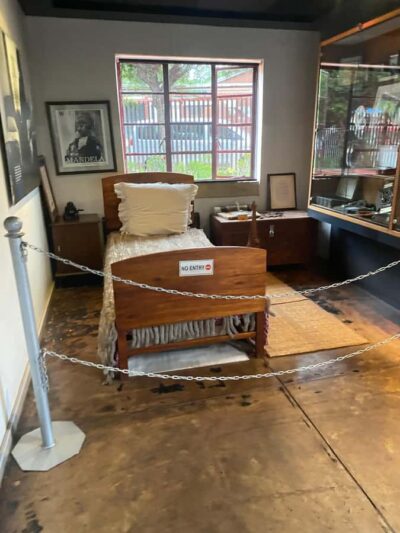
Full-Day Tour with Soweto and Apartheid Museum
Read our review →
Full-Day Soweto, Apartheid Museum and Lunch Tour
Read our review →
Half Guided Day Tour of Soweto And Apartheid Museum
Read our review →
Ultimate Johannesburg Soweto Experience with Apartheid Museum
Read our review →
Hop-On Hop-Off Bus, City Tour and Apartheid Museum
Read our review →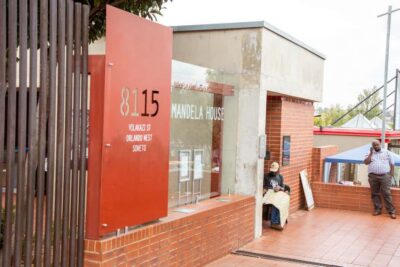
Johannesburg and Soweto Apartheid Full Day Tour w/Lunch
Read our review →Browse the lists this tour appears in