
Reviewed · SOWETO & TOWNSHIP TOURS
Soweto Walking Tour with Lunch
Soweto hits hard, then feeds you. This half-day walking tour in Johannesburg turns big history into real street-level moments, led by a local guide born and raised in the township, often people like Maweza (and sometimes Mulalo Mphuma). I love how personal and clear the explanations feel, and I love the kota sandwich lunch at Orlando Towers that gives you a tasty reset during all that heavy context. One consideration: Mandela House is a stop where entry is not included, so you may want extra cash if you want to go inside.
You’ll spend about 4 hours moving at a steady walking pace, with a choice of morning or afternoon departures. The group can be as large as 100 people, but the route is short enough that the guide can still keep the story focused street by street. Tours run near public transportation, and you’ll have a mobile ticket to keep things simple.
This is the right kind of activity if you want to understand Soweto beyond photos, with a guide who connects 1976 to today. It also suits you if you prefer guided walking over long museum marathons, and if you’re happy with lunch included but no pickup or drop-off.
In This Review
- Key reasons this Soweto walking tour works
- Entering Soweto Through the 1976 student uprising
- Hector Pieterson Museum and Memorial: where the story gets specific
- Moema Street: hearing 1976 through living conditions and aftermath
- Vilakazi Street: two Nobel winners in one neighborhood
- Mandela House stop: iconic, but plan for entry costs
- Tutu House and the role of religion in anti-apartheid resistance
- Baragwanath Road and the first formal houses of Soweto
- Orlando Towers: where you slow down for photos and a kota lunch
- Pace, group size, and what it feels like on the ground
- Price and value: what $40.26 gets you in real terms
- Who should book this Soweto walk, and who might skip it
- FAQ
- FAQ
- Is lunch included on the Soweto Walking Tour with Lunch?
- How long does the tour last?
- Are entry fees included for all stops?
- Where does the tour end?
- How do I get to the start area?
- What is the cancellation window?
- Should you book this Soweto walking tour with lunch?
Key reasons this Soweto walking tour works

- A guide who grew up there, sharing firsthand context and personal perspective
- Stop-by-stop history tied to specific locations, not generic facts
- Mandela and Tutu connection on Vilakazi Street, plus visits around their homes
- Kota lunch at Orlando Towers, a classic South African handheld meal
- Mostly free entry stops, with one major exception at Mandela House
- A route built for walking, so you see how the neighborhood actually moves
Entering Soweto Through the 1976 student uprising

Soweto is often mentioned as a symbol. This tour is better than that. It’s a way to understand how the freedom struggle worked on the ground, especially through the Soweto Uprising and the students of 1976. Instead of treating apartheid as something distant, you get the street names, the places where events played out, and the human fallout that followed.
What I like most is that the guide sets you up with the basic storyline early, then uses each stop to add layers. When you learn the context at the start, later moments make more sense. You’ll also hear about how people lived, not just what happened in the headlines.
This is also where you’ll feel the tour’s respectful tone. Soweto is not a theme park, and the route is handled with care. You’re walking through a living community, so expect a bit of seriousness, but not a dull or stiff museum vibe.
More Township Tours in Johannesburg
- Johannesburg: Hop-On Hop-Off Bus with Optional Soweto Tour
★ 4.6 · 985 reviews - Soweto /Johannesburg and Apartheid Museum Guided Full Day Tour
★ 5.0 · 932 reviews - Johannesburg Hop-On Hop-Off City Tour with Soweto Option
★ 4.5 · 768 reviews
Hector Pieterson Museum and Memorial: where the story gets specific
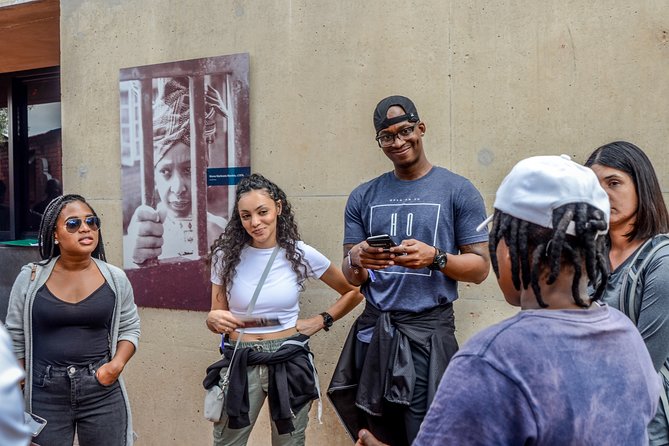
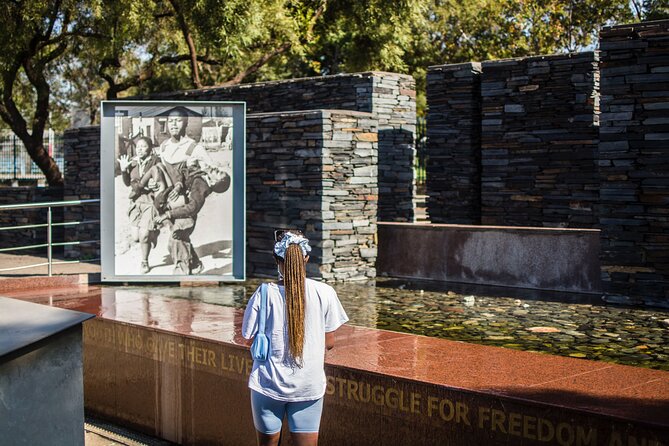
Your walk typically starts at the Hector Pieterson Museum and Memorial. Before you even move far, the guide usually explains the Soweto Uprising as one of the major downfalls of apartheid, organized by students from Soweto. That matters because Hector Pieterson is not just a name. It’s a shorthand for the way young people were at the center of the conflict.
You’re there for about 30 minutes. Since this stop is free, the time is spent on learning and absorbing, not ticket lines. You’ll also want to pay attention to how the guide connects the memorial to the broader events. The best part is usually not the wall text, it’s the way the guide puts the tragedy into a clear, human timeline.
A practical tip: bring your questions. This first stop is the easiest time to ask things like what sparked the uprising, how it spread, and why it became such a turning point.
Moema Street: hearing 1976 through living conditions and aftermath
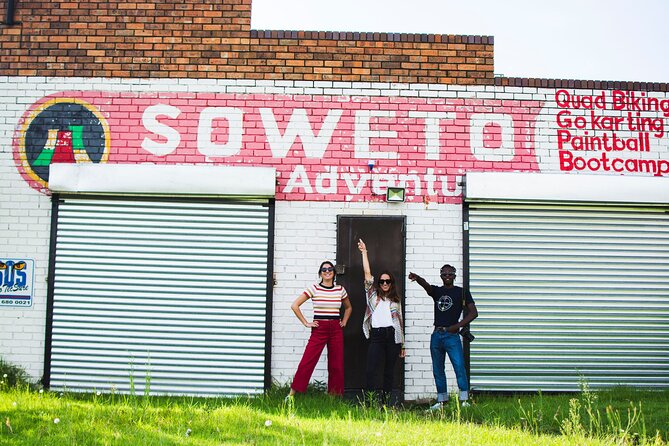
Next comes Moema Street, usually around 20 minutes. Here the guide focuses on the footsteps of the youth of 1976, including details about the shooting and what came after. The stop is short, but the goal is powerful. You’re not just viewing a site. You’re being taught how to read the neighborhood with history in mind.
This is where you’ll likely notice how the tour handles sensitivity. Some tours rush through tough topics. This one tends to slow your thinking down. You’re asked, quietly, to consider what it meant to grow up in the conditions of the time and what the uprising changed, and what it did not change.
If you’re the kind of person who likes cause and effect, you’ll probably enjoy this portion a lot. The guide’s explanation links the events to daily life, then to longer-term consequences that still echo.
Vilakazi Street: two Nobel winners in one neighborhood
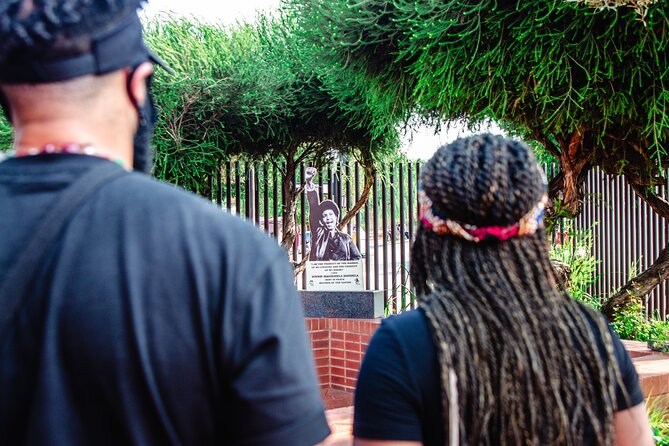
After that, you move to Vilakazi Street, about 10 minutes. This is one of the most famous streets in Johannesburg because it’s where Nelson Mandela and Desmond Tutu both lived. The tour frames it in a practical way: these were not distant figures. They were residents in the same neighborhood, in everyday spaces.
Even with only a short time here, it helps to have a local guide. You’re walking through a place with real identity, not just a photo backdrop. The story stays centered on why the people mattered, and how their lives connected to the fight against apartheid.
If you’re curious about moral leadership, this is the segment that makes it click. Mandela and Tutu are often described in broad terms, but here the guide makes their presence feel local and grounded.
More Walking Tours in Johannesburg
- Soweto: Walking Tour with a Local Guide and Lunch
★ 4.9 · 648 reviews - Johannesburg: Local Food Tasting Guided Walking Tour
★ 4.7 · 192 reviews - Johannesburg: City Centre Walking Tour
★ 4.8 · 152 reviews - Johannesburg City Centre Walking Tour
★ 5.0 · 80 reviews
Mandela House stop: iconic, but plan for entry costs
Then you reach Mandela House for around 20 minutes. This is the iconic Nelson Mandela and Winnie Mandela home, and you’ll learn how they spent their life in the house after apartheid.
Here’s the consideration you should plan for: admission at this stop is not included. The tour covers time with the site in its route, but you may need to pay separately if you want entry. If you’re coming to Johannesburg with a must-see list, factor this into your budget early, so you do not feel stuck at the gate.
What works well during this stop is the contrast. Before Mandela House, you’ve been walking through the story of resistance and youth activism. At the house, the narrative shifts toward legacy and the personal side of political life.
If you want the most value from this part, ask your guide how the house fits into the larger story. A good guide turns the visit from sightseeing into understanding.
Tutu House and the role of religion in anti-apartheid resistance
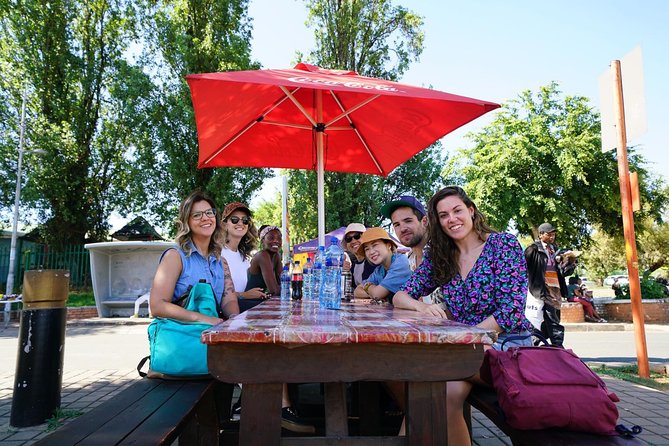
Next is Tutu House, around 10 minutes. This stop is tied to Archbishop Desmond Tutu, a Nobel Peace Prize winner who criticized apartheid through religion. The tour keeps it focused and quick, but the point lands: faith was not a side story. It was a channel for moral pressure and public resistance.
You’ll likely get short explanations about what Tutu stood for and how his voice mattered during the struggle. It’s not long, but it rounds out the tour. Mandela represents political leadership. Tutu represents moral leadership. Together they show how the anti-apartheid effort used many kinds of influence.
If you’re worried this portion will feel repetitive after Mandela House, don’t. The tone shifts. You get different angles on the same fight.
Baragwanath Road and the first formal houses of Soweto
Baragwanath Road is about 30 minutes and is tied to the first formal houses that formed the township of Soweto. This is a helpful stop because it pulls you out of only rebellion and memorials.
History is not only protest. It is also housing, institutions, daily routine, and the shape of community life. This stop helps you see the township as a place that evolved, not only a backdrop for one era.
If you like understanding how neighborhoods form, this is one of the more grounding parts of the tour. You’ll come away with a better sense of what people were building, and what kind of infrastructure existed at different times.
Orlando Towers: where you slow down for photos and a kota lunch
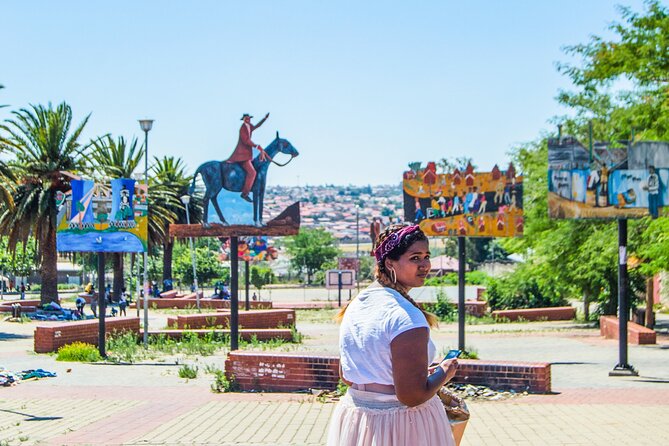
Your walk ends at Orlando Towers, for about 1 hour. This is where you get your final photos and your included lunch.
The lunch is a traditional South African kota, sometimes described as a local burger. It’s handheld, filling, and the perfect match for a half-day outing. You also get bottled water.
Two things make this ending work. First, it gives you a break from the intensity of the earlier stops. Second, it ties the experience back to normal life, not just historic monuments. After walking through heavy topics, you sit down, eat, and you get a chance to talk with your guide in a calmer setting.
A practical tip: bring a bit of cash if you want to buy snacks or small items from vendors around lunch time. The tour includes lunch, but it doesn’t promise extra time for shopping.
Pace, group size, and what it feels like on the ground
This is a walking tour with multiple stops spread across about four hours. In a place like Soweto, walking pace matters because you’re also watching, listening, and trying to absorb details.
The maximum group size can be up to 100 people. In practice, the experience still depends heavily on the guide and how the group is managed. The highly praised part here is that guides like Maweza keep things clear and paced well, with enough time at each stop to understand what you’re seeing. Many people also mention feeling safe and comfortable throughout the experience, which is a big deal when you’re in a neighborhood rather than a curated tourist zone.
What you should do to make it feel smooth:
- Wear comfortable walking shoes and plan for street-level strolling
- Keep your phone charged for photos, but also look up and watch the street life
- Come with curiosity and be ready for serious topics presented with care
Price and value: what $40.26 gets you in real terms
At $40.26 per person for roughly four hours, the price is not just about a tour guide. It’s also about what’s included and what’s excluded.
Included:
- Lunch: a kota sandwich
- Bottled water
- A guided walking route through key sites
Not included:
- Entry fees for certain stops, with Mandela House specifically noted as not included
- Pickup or drop-off (so you’ll need to make your own way to the start area)
Also worth noting: most of the stops along the way are free for entry, so your money goes toward the guide time and the lunch rather than paying multiple site tickets.
If you were to add the cost of a proper meal in Johannesburg plus local guide time, the $40.26 starts to look reasonable. And because you’re getting a coherent route with context, this is less like wandering on your own and more like being taught how to read the neighborhood.
One more value point: the tour is often booked around 15 days in advance. That’s a sign you should not wait until the last minute if your dates are fixed.
Who should book this Soweto walk, and who might skip it
Book this if you want:
- A local-led explanation of Soweto’s freedom struggle, especially the events of 1976
- A walking format that fits into a short Johannesburg visit
- Lunch included, plus water
- A respectful tour that focuses on people and place
Skip it or consider a different format if:
- You strongly prefer indoor museum time over street walking
- You hate having a separate cost at one major stop, like Mandela House
- You expect lots of free time for vendor shopping rather than guided learning
This is also a good choice for mixed ages, as long as everyone is comfortable walking for the full half-day. In the feedback, people appreciate guides being accommodating for elderly family members, which suggests the tour can be flexible when needed.
FAQ
FAQ
Is lunch included on the Soweto Walking Tour with Lunch?
Yes. You get a kota sandwich lunch and bottled water included at the Orlando Towers stop.
How long does the tour last?
The tour is approximately 4 hours.
Are entry fees included for all stops?
Not all of them. The Mandela House stop lists admission as not included, while other stops on the route are marked as free.
Where does the tour end?
It ends at Orlando Towers, which is the final destination for photos and your included traditional lunch.
How do I get to the start area?
The tour is near public transportation. Pickups and drop-offs are not included.
What is the cancellation window?
You can cancel for a full refund up to 24 hours before the experience starts. If you cancel within 24 hours, the amount paid is not refunded.
Should you book this Soweto walking tour with lunch?
I’d book it if you want the human side of Soweto’s history, not just quick sightseeing. The top reason is the guide angle, often a Soweto native like Maweza or Mulalo Mphuma in the guide rotation, plus the way the story is tied to specific streets. The second reason is the practical value: kota lunch plus water included, and you get a coherent half-day route that fits well into a Johannesburg itinerary.
Do one small planning move before you go: budget for Mandela House entry if you want to go inside. If you do that, this tour becomes an efficient, respectful way to understand why Soweto matters, and it ends with good food at the right time, not at the end of your energy.
Newest around Johannesburg
- Soweto Tuk-Tuk Food & Beer Tour★ 5.0 · 9 reviews
- Soweto Township Tour★ 4.4 · 4 reviews
- Soweto Tour; Mandela House; Vilakazi Street; Market Culture★ 5.0 · 6 reviews
- Private Soweto,Mandela House,Apartheid Museum,Constitution★ 4.6 · 15 reviews
- Soweto: Sip & Paint Walking Tour & Take Home a Canvas★ 4.8 · 7 reviews
- Soweto: Hector Pieterson Memorial, to Orlando Towers Tour★ 4.0 · 31 reviews
- Soweto & Johannesburg and Apartheid Museum★ 4.7 · 41 reviews
- Soweto and apartheid museum tour(Half-day)★ 5.0 · 4 reviews
Soweto & Township Tours, compared.


Soweto /Johannesburg and Apartheid Museum Guided Full Day Tour
Read our review →
Johannesburg Hop-On Hop-Off City Tour with Soweto Option
Read our review →


Jo’berg in 1 Day: Soweto, Apartheid Museum & City Tour
Read our review →Browse the lists this tour appears in