
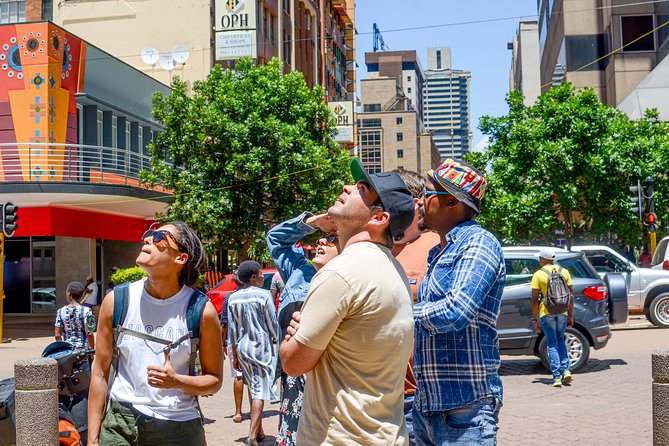
Reviewed · WALKING TOURS
Johannesburg: City Centre Walking Tour
Joburg’s CBD tells its story on foot. This guided walk links the city’s gold-mining beginnings to today’s politics and creative neighborhoods, with Gandhi Square as the launchpad and Mandela Bridge as a photo highlight. You also get a local guide who points out what to notice, not just what to see.
I love the way this tour makes Johannesburg’s architecture feel personal, from towering office blocks to court buildings you can’t help but stare at. I also like how the route threads Mandela-era landmarks into everyday CBD life, so the past does not sit in a museum case. One possible drawback: a key stop like the Workers Museum can be closed on some days, so it helps to have a flexible mindset and rely on your guide’s explanations.
In This Review
- Quick reasons to go
- Why walking Johannesburg’s CBD makes the story click
- Starting at Nando’s Gandhi Square, then sizing up the skyline at Carlton Centre
- High Court to Marshalltown Post Office, the CBD’s “how it works” corridor
- Ferreirasdorp and Chancellor House, where Mandela and Tambo’s legal beginning meets the streets
- Newtown, the Workers’ Museum, and Market Theatre’s cultural gravity
- Mandela Bridge: the best photo stop and the clearest view of “Johannesburg today”
- Braamfontein finish at Sha’p Braai, then decide how to spend the rest of your day
- Price and time: what your $40 actually buys you
- What to bring, and how to get the most out of the walk
- Should you book this Johannesburg CBD walking tour?
- FAQ
- Where do I meet the guide?
- How long is the tour?
- How much does it cost?
- What’s included in the ticket?
- Is lunch included?
- Is it suitable for wheelchair users or pregnant women?
Quick reasons to go

- Gandhi Square to Mandela Bridge keeps the walk focused and scenic at the end
- Mandela and Oliver Tambo’s law firm story connects major history to specific streets
- Workers Museum and migrant labour context adds real meaning to the CBD buildings
- Newtown and Market Theatre brings you into Johannesburg’s arts and street scene
- Braamfontein-style creative energy is a strong finish when you still have daylight (or appetite)
Why walking Johannesburg’s CBD makes the story click
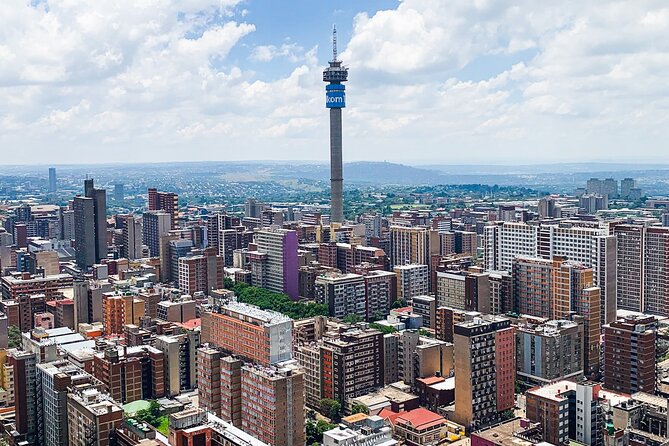
Johannesburg can feel overwhelming from a distance. On foot, the city’s layers become clear, block by block, with your guide turning big headlines into street-level details. You’ll see where people worked, where power showed up, and how communities evolved.
This is also one of the better ways to get your bearings fast. You start in the center and follow a route that keeps your attention on landmark corridors, not random side streets. That matters because Johannesburg’s CBD can be talked about in scary terms, and the tour’s approach helps you understand what’s going on in real time.
Most of all, you’re not just sightseeing. You’re learning how Johannesburg went from gold rush to political turning points to a city still figuring out its next chapter.
More City Tours in Johannesburg
- Johannesburg Hop-On Hop-Off City Tour with Soweto Option
★ 4.5 · 768 reviews - Jo’berg in 1 Day: Soweto, Apartheid Museum & City Tour
★ 4.8 · 524 reviews - Soweto: Hop-On Hop-Off Bus, City Tour and Apartheid Museum
★ 4.5 · 250 reviews
Starting at Nando’s Gandhi Square, then sizing up the skyline at Carlton Centre
You meet your guide outside Nando’s at Gandhi Square, near the Metropolitan Building area. It’s a practical start point, and it puts you right where the CBD energy begins.
The early stops are a smart warm-up. First comes the Carlton Centre area, where you get a guided look for about 20 minutes. If the higher observation options are not available on the day you go, your guide may offer a substitute way to enjoy skyline views, so you do not end up feeling cheated.
From there, you move into the courthouse zone. The High Court of South Africa, Gauteng Local Division gets a photo stop plus a guided visit around 20 minutes. Even if courts are not your usual travel interest, this is where you feel how Johannesburg is built around institutions.
High Court to Marshalltown Post Office, the CBD’s “how it works” corridor
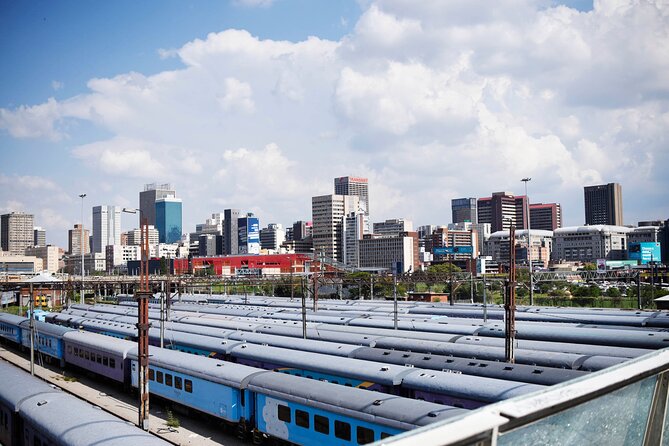
Next you head through the Marshalltown area, starting with a quick guided visit at the Marshalltown Post Office. It’s about 10 minutes, but it’s the kind of stop that shows you how the city’s infrastructure once tied the CBD together.
After that, you get photo and walk time through Marshalltown and Johannestown. This stretch is useful because your guide can explain what those neighborhood names mean in the Johannesburg story, instead of leaving you with a map full of mystery.
You also pass by key public spaces like Beyers Naude Square, with photo and sightseeing time. The group walks are timed so you’re not stuck for too long at any one point, but you still get a chance to step back, look around, and understand the scale of the streets.
Then there are the office and legal landmarks that people often ignore when they rush through the CBD. You’ll pause for photos at places like the Anglo American Corporate Office and the Johannesburg Central Magistrate’s Court, with guided commentary and short walks between them. This is where Johannesburg’s economic history shows up in architecture you can actually see.
Ferreirasdorp and Chancellor House, where Mandela and Tambo’s legal beginning meets the streets
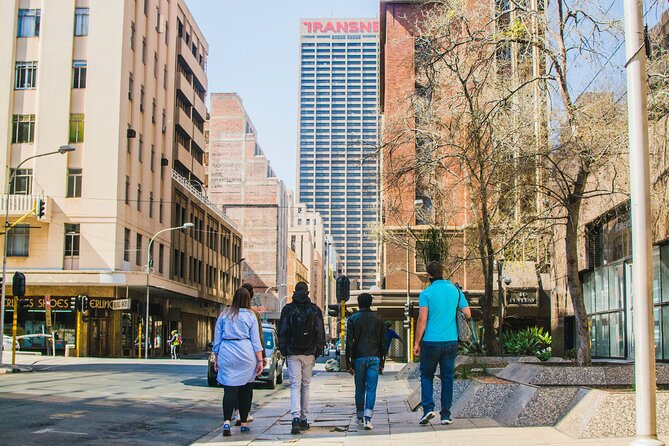
One of the strongest sections is the walk into Ferreirasdorp, often described as a kind of cradle for Johannesburg’s earliest gold digging era. You’re not just hearing about mining in general. You’re walking through the part of town tied to when the first diggings began and where early settlers gathered.
As you continue, you reach Chancellor House, associated with Nelson Mandela and Oliver Tambo setting up their first black-owned law firm. This is a powerful stop because it gives you a tangible location for a major shift in South African history. The guide’s job here is to connect legal work, politics, and identity, so you understand why this building matters beyond its walls.
If you like history that feels grounded in real streets, this is the portion you’ll talk about afterward. It’s not just names and dates. It’s the sense that Johannesburg’s transformation happened through specific places where people worked, argued, organized, and built institutions.
More Walking Tours in Johannesburg
- Soweto: Walking Tour with a Local Guide and Lunch
★ 4.9 · 648 reviews - Soweto Walking Tour with Lunch
★ 5.0 · 288 reviews - Johannesburg: Local Food Tasting Guided Walking Tour
★ 4.7 · 192 reviews - Johannesburg City Centre Walking Tour
★ 5.0 · 80 reviews
Newtown, the Workers’ Museum, and Market Theatre’s cultural gravity
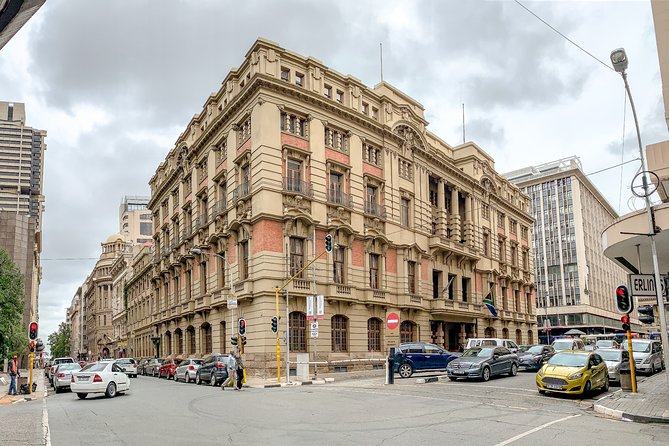
After the Mandela-era segment, the route moves into Newtown, one of Johannesburg’s creative neighborhoods. This is where the tour changes tone slightly, shifting from heavy political context into community life, arts spaces, and the stories that shaped working households.
A major stop here is the Workers’ Museum, with guided time planned for about 15 minutes. The focus is on Johannesburg’s migrant labour history, which adds weight to what you might otherwise treat as just another museum building. And if the museum happens to be closed when you arrive, you still get value. Your guide can explain the living and working conditions behind the exhibits, so the stop does not become a wasted photo moment.
This is also where you see why a guide matters. I’ve seen English-speaking guides on this tour who are the type to keep your questions going, not just run the script. People have mentioned guides like Refiloe, Thabo, and Mathapelo for the way they turn a short walk into a real understanding of how Johannesburg works.
From the Workers’ Museum, the tour continues toward Mary Fitzgerald Square and then to the Market Theatre. The Market Theatre gets a guided look and sightseeing time, plus a short pass-by as you transition. Even when you’re not attending a show, the building’s cultural reputation and surrounding street art energy make it feel like the arts scene is part of daily life, not something sealed off for tourists.
Mandela Bridge: the best photo stop and the clearest view of “Johannesburg today”
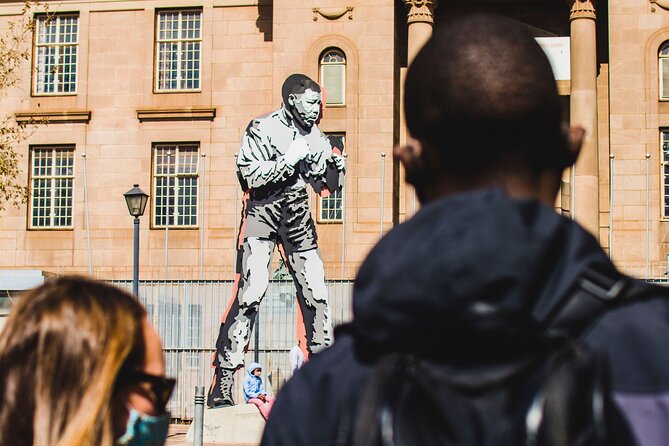
You eventually reach the Nelson Mandela Bridge, one of the most iconic photo points on the whole route. The tour builds in time for a photo stop plus short guided commentary, with scenic viewing on the way.
This is a practical place to slow down. The bridge gives you perspective on how Johannesburg connects different neighborhoods, which helps your brain line up earlier stops with what you see now. If you’re the kind of traveler who likes turning photos into memory anchors, you’ll appreciate that the guide times this part for maximum viewing value.
Also, don’t be shy about asking for photo help. Several guides associated with the tour are known for being relaxed and making sure you get good shots while keeping the group moving safely.
Braamfontein finish at Sha’p Braai, then decide how to spend the rest of your day
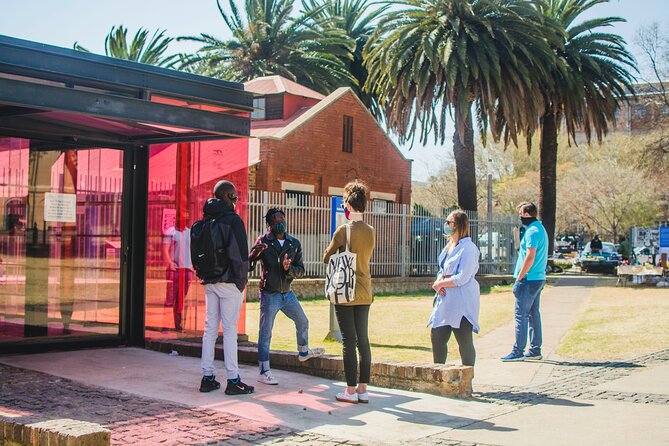
The walk ends in the Braamfontein area, described as a newer artistic hub with youthful energy. It’s a smart finish because it gives you a change of pace after the heavier history stops. You get a sense of Johannesburg’s creative pulse right where the CBD hands you off to a more modern street feel.
The tour concludes near Sha’p Braai – Shisanyama. Lunch is not included, but finishing by a braai spot is a convenient setup. If you’re hungry, it’s an easy transition to food without having to figure out transport from a faraway location.
Braamfontein is also a good place to linger if you still have energy. The tour’s route does not drag you into late-night areas, so you can keep your evening flexible and choose your next move based on how you feel.
Price and time: what your $40 actually buys you
At about $40 per person for roughly 3 hours, the price is mainly paying for two things: a guided route through high-interest CBD landmarks and entrance fees where needed. The tour also includes bottled water, which sounds small until you’re walking in heat and humidity and do not want to stop hunting for a bottle.
Time-wise, 3 hours is an honest length for a dense CBD route. It moves steadily from stop to stop, but it still leaves time for photo pauses and guided visits. In practice, you may end up closer to 4 hours if your guide has extra time and encourages questions, especially when the group is not large.
If you’re deciding between a simple city overview and something more grounded, this is closer to the second option. It’s not a museum-only experience. It’s a walk where you see the city’s architecture, politics, and everyday street life stitched together.
What to bring, and how to get the most out of the walk
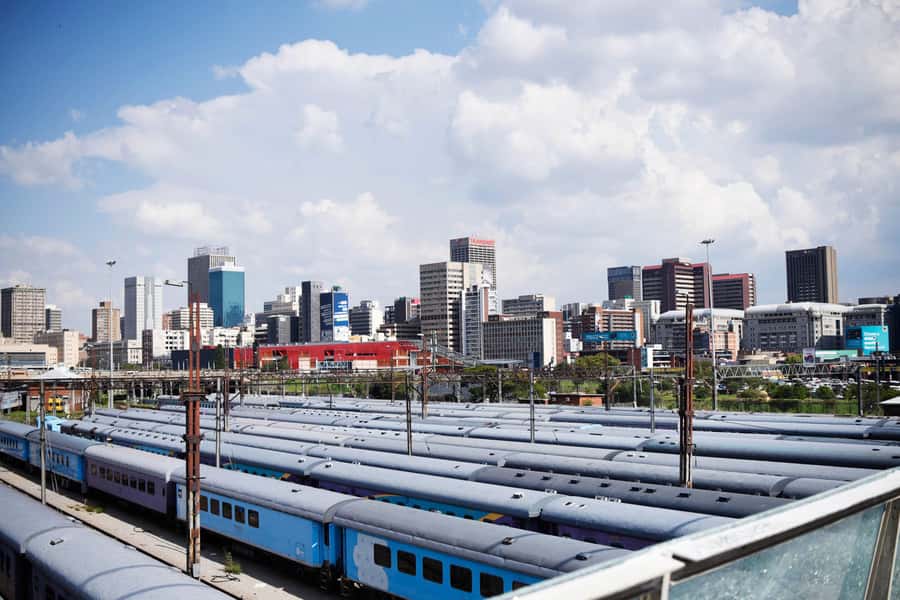
Plan for a walking-focused tour. The key advice is simple: wear comfy shoes and bring a sense of adventure. Since you’re doing multiple photo stops and guided segments, you’ll enjoy the experience more if you keep your hands free for taking photos and quick notes.
Bring a charged phone or camera for Mandela Bridge. Also, consider bringing a light layer, because you’ll be outside for a big chunk of the tour window. If you’re sensitive to walking in busy urban areas, lean into the fact that your guide will keep you oriented and on route.
Finally, go in with curiosity. Ask questions during the stops at courts, post office landmarks, and political sites. That’s where the tour tends to become more than a checklist.
Should you book this Johannesburg CBD walking tour?
Book it if you want Johannesburg that feels real, not sanitized. This tour is ideal when you care about architecture, want context for Mandela-era landmarks, and like learning how migrant labour and working history shaped the city.
I’d skip it if you’re looking for a low-effort “sit and watch” experience. This is a walking tour with active stops, and it also includes a mix of public buildings and museum time, so some days may feel less about galleries and more about explanations.
Also, if you’re traveling on a day when the Workers’ Museum is closed, don’t cancel your plans. The guide’s role is to keep the story moving even when that particular doorway is shut.
If you’re coming to Johannesburg for the first time and want one solid way to understand the CBD, this is one of the best bets for getting meaning out of the streets.
FAQ
Where do I meet the guide?
Meet your guide outside Nando’s at Gandhi Square, near the Metropolitan Building area.
How long is the tour?
The tour lasts about 3 hours.
How much does it cost?
It costs $40 per person.
What’s included in the ticket?
The price includes entrance fees, bottled water, and a live English-speaking guide, plus the walking tour itself.
Is lunch included?
No, lunch is not included.
Is it suitable for wheelchair users or pregnant women?
The activity notes it is not suitable for pregnant women and wheelchair users, even though wheelchair accessibility is also listed. If either applies to you, check with the provider before booking to make sure it will work.
Newest around Johannesburg
- Soweto Township Tour★ 4.4 · 4 reviews
- Soweto Tuk-Tuk Food & Beer Tour★ 5.0 · 9 reviews
- Soweto Tour; Mandela House; Vilakazi Street; Market Culture★ 5.0 · 6 reviews
- Private Soweto,Mandela House,Apartheid Museum,Constitution★ 4.6 · 15 reviews
- Soweto: Sip & Paint Walking Tour & Take Home a Canvas★ 4.8 · 7 reviews
- Soweto: Hector Pieterson Memorial, to Orlando Towers Tour★ 4.0 · 31 reviews
- Soweto & Johannesburg and Apartheid Museum★ 4.7 · 41 reviews
- Soweto and apartheid museum tour(Half-day)★ 5.0 · 4 reviews
Walking Tours, compared.

Browse the lists this tour appears in