
Reviewed · WALKING TOURS
Johannesburg’s Downtown Walking Tour with lunch
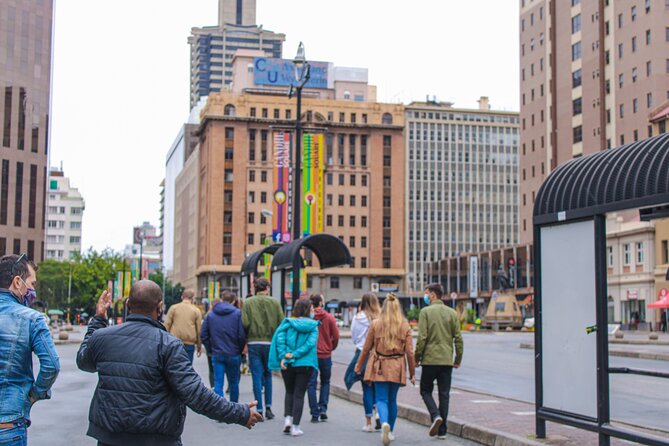
Joburg makes more sense on foot. This walking tour turns the map into a story, starting at Constitution Hill and working outward through Braamfontein and Newtown, with lunch to keep you going.
I like that the guide keeps the focus on how and why the city changed, not just what you’re supposed to photograph. I also love the practical pace for a 3 to 5 hour tour, plus bottled water and air-conditioned comfort included along the way.
The main thing to consider is that parts of central Johannesburg can feel tense if you’re not used to inner-city streets, but the whole approach is safety-first, with your guide staying close and setting expectations.
In This Review
- Key highlights worth your time
- Why this downtown walk feels different (and not touristy)
- Start at Constitution Hill in Braamfontein
- Braamfontein’s exodus story, and why it still matters
- Passing the rail lines and bridges near Johannesburg Park Station
- Newtown’s regeneration, and why art sits inside real streets
- Gandhi Square as a downtown reset point
- Lunch and pacing: why the “3 to 5 hours” range works
- Safety is the theme, not a side note
- Price and what you really get for $77.92
- Weather, comfort, and how to prep
- Who should book this Johannesburg downtown tour
- Should you book Honest Travel Experience’s downtown walk with lunch?
- FAQ
- How long does the Johannesburg downtown walking tour take?
- What’s included in the price?
- Do I need to bring my ticket?
- Is pickup available?
- Is this tour dependent on weather?
- Is there a cancellation window?
Key highlights worth your time
- Constitution Hill first, so you get the context behind Johannesburg right away
- Braamfontein’s big shift story, from historic business district to a newer local economy
- Nelson Mandela Bridge and the urban layout, explained with real-world detail
- Newtown’s creative core, including the area around the Market Theatre
- Guides who make you feel oriented, with easy communication and good question-handling
Why this downtown walk feels different (and not touristy)
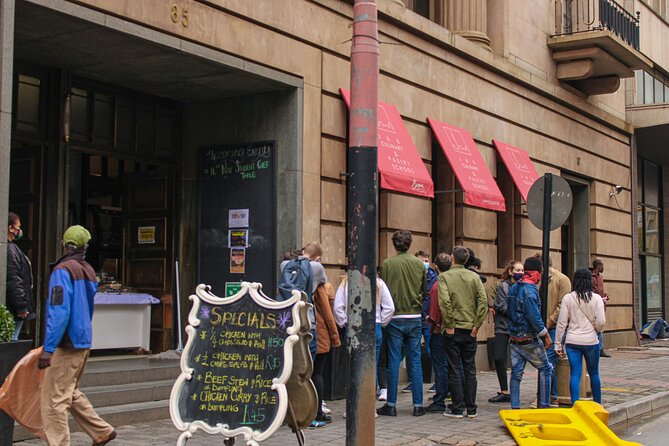
There are lots of ways to do a city, but walking is where Johannesburg starts to click. You see the spacing between places, how neighborhoods connect, and how movement flows through the CBD. And this tour leans into the big question everyone has when they land: what actually happened here?
Honest Travel Experience frames Johannesburg as more than danger headlines. You’re guided through the past, the present, and where the city is heading now. That matters, because if you only hear fear-based talk, you miss the real causes, the real people, and the real contrasts. Here, the route is built to challenge assumptions while still keeping your comfort in mind.
One more smart touch: the tour uses a mix of walking and an air-conditioned vehicle. For a half-day plan, that combo helps you stay fresh without turning it into a sit-and-stare drive-through.
More Walking Tours in Pretoria
- Pretoria: Cullinan Surface Diamond Mine Walking Tour
★ 4.5 · 58 reviews - Soweto walking tour with a taxi ride
★ 4.5 · 42 reviews - Elephant Walk Guided Half Day Tour from Johannesburg
★ 5.0 · 26 reviews
Start at Constitution Hill in Braamfontein
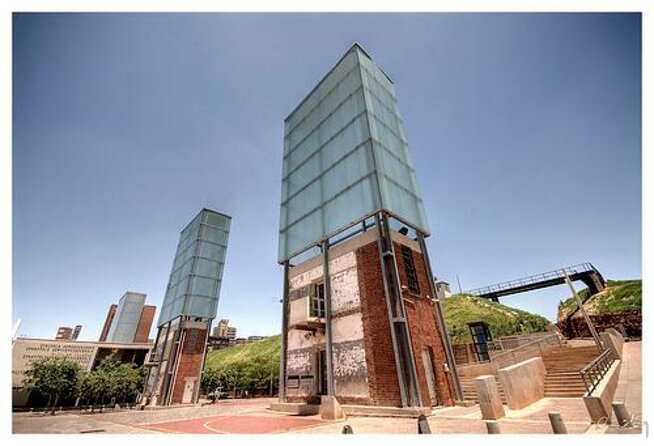
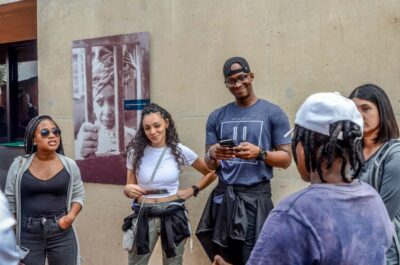
You begin at the Constitution Hill precinct at 11 Kotze Street, in Braamfontein, near the western edge of Hillbrow. This is the seat of South Africa’s Constitutional Court, and that alone gives the day a strong starting point. You’re not just learning facts. You’re standing in a place that carries political weight, then stepping into the surrounding city that grew up around those shifts.
Why I think this stop is so valuable: it sets a tone for the entire walk. When your guide explains what this place represents, the rest of Johannesburg stops feeling random. You can connect street corners and changing neighborhoods to the bigger story of law, rights, and power.
In the precinct, you may also see an African art museum setting with thousands of works that range from historic pieces to contemporary works. If you care about culture as a living force, this part helps you see how art records identity and change over time.
A practical note: this is a walking tour, but it starts with a point of reference. Even if you’re the type who usually hates “intro history,” the way this place anchors the day tends to make everything else easier to follow.
Braamfontein’s exodus story, and why it still matters
After Constitution Hill, the tour shifts to Braamfontein, a neighborhood right outside the Johannesburg CBD. The big idea here is change through geography and economics.
Braamfontein joined Johannesburg as far back as 1886, and it wasn’t always urban. It began as a farm, then grew into a business district when the CBD center of gravity was closer to it. Later, businesses and institutions moved toward places like Sandton and northern suburbs. As that center shifted, Braamfontein didn’t fully collapse or disappear. It adapted, and today it’s known more for a less formal economy.
This stop matters because it gives you a clear cause-and-effect map. Instead of treating neighborhoods like they’re frozen in time, you understand how decisions, roads, and corporate gravity can pull the center elsewhere. And you can start spotting those traces while you walk.
If you’re worried about discomfort on inner-city streets, this is also where your guide’s safety approach becomes real. Some parts of the area may feel unfamiliar, but being with a group and a local guide usually helps your brain settle. Several guides named in the experience feedback, like Nkosi and Sean, were described as making people feel at ease and able to ask questions without stress.
Passing the rail lines and bridges near Johannesburg Park Station
One of the most interesting, overlooked parts of downtown touring is infrastructure. Johannesburg is full of movement, and the railway lines and bridges shape what you can reach and how fast. During the walk, you’ll pass a bridge setting described as the fourth of five bridges that cross the railway lines and sidings just west of Johannesburg Park Station.
It also helps to understand the bigger context of the nearby Johan Rissik Bridge, which was completed in 2003 and cost R38 million. Even if you don’t love engineering trivia, these facts are useful because they show how much investment goes into connecting neighborhoods and creating gateways.
Why this works as a travel experience: it turns the city into something you can read. Instead of seeing “random” urban structures, you start realizing that bridges, stations, and road links are how the city organizes itself. That knowledge makes later stops like Newtown feel less like a different world and more like an outcome.
Same province, a very different day:
- Johannesburg and Soweto tour
★ 5.0 · 231 reviews - Soweto Half Day Tour
★ 5.0 · 231 reviews - Ultimate Johannesburg Tour
★ 5.0 · 200 reviews - Johannesburg: Pretoria and Cullinan Diamond Mine Tour
★ 4.7 · 165 reviews
Newtown’s regeneration, and why art sits inside real streets
From Braamfontein, the day continues toward Newtown, one of Johannesburg’s key inner-city reinvention areas. Newtown sits between railway lines to the north and the M2 highway to the south, with West Street and Quinn Street forming the east-west boundaries.
The walk connects you to Newtown through the Nelson Mandela Bridge, which links Braamfontein to Newtown. The bridge carries about 3,000 cars an hour, and it acts like a new gateway coming into the city from the north. That bridge detail is more than trivia. It explains why this area feels like a hinge point, with flows of people and traffic shaping how the neighborhood operates.
Newtown is often associated with the arts, and the Market Theatre is a major landmark in the area. The tour gives you a chance to understand why creative spaces matter here. It’s not “art for art’s sake.” Theatre, galleries, and cultural venues are part of how the city talks back to itself, how it keeps identity alive, and how it builds community meaning in the middle of economic shifts.
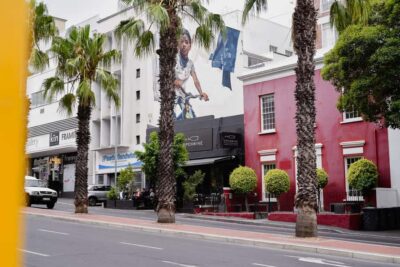
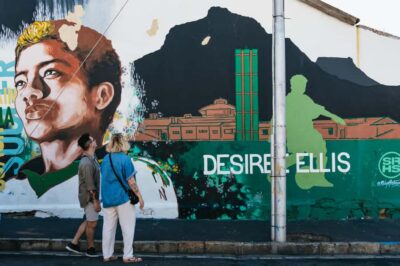
What I like about this section is that it’s not only about buildings. Your guide ties the creative energy to the surrounding streets. That makes you notice street art, building textures, and the small signs of everyday use, not just the main venue façade.
If you want a slightly more personal feel, the guide stories in the experience feedback can help. People who went with Sean, Romeo, and other local hosts described the day as eye opening and fun, with guides answering questions on everything from history to what life feels like today.
Gandhi Square as a downtown reset point
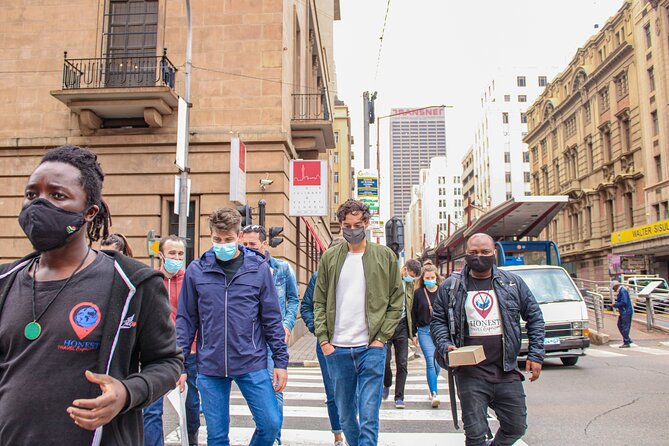
After the art and regeneration focus, the tour brings you to Gandhi Square in the Central Business District. It’s named after Mahatma Gandhi, which gives you another historical anchor that doesn’t require a lecture. The square works like a reset in the route, a place to pause and connect what you’ve seen so far.
Why this stop is useful: squares are how cities organize public life. You can look around and read the layout. You can also regroup mentally before the final stretch, especially if you’re walking in warm or changeable weather.
You’ll likely get context from your guide on why the square exists here and what it signals in terms of public identity. It’s one of those stops that can feel small on a map, but when you’re walking and learning, it becomes part of the larger logic of the day.
Lunch and pacing: why the “3 to 5 hours” range works
The tour includes lunch plus bottled water, and that’s not just a perk. It changes how you experience the city. Without food, walking tours can turn into energy-management exercises. With lunch planned into the timeline, you can focus on the story and the streets instead of timing your last snack.
The pace is set up for most travelers to participate, and the size cap is up to 30 people. That matters, because larger groups can make questions hard and can pull the day into a slow shuffle. Here, you still get the benefits of group safety while keeping the flow of a guided walk.
On hot days, the included air-conditioned vehicle is also a comfort lever. You can expect at least some time on wheels during the tour, so you’re not stuck overheating the whole time.
A practical suggestion: wear shoes you trust for city walking. The tour is about downtown movement, so your feet will do most of the work. Bring a light layer too, since weather can change quickly, and the tour requires good weather.
Safety is the theme, not a side note
The tour provider explicitly makes safety the number one priority, especially because Johannesburg gets a reputation that can scare people before they even understand it. The whole route is designed to address the danger narrative with real context and careful guidance.
What to take from that: you don’t need to treat central Johannesburg like a fantasy set. You should treat it like a real city. Stay with your group, follow the guide, and keep your focus on the walking route.
Some parts of the day may still make you feel uneasy. That doesn’t mean the tour is wrong, it means you’re learning to read a city you haven’t seen before. In feedback, guests described feeling secure specifically because the guide was right there, communicating clearly and setting a steady rhythm.
If you’re traveling solo, this can be a big relief. People who did the walk with guides like Nkosi and Sean often mentioned feeling comfortable and oriented, even when the neighborhood vibe felt unfamiliar.
Price and what you really get for $77.92
At $77.92 per person, this is not a budget street-stroll. But when you break it down, the value starts to make sense for a first-time Johannesburg day.
You get:
- a guide
- lunch
- bottled water
- an air-conditioned vehicle
- a walking route through key downtown areas
- admission-related inclusions at some of the stops
For many travelers, the combination of context plus food plus local navigation is the real cost-saver. Instead of piecing together transport, separate admissions, and a casual meal, you get one plan that’s meant to connect the “what” and the “why.”
Also, the average booking window is about 22 days in advance. That hints that departures can plan up early, and it’s smart to lock in your date if you’re on a tight schedule. If you wait too long, you may still find availability, but you’ll have less choice.
Weather, comfort, and how to prep
This experience requires good weather. If it’s canceled due to poor weather, you’ll be offered a different date or a full refund. That’s worth taking seriously because this is a walking-focused tour, not a museum-only day.
My prep advice is simple:
- Dress for walking and sun, but bring a light layer
- Keep your phone charged for photos and quick route checks
- Stick to the pace your guide sets, don’t sprint ahead
- Use the provided water, and don’t assume you’ll find a quick drink later
If you’re sensitive to stairs and uneven sidewalks, plan for city surfaces that are not always perfectly smooth. The tour works for most people, but downtown walking anywhere means you’re doing real foot travel.
Who should book this Johannesburg downtown tour
I think this tour is a great fit if:
- you’re visiting Johannesburg for the first time and want context fast
- you care about the reasons behind neighborhood change, not just snapshots
- you like walking with a guide who can handle questions
- you want lunch included, so the day feels complete
It may not be ideal if:
- you hate walking and prefer vehicles-only sightseeing
- you want a purely comfortable, fully curated “tour bus” experience with minimal street contact
If you’ve heard only fear-based warnings about Johannesburg, this is the kind of structured, safety-first walk that helps you reset your expectations.
Should you book Honest Travel Experience’s downtown walk with lunch?
Yes, I’d book it if you want a meaningful first contact with Johannesburg. The tour’s strongest advantage is that it starts with Constitution Hill, then keeps building the story through Braamfontein and Newtown, finishing with a downtown anchor at Gandhi Square. You get lunch, bottled water, and a guide who stays focused on the causes behind how the city developed.
Just go in with the right mindset: this is downtown walking. It’s not a theme park. But with the safety-first approach and the fact that guides like Nkosi, Sean, Romeo, Frank, Tigh, and B.K. have been highlighted as clear communicators and friendly hosts, you’re likely to come away feeling more oriented, not just “educated.”
If you want your Johannesburg day to feel grounded, practical, and human, this is a smart use of half a day.
FAQ
How long does the Johannesburg downtown walking tour take?
It runs about 3 to 5 hours.
What’s included in the price?
A guide, an air-conditioned vehicle, lunch, and bottled water are included. Alcoholic beverages are not included.
Do I need to bring my ticket?
No, you’ll use a mobile ticket.
Is pickup available?
Yes, pickup is offered.
Is this tour dependent on weather?
Yes. The experience requires good weather. If it’s canceled due to poor weather, you’ll be offered a different date or a full refund.
Is there a cancellation window?
Free cancellation is available up to 24 hours in advance for a full refund. If you cancel less than 24 hours before the start time, the amount paid is not refunded.
Newest around Pretoria
- Half Day E-Biking with Wildlife Watching in Pretoria★ 5.0 · 23 reviews
- Aha Lesedi Cultural Village tour★ 5.0 · 4 reviews
- Soweto, Kliptown, Eldorado Park Tour★ 5.0 · 41 reviews
- Traditional Tribal Village Tour★ 5.0 · 6 reviews
- Johannesburg,Soweto & Apartheid museum tour★ 5.0 · 10 reviews
- Daily Pilanesberg National Park Private Shuttle Services★ 5.0 · 10 reviews
- Apartheid museum, Soweto and Joburg highlights tour★ 5.0 · 6 reviews
- Full Day Johannesburg , Apartheid Museum and Soweto Tour – 8hrs★ 4.5 · 7 reviews
Walking Tours, compared.


Browse the lists this tour appears in