
Reviewed · WALKING TOURS
LocalPlaces Understanding Johannesburg Walking Tour
Joburg history sits on every corner. This is one of the best ways to get your bearings fast because you walk the city’s old business core and hear how it grew, declined, and is now being re-made. You start with the big backstory, then follow the clues in the streets, buildings, and statues.
I love the story-first approach. The guide strings together pre-gold-rush days, gold-rush boom, the early 1900s Edwardian era, and the more recent job creation and city regeneration you can see along Main Street. I also love the focus on specific landmarks, not vague viewpoints, including the Shadow Boxer sculpture and the Gandhi Square legal-history stop.
One consideration: the walk is weather-dependent. This experience requires good weather, so if the forecast is poor you’ll need flexibility for a different date or a full refund.
In This Review
- Key highlights you’ll care about
- A first walk that makes Johannesburg click, not just impress
- Marshalltown and the Wiser West story you can read in buildings
- Main Street, mining wealth, and why the CBD layout matters
- Gandhi Square: the statue and the lawyer-in-the-court detail
- Shadow Boxer and the Mandela and Tambo connection
- Gold-rush boom, architecture, and the Edwardian era you can still spot
- When decline becomes regeneration, and what to watch for
- The “4-hour” rhythm: what the schedule feels like on the ground
- Price and value: what you’re really paying for at $80.80
- A few practical tips for making the most of it
- Who this tour suits best, and who might prefer something else
- Should you book the Johannesburg Walking Tour of Marshalltown and Gandhi Square?
- FAQ
- Where does the Johannesburg walking tour start?
- What time does the tour begin?
- How long is the tour?
- What does the tour focus on?
- What stops are included?
- Is there an admission fee for the main sights?
- How much does it cost?
- Is the tour private or shared?
- Is the tour dependent on weather?
- Can I use public transportation to get there?
- What is the cancellation window?
Key highlights you’ll care about
- A first-introduction route through Johannesburg’s oldest inner-city area, sometimes called the Wiser West
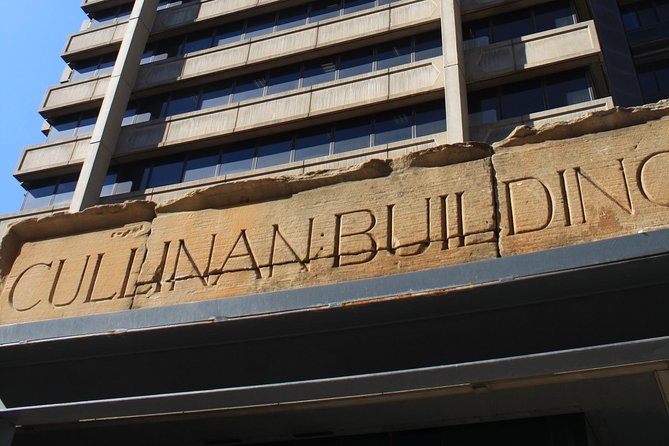
- Marshalltown on foot with an emphasis on the city’s mining and financial origins
- Gandhi Square with legal history and a sculpture of Gandhi as a young lawyer
- Shadow Boxer sculpture tied to the Mandela and Tambo era
- Street-level time travel, including a chance to look into an abandoned stock exchange with stained-glass windows
A first walk that makes Johannesburg click, not just impress
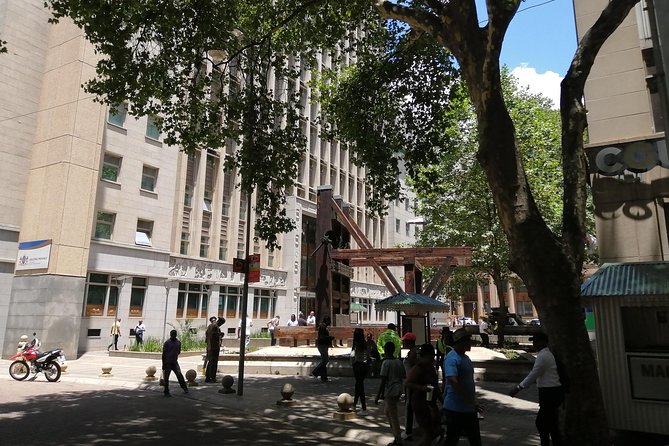
If you’re new to Johannesburg, the city can feel confusing fast. There’s a lot going on, and the skyline alone tells only part of the story. This walk helps you understand why the city looks the way it does, from the early days of gold-driven wealth to the long period of decline and the renewed energy happening in the inner-city.
The real value is the sequencing. Instead of tossing facts at you, the guide tells the story and then you see the physical evidence right in front of you. You get to connect the dots between architecture, who had power, and what happened when that power shifted.
More Walking Tours in Johannesburg
- Soweto: Walking Tour with a Local Guide and Lunch
★ 4.9 · 648 reviews - Soweto Walking Tour with Lunch
★ 5.0 · 288 reviews - Johannesburg: Local Food Tasting Guided Walking Tour
★ 4.7 · 192 reviews
Marshalltown and the Wiser West story you can read in buildings
You start in the Johannesburg CBD at 2 Pritchard St, and the walking route begins by heading into Marshalltown, the older, more architecturally rich part of the city center. This is where the city’s mining and financial companies took root, and that matters because Johannesburg’s history is not one single chapter. It’s an ongoing chain of booms, crashes, and reinventions.
On this tour, Marshalltown is treated like a timeline you can walk through. You spend roughly three hours moving through the inner-city streets and learning how the gold rush created the job prospects, buildings, and business networks that shaped early Johannesburg. Then you shift forward into the plush Edwardian era in the early 1900s, when the city’s wealth and optimism showed up in architecture and street life.
What makes this segment so effective is the mix of eras. It’s not just “then gold, now coffee.” You’ll hear why the growth happened, how the city’s business life worked, and what conditions later contributed to the urban decline. By the time you reach the regeneration thread, it feels earned rather than random.
A practical note: this portion is the longest part of the tour, so plan to stay alert for the full story flow. If you’re the type who likes to skim, you might miss some of the connections the guide is building.
Main Street, mining wealth, and why the CBD layout matters
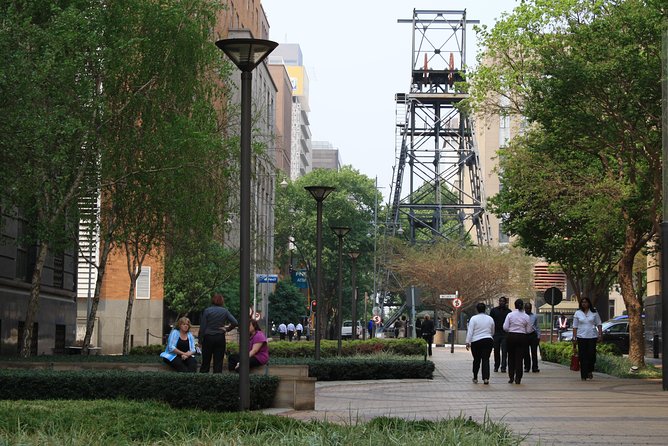
As you move through the corporate mining district, you’re walking along Main Street and taking in the pedestrianized feel of the area. That layout is part of the explanation. In a city shaped by labor and commerce, streets and districts become the physical map of who moved money, goods, and people.
You also get historic landmarks tied to the city’s business rise. The tour keeps returning to one theme: Johannesburg grew fast because of gold, and it organized itself around mining and finance. When you understand that, you can look at older buildings and see why they were built the way they were, and why they ended up being useful later.
One of my favorite outcomes of this part of the walk is that it gives you language for the city. After you finish, you’ll be able to talk about Johannesburg not just as a place you visited, but as a place with a business history you can visually track.
Gandhi Square: the statue and the lawyer-in-the-court detail
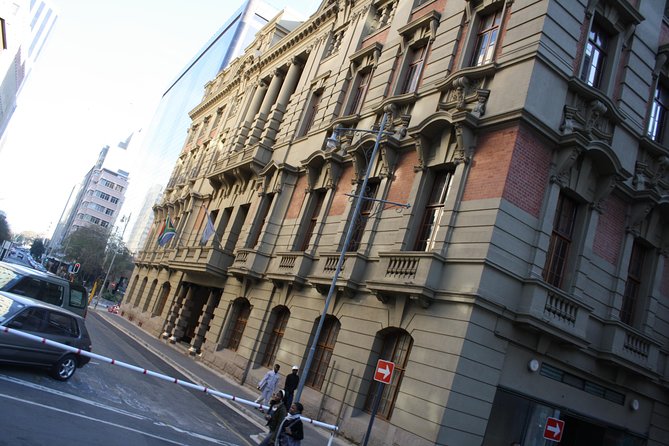
After the main historic stretch, you shift to a smaller but powerful stop: Gandhi Square. You’ll spend about 15 minutes here, and it’s exactly the kind of short stop that still feels meaningful because the context is specific.
You’ll see a sculpture of Gandhi as a young lawyer. The key detail is that Gandhi worked here as a business lawyer when he was younger. The stop also ties into the idea that this square connects to Gandhi’s legal work, including the court element of his career story.
Even if you already know Gandhi’s broad history, this stop helps you place him geographically in Johannesburg rather than as a distant historical figure. It turns a statue into a setting, and it turns a square into a clue about how the city drew in people and ideas well beyond mining.
Same province, a very different day:
- From Johannesburg: Pilanesberg Nature Reserve Game Safari
★ 4.8 · 1,327 reviews - Johannesburg: Hop-On Hop-Off Bus with Optional Soweto Tour
★ 4.6 · 985 reviews - Soweto /Johannesburg and Apartheid Museum Guided Full Day Tour
★ 5.0 · 932 reviews - Johannesburg Hop-On Hop-Off City Tour with Soweto Option
★ 4.5 · 768 reviews
Shadow Boxer and the Mandela and Tambo connection
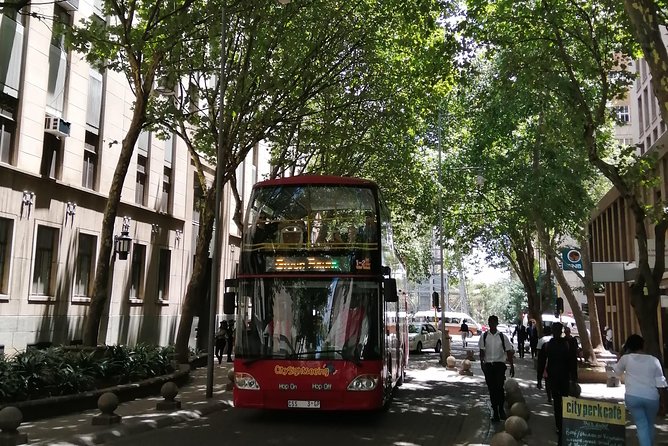
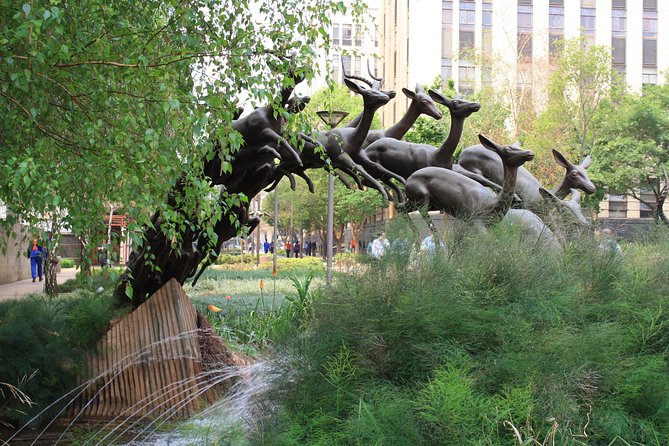
Back in the inner-city, you’ll also admire the Shadow Boxer sculpture. It’s tied to a very specific part of South African history, because Mandela and Tambo once had offices in that area.
What I like about this stop is that it anchors the tour in names people recognize, but it doesn’t treat them as trivia. The guide uses it to help you understand how political momentum and business life intersected in Johannesburg’s space. When you see the statue in context, it feels less like a random photo moment and more like a checkpoint in the city’s longer story.
If you’re traveling with someone who usually tunes out history, this kind of anchor can bring them back in. The sculpture gives you a clear “before and after” feeling about what Johannesburg became known for.
Gold-rush boom, architecture, and the Edwardian era you can still spot
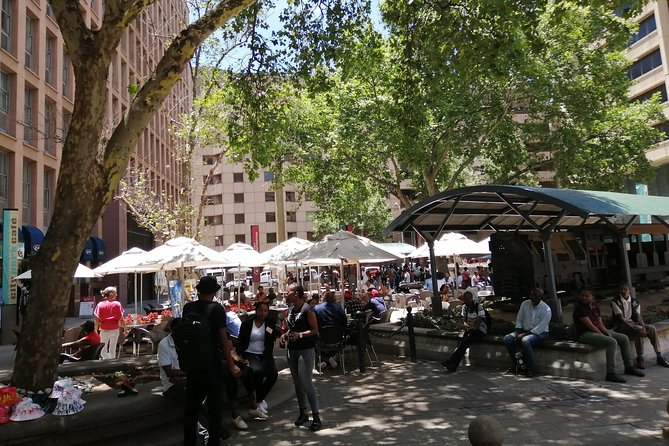
A big part of the tour’s appeal is how it moves through Johannesburg’s changing moods. The gold rush is often told as a dramatic origin story, but here you learn what it meant on the street: business districts formed, wealth concentrated, and buildings rose to match ambition.
Then comes the early 1900s Edwardian era, when the city’s look and feel shifted toward more formal architectural statements. You’ll get a sense of how prosperity expressed itself in design and street presence, and you’ll also learn how later decline altered what you see.
This architecture-and-story combination is where walking tours can either become boring or become addictive. This one leans toward the addictive side. You end up looking at doors, windows, and building shapes with questions in your head: Who built this? Why here? What happened later?
When decline becomes regeneration, and what to watch for
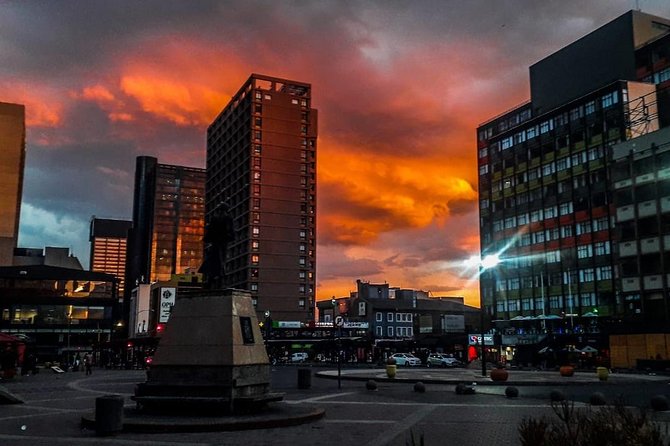
Johannesburg’s modern story is not only about hardship. This tour frames the long urban decline as part of the city’s turning points, not as the final ending. The regeneration theme comes through in the idea that the inner-city can still evolve, and that today’s street life is built on older foundations.
One way the walk makes this real is by bringing you past the kinds of places people go for everyday life now, including coffee shops and eateries along Main Street. That doesn’t mean the city is solved or easy, but it does show you that the street is active and that the inner-city is drawing people back.
By the time you finish, you’re not left with just a sad history. You’re left with a city that has layers, and you can point to the layers instead of guessing.
The “4-hour” rhythm: what the schedule feels like on the ground
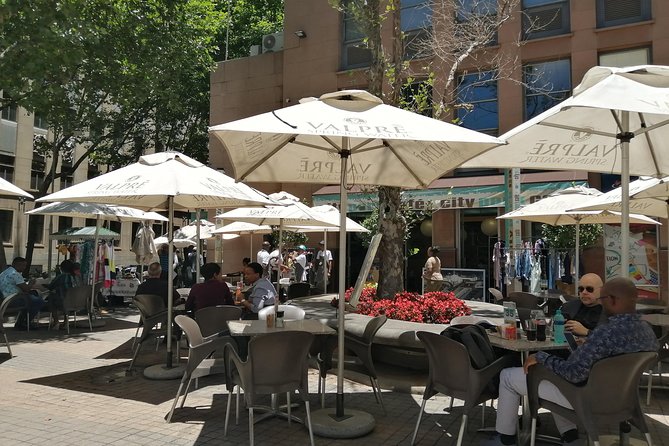
The tour is listed at about 4 hours, starting at 9:00 am. Practically, that timing works well because you still have the rest of the day to explore on your own after you’ve learned what matters.
You’ll roughly split your time like this:
- Marshalltown takes the bulk of the walk, with the story building over around three hours
- Gandhi Square is a shorter stop at around 15 minutes
You finish back at the original meeting point at 2 Pritchard St, so it’s easy to plan a next stop for lunch or another attraction nearby.
Also, this is described as a private tour/activity with only your group participating. That’s a real benefit for first-timers, because you can focus on the guide’s pace rather than worrying about matching a huge mixed crowd.
Price and value: what you’re really paying for at $80.80
The price is $80.80 per person, which might sound steep until you connect it to what you’re buying: a guided, story-driven walking route through a dense part of Johannesburg that covers multiple eras, plus help understanding what you’re seeing.
Here’s how I judge value on tours like this:
- You get a structured introduction, not random walking
- You cover major themes: gold-rush origins, the early 1900s Edwardian period, decline, and current regeneration
- Stops include high-signal landmarks like Gandhi Square and the Shadow Boxer
- The tour uses a mobile ticket, and there are group discounts
The listing also indicates that the tour’s stops involve free admission, meaning you’re not paying separate entry fees to see the core sights. For a visitor trying to manage costs while maximizing meaning, that can help.
Finally, it’s worth noting that the tour is typically booked in advance (around 15 days on average). That usually signals popularity. If you want a specific day, don’t wait until the last minute.
A few practical tips for making the most of it
Since this is a walking tour in an inner-city district, you’ll get the best results if you come ready to pay attention. Bring comfortable shoes, and keep your photo time controlled so you don’t miss the story beats.
Also keep an eye on weather. The experience requires good weather, and the provider notes that if it’s canceled due to poor weather, you’ll be offered a different date or a full refund. When a tour is heavy on street-level context, rain can make it harder to take in details.
One more tip: because the route centers on history and architecture, it helps to ask questions. If something doesn’t make sense, the guide can usually connect it back to the timeline you’re building in your head.
Who this tour suits best, and who might prefer something else
This walking tour is ideal if you:
- Want a first introduction to Johannesburg and don’t want to guess at what you’re looking at
- Like history and architecture tied to real places
- Prefer a guided narrative over self-guided wandering
- Value a route that explains both past boom and present-day change
You might consider skipping this specific tour if you:
- Want a mostly modern, nightlife, or shopping-focused route
- Don’t enjoy history-heavy guides and prefer very light commentary
Should you book the Johannesburg Walking Tour of Marshalltown and Gandhi Square?
I think this is an excellent booking for first-time visitors who want their Johannesburg experience to make sense. The best part is the way the tour turns the city into a timeline, with landmarks that explain the story instead of just sitting for photos.
If you’re curious about how Johannesburg grew out of gold and finance, and how later decline set the stage for today’s regeneration, this is the route to start with. The price reflects the hours of guided interpretation, and the free admission for the core stops helps keep it feel like value rather than a ticketed attraction.
Book it if you can match the 9:00 am start and you’re traveling during good weather. If you’re flexible and ready for a focused inner-city walk with a lively guide, you’ll leave with a much clearer picture of Johannesburg, and you’ll be able to explore the rest of the city with better instincts.
FAQ
Where does the Johannesburg walking tour start?
It starts at 2 Pritchard St, Johannesburg, 2113, South Africa. The tour ends back at the same meeting point.
What time does the tour begin?
The start time is 9:00 am.
How long is the tour?
The duration is about 4 hours.
What does the tour focus on?
It focuses on the history of Johannesburg, from pre-gold rush days through the gold rush and Edwardian era, then the city’s decline and current regeneration, with stops in key inner-city areas.
What stops are included?
The route includes Marshalltown and Gandhi Square.
Is there an admission fee for the main sights?
The tour lists admission ticket free for the stops.
How much does it cost?
The price is $80.80 per person.
Is the tour private or shared?
It is private in the sense that only your group will participate.
Is the tour dependent on weather?
Yes. The experience requires good weather. If it is canceled due to poor weather, you will be offered a different date or a full refund.
Can I use public transportation to get there?
The meeting area is near public transportation.
What is the cancellation window?
You can cancel up to 24 hours in advance of the experience for a full refund.
Newest around Johannesburg
- Zulu Food Cooking & Dining Experience with a local Chef★ 4.4 · 5 reviews
- Private Soweto Tour 5 hours approximately from Johannesburg or Pretoria.★ 4.5 · 9 reviews
- bicycle tour soweto★ 4.5 · 20 reviews
- Two day Kruger National Park Safari from Johannesburg★ 5.0 · 19 reviews
- Sun City Day Tour From Johannesburg★ 4.5 · 6 reviews
- Taste of Africa★ 5.0 · 9 reviews
- Full-day Johannesburg Bike Or Walking tour – With Transport★ 5.0 · 10 reviews
- Soweto Township Tours★ 4.5 · 6 reviews
Walking Tours, compared.






Browse the lists this tour appears in