
Reviewed · COOKING CLASSES
Authentic African Cuisine Cooking Experience
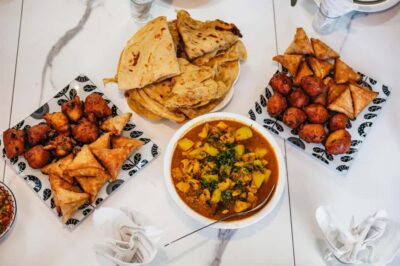
Food, hands on, and real Cape Town hospitality. In Salt River, I love that this cooking experience turns African cuisine into something you actually make, not just watch. You learn the stories behind the ingredients, cook from start to finish, then share the meal communally in a home-style way.
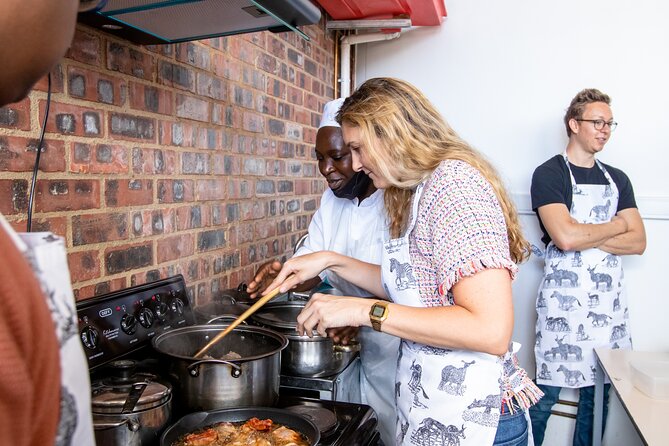
Two things stood out to me right away. First, Caleb’s history lesson makes the menu click, from how recipes evolved to what each ingredient brings to the table. Second, Florence runs the cooking with warmth and clarity, and you get real chances to contribute while you make dishes like sadza and peanut-buttered greens.
One thing to consider: this isn’t an advanced culinary lab. It is hands-on, but one note from past participants is that it can feel geared to basic cooks, so if you’re chasing fancy technique, you might find it simpler than you expected.
In This Review
- Key highlights you’ll care about
- Getting Hands-On at Pahari African Restaurant in Salt River
- Meet Caleb and Florence: The Story Comes First
- Your Step-by-Step Menu: Sadza to Peanut-Butter Greens
- Chakalaka and Sugar Beans: Why the Sides Matter
- The Communal Meal: Eat Like It’s Home
- Drinks, Snacks, Lunch and Dinner: How Value Adds Up
- Price and Logistics: What’s Covered, What You Must Handle
- Who Should Book This Cape Town African Cooking Class?
- Should You Book It?
- FAQ
- How long is the African cuisine cooking experience in Cape Town?
- Where does the experience start?
- How many people are in each group?
- What dishes will I learn to cook?
- What’s included in the price?
- Is lunch and dinner both included?
- Is private transportation included?
- What should I bring, since it uses a mobile ticket?
- Is there free cancellation, and how far in advance can I cancel?
Key highlights you’ll care about
- Small group of up to 10 means you actually get involved, not stuck on the sidelines.
- Caleb and Florence guide you through the story and the cooking, with step-by-step support.
- A full home-style menu you cook, including sadza (mealie pap), chakalaka, beans, and more.
- Communal eating where the meal is shared together, the way it’s often done at home.
- Vegan and vegetarian options are available, so you can join without compromise.
- Coffee or tea at the end gives the experience a neat finish.
Getting Hands-On at Pahari African Restaurant in Salt River
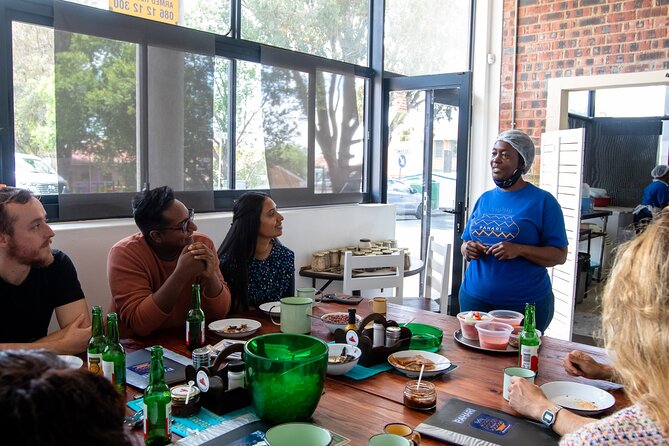
This is the kind of Cape Town activity that feels practical and personal at the same time. You start at Pahari African Restaurant in Salt River, and from the first moments, you’re in a real food setting, not a classroom that’s trying to be a kitchen set. The format is simple: you learn, you cook, then you eat as a group.
I like the peaceful, home-style setup described for this experience. In a place like Cape Town, it’s easy to bounce from sight to sight. Here, you slow down and focus on one big thing, a traditional meal made step-by-step. That makes it a strong choice for an evening, or for your first trip to Southern Africa, when you want food to be your entry point.
There’s also a built-in crowd control benefit. With a maximum of 10 travelers, you’re less likely to feel rushed, and you can ask questions while you’re cooking. That group size matters more than it sounds, especially when the whole point is getting your hands dirty.
A few more Cape Town trips worth comparing
- Cape Town: Malay Cooking Class and Lunch in Bo-Kaap
★ 4.8 · 515 reviews - Cape Town: Cape Malay Cooking Class in Bo-Kaap
★ 4.8 · 120 reviews - Cape Town: Bo-Kapp Walking Tour and Malay Cooking Class
★ 4.7 · 105 reviews
Meet Caleb and Florence: The Story Comes First
Before you start cooking, you get welcomed with African drinks choices and starter snacks. That small touch matters, because it shifts you from tourist mode to food-mode right away. You settle in, snack a bit, and then the lesson begins.
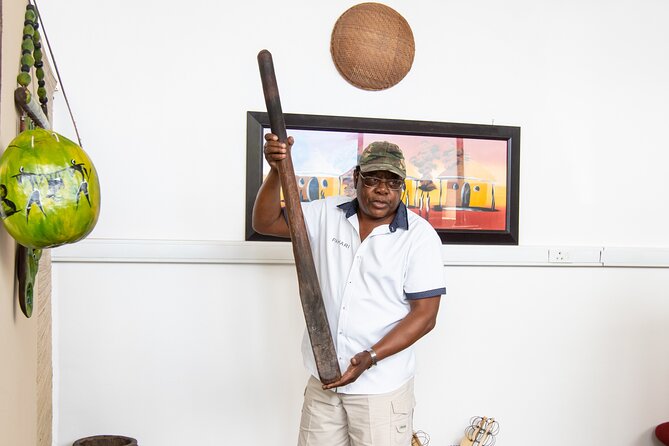
Then Caleb takes the lead with an explanation of African cuisine, including its ingredients and how recipes changed over time and passed down through generations. It’s not presented as abstract trivia. The history is tied to what you’re about to make, so when you later handle spice blends, vegetables, or staple starch, you understand why it’s there.
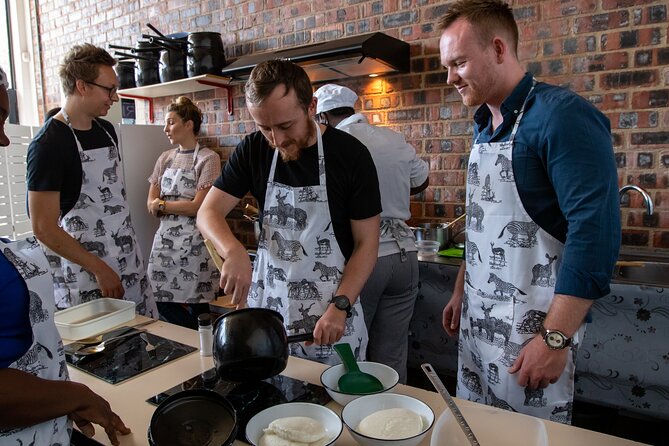
Next, Florence moves you from theory to practice. Multiple dishes are cooked during the session, and each person contributes. The cooking isn’t just a demonstration where you watch someone else do the hard part. You get chances to help with components, and you learn how the dishes come together as a real meal.
If you like cultural learning that doesn’t feel like a lecture, this combo is why it scores so high. The hosts bring both the story and the hands-on work, and that balance is exactly what turns a meal into a memory.
Your Step-by-Step Menu: Sadza to Peanut-Butter Greens
The heart of the experience is the cooking itself. On the day, you learn to make a traditional lineup that includes:
- Sadza (mealie pap)
A staple made from maize. This is the kind of dish that becomes the base for the rest of the meal, and you’ll see how it’s meant to be eaten with stews and relishes.
- Meaty beef bones with green vegetables
Hearty, savory, and built around slow-cooked depth. If you like food that tastes like it simmered longer than you thought possible, this is the one.
- Chicken stew
Another comfort-forward dish, where spices and sauces matter. You’ll get a real sense of how chicken becomes flavorful when it’s cooked as part of a bigger meal plan.
- Green vegetables with peanut butter
This is a standout type of dish, because peanut butter isn’t used like a dessert ingredient here. It becomes a sauce, a thickener, and a flavor anchor. Past participants also highlight that you get insight into how peanut butter is made traditionally, which adds context beyond just following steps.
- Chakalaka
A relish with bold character, often linked to spice and vegetable mix-ins. It’s the side that wakes up the plate.
- Sugar beans
Sweet-leaning beans that balance the meal. They help round out the flavors, so the whole table feels complete.
Here’s what makes this menu valuable for you. You’re not only learning one dish. You’re learning a system: how a starch base pairs with stews, how vegetables get treated in different ways, and how relishes like chakalaka cut through richness.
And if you have dietary needs, good news. Vegan and vegetarian options are available, so you can still join and build a plate that matches your preferences.
Chakalaka and Sugar Beans: Why the Sides Matter
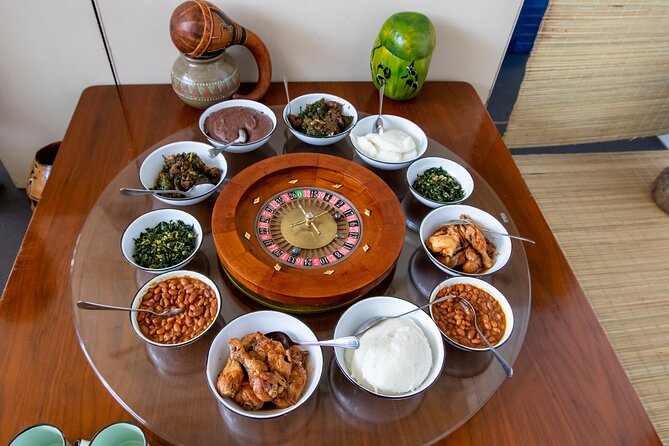
People sometimes think sides are optional. Not here. The sides are part of the meal logic, and they change the way you experience the main dishes.
Chakalaka is your flavor pop. It brings spice and tang-like intensity, so when you pair it with sadza or stew, the bite feels layered instead of heavy. This is exactly the kind of dish that makes you go, okay, now I get why African meals often feel so satisfying even when portions look simple.
Then there are sugar beans, which add softness and balance. When you’ve cooked something rich like beef bones or chicken stew, beans help keep the plate from turning one-note. They also add variety in texture, and that means you’ll enjoy the meal longer, not just power through.
The big takeaway for you: you’ll learn why people eat this way at home. It’s not one big dish and a random topping. It’s a set of components meant to work together.
Same province, a very different day:
- Wine Tour: Paarl, Franschhoek & Stellenbosch incl 3 wineries
★ 5.0 · 3,940 reviews - Cape Town: Hop-On Hop-Off Bus Tour with Optional Cruise
★ 4.8 · 3,929 reviews - Cape Town: Cape of Good Hope & Penguins Day Tour with Pickup
★ 4.7 · 3,362 reviews - Zipline Cape Town – From Foot of Table Mountain Reserve
★ 5.0 · 3,179 reviews
The Communal Meal: Eat Like It’s Home
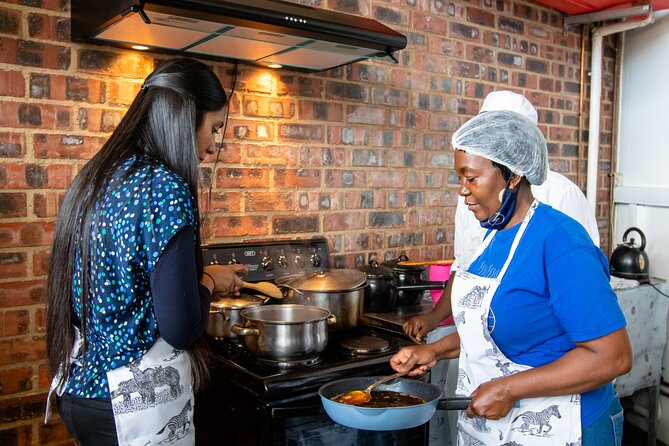
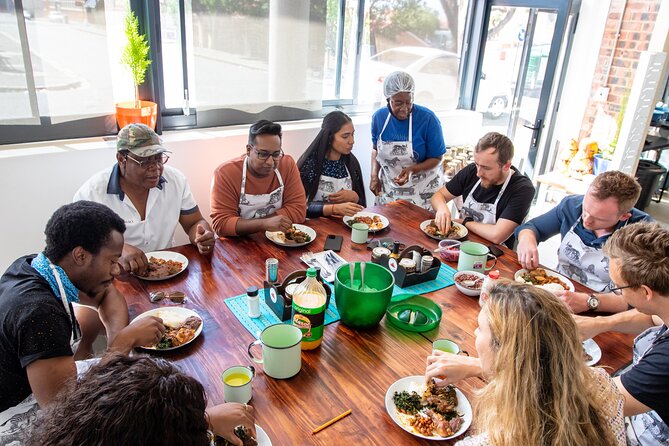
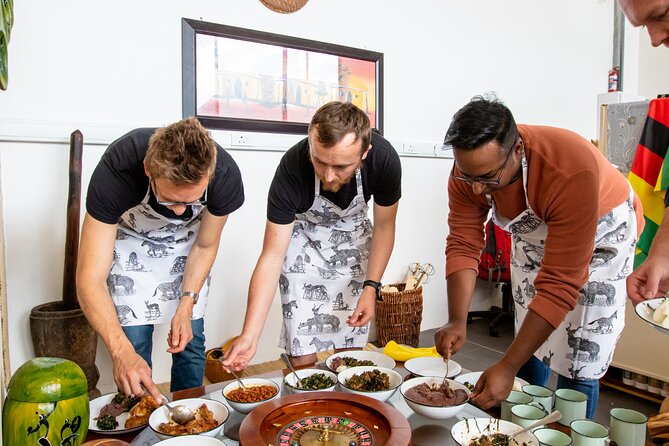
When cooking wraps up, you sit down together to enjoy the meal communally. This is a key part of the experience, because it turns your work into something shared. You stop thinking like a student and start thinking like a guest at a home table.
Communal eating also gives you a chance to compare notes with the group. You’ll learn fast, mostly by observation, how others approached their steps and what worked best. And because the group is capped at 10, the table tends to feel social without getting chaotic.
One detail that pops in the feedback is that the meal is often eaten with your hands. If you’re curious and willing, that changes the feel of the experience. You’re not only tasting food, you’re learning how it’s meant to be handled. It’s also a great way to stay engaged during the meal, instead of going quiet after the cooking ends.
For me, this is where the class becomes more than food. It’s cultural contact you can feel in your own hands and on your own plate.
Drinks, Snacks, Lunch and Dinner: How Value Adds Up
This experience runs about 2 hours 30 minutes, and you get a lot inside that time. You’ll start with African drink choices plus starter snacks. By the end, you’ve had a full meal experience, with lunch and dinner included, plus extra snacks along the way.
Included in the package:
- Lunch
- Dinner
- Snacks
- Coffee and/or tea
- Alcoholic beverages
That matters when you look at the price, $57.51 per person. In most cities, you might pay close to that for a single restaurant meal, maybe with a drink. Here, you’re paying for instruction, multiple dishes, and the full eating experience built around those dishes. It’s not just tastings, it’s full portions.
Also, the pacing helps. At 2.5 hours, it fits well into a Cape Town itinerary without turning into a half-day commitment.
One more practical note: this activity uses a mobile ticket, so bring your phone with the ticket ready.
Price and Logistics: What’s Covered, What You Must Handle
You meet at 121 Cecil Rd, Salt River, Cape Town, 7925 at Pahari African Restaurant, and the experience ends back at the meeting point. So it’s easy to plan your next stop without juggling complicated pick-ups.
The one major item not included is private transportation. That doesn’t mean you’re stuck, it just means you should plan to arrive on your own. The meeting point is noted as near public transportation, and that’s a plus if you’d rather not rely on taxis all evening.
Small things that help you start smoothly:
- Aim to arrive on time so you can join the welcome drinks and start the lesson without delay.
- If you use ride-hailing, share the restaurant name and address with your driver in advance, so you don’t waste time.
Who Should Book This Cape Town African Cooking Class?
This is a great fit if you want an authentic food experience without the pressure of fine dining. I’d especially recommend it if you:
- want hands-on cooking rather than watching from a distance
- like cultural context tied directly to what you eat
- travel with food-loving friends or family, because communal eating is part of the fun
- want a smaller group experience that feels more intimate
- are curious about staples like sadza (mealie pap), plus relishes and bean sides
It also works for families. One note from past participants includes kids enjoying the chance to eat with their hands and try challenging foods. If your group likes to try things, you’ll probably have a great time.
If you’re an expert cook chasing advanced technique, you might find the session more beginner-friendly. But if your goal is authenticity, learning, and a full meal you helped make, the format is strong.
Should You Book It?
Yes, I think you should book this if you want a meaningful Cape Town experience that centers on real food and real hospitality. You’re getting instruction, a complete menu you cook, and a communal meal that makes the whole night feel like an invitation, not a transaction.
Book it sooner rather than later if your dates are fixed. It’s often booked about 33 days in advance, and with a maximum of 10 travelers, popular time slots can move.
If you want a classic sightseeing day, skip it. If you want one night where Cape Town’s culture shows up on your plate, this is a smart choice.
FAQ
How long is the African cuisine cooking experience in Cape Town?
The experience lasts about 2 hours 30 minutes.
Where does the experience start?
You start at Pahari African Restaurant, 121 Cecil Rd, Salt River, Cape Town, 7925, South Africa.
How many people are in each group?
The tour has a maximum of 10 travelers.
What dishes will I learn to cook?
On the day, you’ll learn dishes including sadza (mealie pap), meaty beef bones with green vegetables, chicken stew, green vegetables with peanut butter, chakalaka, and sugar beans. Vegan and vegetarian options are also available.
What’s included in the price?
Coffee and/or tea, alcoholic beverages, lunch, dinner, and snacks are included.
Is lunch and dinner both included?
Yes, lunch and dinner are both included in the experience.
Is private transportation included?
No, private transportation is not included.
What should I bring, since it uses a mobile ticket?
Bring your mobile phone with your ticket ready, since the experience uses a mobile ticket.
Is there free cancellation, and how far in advance can I cancel?
Yes, there is free cancellation. You can cancel up to 24 hours in advance for a full refund.
Newest around Cape Town
- Private E-Bike Cape Town MTB Trails with a Pro★ 5.0 · 3 reviews
- Taste of Cape Town – food and city tour★ 5.0 · 46 reviews
- Skip the Line: District Six Museum Admission Ticket★ 4.0 · 6 reviews
- E-Bike Cape Peninsula tour★ 5.0 · 7 reviews
- 1-3 Passenger Private Arrival & Departure Cape Town – Airport Transfers★ 4.5 · 17 reviews
- Private Cycling Tour of Constantia Winelands★ 4.5 · 10 reviews
- Private Tour To Stellenbosch Franschoek Wineries from Cape Town Price Per Group★ 5.0 · 4 reviews
- Catamaran Cruise and Sushi Experience in Cape Town★ 4.0 · 6 reviews
Cooking Classes, compared.
Half-Day Small Group Cooking Experience in Franschhoek
Read our review →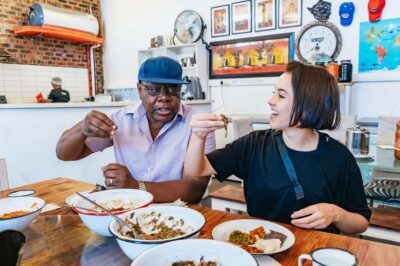
GQ: City Walking Tour & African Cuisine Cooking Class
Read our review →
Browse the lists this tour appears in