
Reviewed · COOKING CLASSES
Cape Town: Bo-Kapp Walking Tour and Malay Cooking Class
Bo-Kaap is more than postcard color. This 4-hour walk plus a home cooking class threads together Bo-Kaap history, a spice stop, and the kind of hands-on meal prep you actually remember.
I love the hands-on cooking with hosts like Faldela, where you fold samosas and learn roti technique step by step. I also love the spice shop lessons, including why particular spices are used and how they show up in the dishes. The only real caution is that the cooking area can be tight, so you may take turns rather than work side-by-side nonstop.
In This Review
- Key Points Worth Your Time
- Finding Your Purple Door in Bo-Kaap
- The Bo-Kaap Walking Tour, Past the Painted Houses
- A Spice Shop Visit That Actually Changes How You Cook
- Cooking in a Local Home, From Samosas to Roti
- The Menu You Make, and How It Fits Together
- Museum Entrance, Water, and What the Price Really Buys
- The Real Win: Local People, Not a Show
- Who This Tour Suits Best
- Tips to Make Your Afternoon Smoother
- Should You Book the Bo-Kaap Walking Tour and Malay Cooking Class?
Key Points Worth Your Time
- A guided Bo-Kaap stroll with real context: you walk cobblestone lanes and learn about the Cape Malay community and local traditions.
- Spice shop stop with practical lessons: you get talk-through guidance on common spices and how they contribute flavor and health claims.
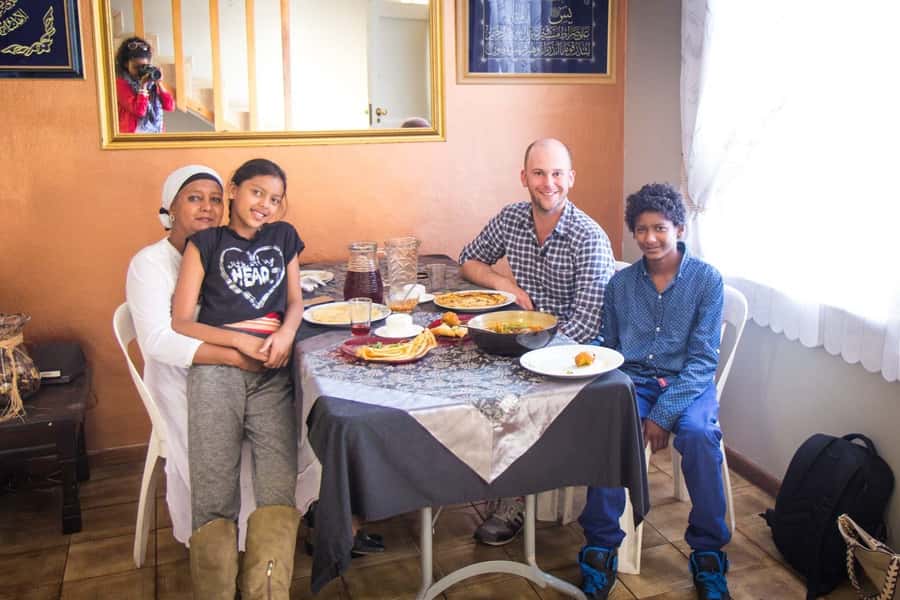
- Hands-on meal prep in a local home: samosas, chicken curry, roti, and sambal come with instruction, not just a demo.
- Dessert and tea are part of the plan: koesisters and cardamom tea close out the meal.
- Recipes get sent to you: you leave with guidance you can repeat later at home.
- Small-space cooking means teamwork: you might work in short turns, which is the main trade-off.
Finding Your Purple Door in Bo-Kaap
Your afternoon starts at a purple house with flower pots on top. It sounds simple, but it matters, because Bo-Kaap’s streets look alike at first glance, and you do not want to waste time hunting around.
The tour runs about 4 hours with an English live guide. Comfortable shoes are a must, since the walking is on cobblestones and you will likely cover a good chunk of neighborhood streets before you sit down to cook.
You are also not just being taken to a highlight spot. This is built around time with local people, in their homes and community businesses, which is why the pacing feels more like a shared afternoon than a scripted attraction.
More Walking Tours in Cape Town
- Cape Town: Nathi Langa Township Walking Tour
★ 4.9 · 493 reviews - Cape Town: Art, Culture & History Walking Tour
★ 4.9 · 392 reviews - Cape Town: Street Art Walking Tour in Woodstock
★ 4.8 · 293 reviews
The Bo-Kaap Walking Tour, Past the Painted Houses
The Bo-Kaap walk is all about giving the colors context. Yes, you will see the famous colorful houses, but the point is what they represent, how the community formed, and how the neighborhood’s identity is tied to the Cape Malay story.
Expect an introduction to older historical buildings as you wander. You will also hear about the local Islamic heritage, including a stop that references the first and oldest mosque in South Africa, plus time tied to a cultural museum.
What I like about this part is that you get a guide who lives the neighborhood, not just a narration. In multiple runs, guides such as Gadija or Ilyas have led the walk, and the difference shows. They point out details and explain why they matter, like how the architecture and street layout connect to different periods.
One possible consideration: some of the community messaging you may see on house fronts can be political in nature. If you prefer your activities tightly focused on cooking and straightforward sightseeing, just know your guide may mention those visuals as part of explaining life in the neighborhood.
A Spice Shop Visit That Actually Changes How You Cook
After the walking portion, you head to a spice shop. This stop is not a quick photo break. It is where the day starts to get practical, with explanations of different spices and their uses.
You will hear about health benefits and how spices show up in Cape Malay cooking. One great tip: when the guide pulls out the spices and starts connecting them to the food, hit record on your phone if you want a reference later. The explanations are the sort you want to replay while you are buying spices at home.
This is also a good moment to ask small questions. If you want to know what you can substitute for something you cannot find in your home country, a guide can often point you in a direction since they are discussing real ingredients rather than abstract flavor profiles.
Cooking in a Local Home, From Samosas to Roti
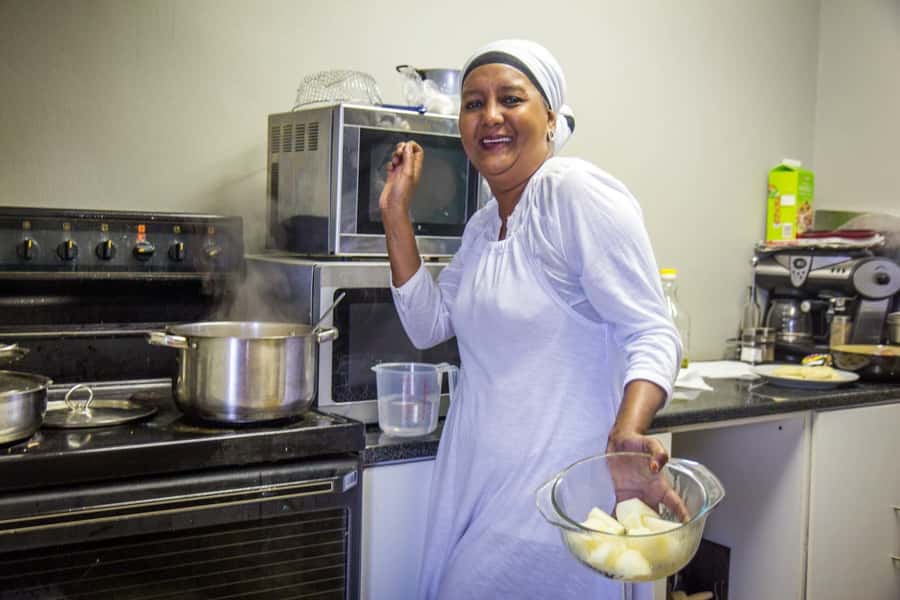
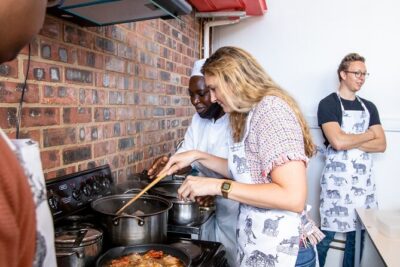
Then you move into the home kitchen. This is the heart of the experience, because it is interactive. You are not watching from the sidelines while someone else works.
The flow goes like this. You help with the first course, folding samosas. That might sound basic, but folding properly changes the whole bite, and you get guidance along the way instead of guessing.
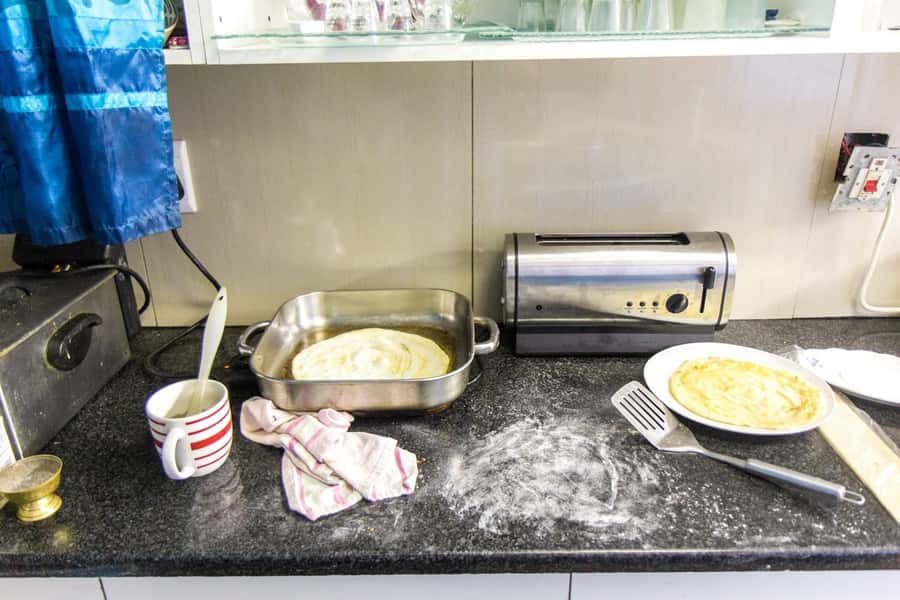
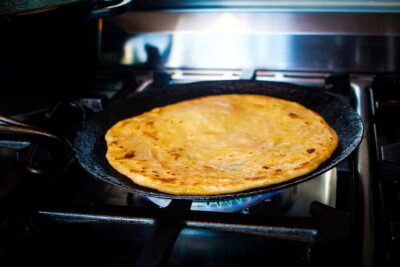
Next comes the main meal: chicken curry and roti flatbread. You learn techniques for flavor and texture, especially for roti. Several participants have said roti feels like a breakthrough skill by the end, which is a good sign you will leave with a real takeaway rather than just a full stomach.
For the “salsa salad,” you make sambal, more like a fresh, spicy accompaniment than something you dump on top at the end. You will learn how the balance works, so it is not only about heat. It is about how the salad lifts the curry.
A heads-up on logistics, based on real feedback: the cooking area can be small, so the group may rotate through workstations. You can still participate fully, but you should expect a bit of sharing space rather than everyone rolling dough at the same time.
A few more Cape Town trips worth comparing
- Cape Town: Malay Cooking Class and Lunch in Bo-Kaap
★ 4.8 · 515 reviews - Authentic African Cuisine Cooking Experience
★ 5.0 · 236 reviews - Cape Town: Cape Malay Cooking Class in Bo-Kaap
★ 4.8 · 120 reviews - Cape Town: Authentic African Cuisine Cooking Experience
★ 4.9 · 31 reviews
The Menu You Make, and How It Fits Together
Your meal is a Cape Malay style spread, and the best part is that the dishes connect. Curry provides the deep, warming base. Roti is the tool that carries it. Sambal keeps things bright and spicy.
You also get dessert: koesisters, which are spicy savory donuts, paired with cardamom tea. It is a nice way to end the class because the flavors shift from savory and spiced into something fragrant and sweet-salty.
Even if you think you are not much of a cook, do not let that stop you. The class is designed so you can follow along. One of the consistent themes in the feedback is that people felt guided step by step and left confident enough to try again.
Another small plus: dietary needs appear to be taken into account. The data here does not list specific restrictions the class can handle, but the hosts seem to plan with different eaters in mind. When you book, make sure you share your needs clearly.
Museum Entrance, Water, and What the Price Really Buys
The listed price is $68 per person for about 4 hours. That sounds straightforward, but the value comes from what is bundled into that time.
You get a guided walk in the neighborhood, a spice shop stop with ingredient education, a cooking class in a home, museum entrance, and water. You also end up with the meal you prepared and recipes sent to you afterward by email.
Food and drinks can be a confusing line item on some booking pages, so here is the practical way to interpret it for your planning. You will eat what you cook in the class, but alcohol is not included. So if you want wine or anything similar, you should plan on paying separately.
In other words, you are not just paying for entertainment. You are paying for guided instruction, ingredients knowledge, and a real meal experience that happens inside the community.
The Real Win: Local People, Not a Show
Plenty of Cape Town activities are built around getting you in, getting you out, and keeping the story vague. This one is different because it leans hard into local relationships and lived-in places.
That is why names like Faldela (your cooking host in many runs) come up so often. Participants repeatedly describe her as warm, funny, and serious about teaching technique. There is also a practical element: the guidance does not stop at what to do, it explains why. That is what helps you repeat the food at home.
The walking portion also tends to include small detours to local stores, including art and souvenir shops. In past experiences, people even got to meet artists at their shops and see how small businesses operate. If you like supporting local makers instead of buying the same generic trinket everywhere, this adds genuine satisfaction.
Who This Tour Suits Best
This is a great fit if you want more than photos of Bo-Kaap. You like learning why places look the way they do, and you enjoy turning knowledge into something you can taste.
It is also ideal if you want a social, hands-on class that does not require advanced cooking skill. The structure is designed so you can participate even if you have never folded samosas before.
If you are the kind of traveler who hates anything cooking-related, this will likely feel like work. But if you can handle rolling dough and stirring curry, you will probably have a blast. Several people have said it was the highlight of their time in Cape Town for exactly that reason.
If you are very sensitive to political discussion, just know you may see messages on house fronts and hear some context. The overall focus stays tied to Bo-Kaap community life and the cooking tradition, but you should decide if that kind of context fits your comfort level.
Tips to Make Your Afternoon Smoother
A few small choices can make the day feel effortless.
Wear comfortable shoes with grip. Cobblestones plus kitchen floors is not a place for slick soles. Bring a phone for the spice explanations if you want to replay details later.
Also, if you want the recipes to be useful when you get home, take note of what spices you remember tasting. Since recipes are sent by email, having a memory anchor helps you match the flavors later.
Finally, go with the expectation that you will be part of the process. The cooking is interactive. If you treat it like a spectator sport, you will miss the best part.
Should You Book the Bo-Kaap Walking Tour and Malay Cooking Class?
Book it if you want a Cape Town afternoon that mixes neighborhood storytelling with hands-on cooking in a real home. For $68 and 4 hours, you are getting more than a meal, you are getting technique, ingredient context, and a chance to understand Bo-Kaap beyond surface color.
Skip it or think twice if you strongly dislike small-space cooking turns. You may not get a huge personal work area, but you can still participate.
If your goal is to leave with both recipes and a real sense of place, this is one of the better ways to spend time in Cape Town.
More Workshops in Cape Town
- Private Surf Lesson
★ 5.0 · 53 reviews - Private Surf Lesson in Cape Town – Transport & Photos Included
★ 5.0 · 50 reviews - Muizenberg Cape Town: Private Surf Lesson
★ 5.0 · 37 reviews - Koeksister and Samoosa Class by the Malay Cook Up
★ 4.8 · 9 reviews
Newest around Cape Town
- Private E-Bike Cape Town MTB Trails with a Pro★ 5.0 · 3 reviews
- Taste of Cape Town – food and city tour★ 5.0 · 46 reviews
- Skip the Line: District Six Museum Admission Ticket★ 4.0 · 6 reviews
- E-Bike Cape Peninsula tour★ 5.0 · 7 reviews
- 1-3 Passenger Private Arrival & Departure Cape Town – Airport Transfers★ 4.5 · 17 reviews
- Private Cycling Tour of Constantia Winelands★ 4.5 · 10 reviews
- Private Tour To Stellenbosch Franschoek Wineries from Cape Town Price Per Group★ 5.0 · 4 reviews
- Catamaran Cruise and Sushi Experience in Cape Town★ 4.0 · 6 reviews
Cooking Classes, compared.
Half-Day Small Group Cooking Experience in Franschhoek
Read our review →

GQ: City Walking Tour & African Cuisine Cooking Class
Read our review →
Browse the lists this tour appears in