
Reviewed · WORKSHOPS
Koeksister and Samoosa Class by the Malay Cook Up
Bo-Kaap smells like fried dough. I love the step-by-step coaching from an accomplished Cape Malay cook and the mix of savoury samoosa plus sweet-spicy koesister you get to enjoy at the end, but you should know that some parts may be pre-prepped for speed.
This is a home-kitchen style workshop in Bo-Kaap (Western Cape, South Africa), run in English and Afrikaans, with local stories folded into the cooking. The mood stays friendly and informal, and the focus is on authentic Cape Malay flavours rather than fancy food tricks.
If you want every single component made 100% from scratch, I suggest going in with one question ready, because one guest noted the pastry and fillings were not fully handled by the group.
In This Review
- Key things I’d clock before you book
- A Bo-Kaap Cooking Class That Focuses on Real Cape Malay Flavour
- Two Hours of Cooking, Tasting, and Local Stories
- Samoosas in the Triangle, Savoury Filling, and Practical Hands-On
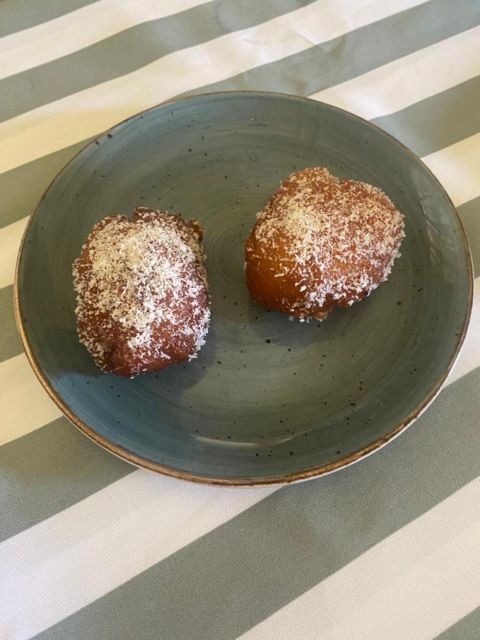
- Koesisters: Sweet-Spicy Doughnut Craft and the Payoff Bite
- The End-of-Class Tasting: Eating What You Made, Not Just Watching
- Price and Value of the $23, 2-Hour Workshop
- Where You Might Want to Adjust Your Expectations
- Who This Workshop Suits Best
- Should You Book the Malay Cook Up Samoosa and Koesister Class?
- FAQ
- How long is the koesister and samoosa class?
- Where does the workshop take place?
- How much does it cost?
- What will I learn to make?
- Is tasting included?
- What’s included in the experience?
- What languages are offered?
- Is alcohol allowed during the class?
- Do I need to pay in advance?
- What is the cancellation policy?
Key things I’d clock before you book
- Home-kitchen teaching in Bo-Kaap, not a showy studio setup
- Interactive coaching with an experienced Cape Malay cook
- Two flavours in one class, savoury samoosas and sweet-spicy koesister
- Tasting included, so your time ends with what you made
- Local history shared, tied to the food and the community
- Ask about what’s truly from scratch, if hands-on pastry and fillings are your top goal
A Bo-Kaap Cooking Class That Focuses on Real Cape Malay Flavour
This isn’t a lecture. It’s work at the counter, flour under your fingertips, and a rhythm that stays practical. You’ll learn how to make samoosa (the pastry triangle) and koesister (the sweet-spicy doughnut) from scratch, guided by an accomplished Cape Malay cook in a home kitchen in Bo-Kaap.
What I like about this setup is the balance. You’re not just learning one thing. You’re making two classic Bo-Kaap snacks that show up across South African food culture, regardless of background or religion. That gives the class more meaning than just learning a recipe.
One more thing: the class is designed to be interactive and engaging, with friendly conversation at the end. Even if you’re not a confident cook, you’re likely to get plenty of back-and-forth and clear direction as you go.
A few more Cape Town trips worth comparing
- Cape Town: Malay Cooking Class and Lunch in Bo-Kaap
★ 4.8 · 515 reviews - Cape Town: Cape Malay Cooking Class in Bo-Kaap
★ 4.8 · 120 reviews - Cape Town: Bo-Kapp Walking Tour and Malay Cooking Class
★ 4.7 · 105 reviews
Two Hours of Cooking, Tasting, and Local Stories
The workshop runs for two hours, including tasting. The format is straightforward: you start with an intro, then move through the cooking process step-by-step, and finish by sitting down with your host to eat what you prepared while chatting.
That last part matters more than it sounds. Food workshops are often “cook, eat, leave.” Here, the conversation is part of the value. You learn how these foods link to the earliest inhabitants associated with Cape Malay communities, and why samoosa and koesister remain common on South African tables today.
You’ll also get the basics handled for you. Equipment and ingredients are provided, and you’re using authentic ingredients rather than substitutions that only half match the real flavour.
Samoosas in the Triangle, Savoury Filling, and Practical Hands-On
Samoosa is one of those foods that looks simple until you’re shaping it yourself. In this class, you’ll learn to make the samoosa pastry triangle from scratch, with step-by-step coaching.
Here’s where you should set expectations. One key consideration popped up from real experiences: some guests found the pastry portion was not fully handmade by the group, and the fillings were pre-done. Another guest still enjoyed the overall class a lot, but the hands-on level differed depending on how ingredients were prepped before you arrived.
So think of the class as learning the workflow and technique, with more emphasis on doing and understanding than on every single minute step of dough-making. If you are the type who really wants to mix, knead, and shape everything yourself, I’d ask the host a simple question when you confirm:
- How much of the pastry and fillings will we assemble from scratch during class?
That way you protect what you care about most, and you get a better match for your cooking style.
Koesisters: Sweet-Spicy Doughnut Craft and the Payoff Bite
Koesister is the fun part for a lot of people, and the class leans into that. You’ll learn how to make the koesister (a sweet-spicy doughnut) from scratch, again with guided, step-by-step instruction in the home kitchen.
What makes koesister satisfying in a workshop is the payoff. Even when dough work gets sticky and awkward, you can usually feel progress fast. And the flavour is unmistakable once they’re cooked and ready to eat.
One guest specifically pointed out that the koesister portion felt more interactive, and that the results tasted great. That lines up with how these classes often work: frying and finishing steps bring you closer to the action, while earlier steps can be partly prepped to keep the class moving.
If you love sweet-spicy food, this is where you’ll likely smile the most. You’re not waiting for an end-of-class miracle. You’re building toward something you can taste right away.
Same province, a very different day:
- Wine Tour: Paarl, Franschhoek & Stellenbosch incl 3 wineries
★ 5.0 · 3,940 reviews - Cape Town: Hop-On Hop-Off Bus Tour with Optional Cruise
★ 4.8 · 3,929 reviews - Cape Town: Cape of Good Hope & Penguins Day Tour with Pickup
★ 4.7 · 3,362 reviews - Zipline Cape Town – From Foot of Table Mountain Reserve
★ 5.0 · 3,179 reviews
The End-of-Class Tasting: Eating What You Made, Not Just Watching
The workshop includes tasting, and you’ll sit down with the host after cooking to enjoy what you prepared. This is a strong value point because it turns your effort into immediate reward.
Also, tasting in the same home kitchen you cooked in helps you connect the dots. You learn how the flavour changes across the two snacks: savoury and spiced in the samoosa, sweet-spicy and comforting in the koesister.
And because conversation is part of the experience, tasting becomes more than a snack break. You’re hearing the why, not just the how. The host shares local history tied to the food, and you get context for why these treats show up in South Africa beyond any single community.
Price and Value of the $23, 2-Hour Workshop
At $23 per person for a two-hour interactive class, this can be a good deal if you value hands-on cooking and authentic ingredients. The price isn’t just paying for recipe instructions. It includes:
- the class itself
- tasting
- all equipment and ingredients
- local history shared
- authentic ingredients
That bundle helps you avoid the classic food-tour problem: paying for a meal while having limited involvement. Here, you’re actively making snacks, so you leave with both food and know-how.
If you compare it to the cost of buying random ingredients and trying to replicate the process at home, it also starts to make sense. You’re paying for guided technique plus the ingredients that help the flavour land where it should.
Where You Might Want to Adjust Your Expectations
This is the balanced part of the review. A big reason to book cooking classes is the chance to get your hands on everything. But one guest reported a disappointment: the samoosa pastry felt store-bought, and the fillings were pre-done. The koesister portion still worked better for them because it felt more interactive.
So for your decision, I’d weigh two questions:
- Are you mainly after the food and the vibe in a Bo-Kaap home kitchen?
- Or do you care deeply about fully making the pastry and fillings yourself, every step, every ingredient?
If it’s the second, ask how much is prepared ahead and what your role will be during class. That one step of clarity can save you from the exact kind of mismatch one guest described.
Also note the rules: alcohol and drugs are not allowed. If you’re looking for a drinking-friendly evening, this isn’t that.
Who This Workshop Suits Best
This class fits best if you want a cultural food experience that’s hands-on, friendly, and rooted in Cape Malay flavours. You’ll likely enjoy it if you:
- like learning recipes you can actually repeat later
- want savoury and sweet snacks in one sitting
- enjoy home-kitchen settings more than big commercial kitchens
- are curious about why food traditions stay strong in South Africa
Because languages include English and Afrikaans, it’s also a comfortable option if you want the teaching to be clear and local.
It’s also a solid choice for casual group time. The overall tone comes across as relaxed and welcoming, including for family and friends outings.
Should You Book the Malay Cook Up Samoosa and Koesister Class?
I think this is a worthwhile booking if your priority is authentic Cape Malay flavours, a guided cooking experience, and a tasting that ends with something you made yourself. The price is reasonable for the full package, and Bo-Kaap adds extra texture to the food.
Hold it up to your expectations if you’re very strict about making every component from scratch. A quick question to the host about how much pastry and filling work happens during class will help you lock in the right level of hands-on time.
If you want spice, comfort, and a real home-kitchen atmosphere in Bo-Kaap, this is one of the easier “yes” choices in Western Cape food experiences.
FAQ
How long is the koesister and samoosa class?
The class lasts 2 hours, including tasting.
Where does the workshop take place?
It is held in a home kitchen in Bo-Kaap, in the Western Cape, South Africa.
How much does it cost?
It costs $23 per person.
What will I learn to make?
You will learn to make samoosa (pastry triangle) and koesister (sweet-spicy doughnut) from scratch.
Is tasting included?
Yes, tasting is included as part of the 2-hour class.
What’s included in the experience?
You get the class with tasting, all equipment and ingredients provided, authentic ingredients, and local history shared.
What languages are offered?
The workshop is offered in English and Afrikaans.
Is alcohol allowed during the class?
No, alcohol is not allowed.
Do I need to pay in advance?
You can book using Reserve and Pay Later, which lets you reserve your spot and pay nothing today.
What is the cancellation policy?
You can cancel up to 24 hours in advance for a full refund.
Newest around Cape Town
- Private E-Bike Cape Town MTB Trails with a Pro★ 5.0 · 3 reviews
- Taste of Cape Town – food and city tour★ 5.0 · 46 reviews
- Skip the Line: District Six Museum Admission Ticket★ 4.0 · 6 reviews
- E-Bike Cape Peninsula tour★ 5.0 · 7 reviews
- 1-3 Passenger Private Arrival & Departure Cape Town – Airport Transfers★ 4.5 · 17 reviews
- Private Cycling Tour of Constantia Winelands★ 4.5 · 10 reviews
- Private Tour To Stellenbosch Franschoek Wineries from Cape Town Price Per Group★ 5.0 · 4 reviews
- Catamaran Cruise and Sushi Experience in Cape Town★ 4.0 · 6 reviews
Workshops, compared.

Private Surf Lesson in Cape Town – Transport & Photos Included
Read our review →
Jeffreys Bay: Private Surfing Lesson for Beginners
Read our review →
Browse the lists this tour appears in