
Reviewed · WALKING TOURS
Johannesburg City Evolution, Arts and Museums Walking Tour
History walks, art talks, and you connect dots. This 3-hour Johannesburg tour threads together Constitution Hill human-rights lessons, South African art in museums, and street-level creativity, all while using local transport. It also focuses on comfort, with renovated locations designed to be easier for tourists.
I love the way this route turns big ideas into real places, starting at the human-rights precinct and continuing through the city’s cultural institutions. I also like the value angle, because several key stops have admission included while other areas are free to explore.
One possible drawback: this tour covers a lot of ground in a short time. If you prefer long museum hours with no schedule pressure, you might find it a bit fast, so plan to pace yourself and bring water.
In This Review
- Key highlights you will feel right away
- Starting at Constitution Hill, where the city’s story gets personal
- Wits University and the Wits Art Museum stop with classroom-level context
- COSATU House and Braamfontein, where labor and city life intersect
- Nelson Mandela Bridge, a quick crossing that links neighborhoods
- Oriental Plaza and the Museum Africa contrast: old warehouses, big museum energy
- Market Theatre in Newtown, where art pushed back during apartheid
- How local transport and the small group shape the whole experience
- Price and value: what $37.02 buys you in real terms
- What the guides bring to the art and history connections
- Who should book this tour, and who might skip it
- Should you book this Johannesburg city evolution, arts, and museums walking tour?
- FAQ
- What is the duration of the Johannesburg City Evolution, Arts and Museums walking tour?
- How much does the tour cost per person?
- Is pickup available?
- Is there admission included in the ticket price?
- What is the group size limit?
- Where does the tour start and end?
- What time does the tour begin?
- Is the tour near public transportation?
- What is the cancellation policy if my plans change?
Key highlights you will feel right away
- Constitution Hill’s conversion from prison to democracy space gives the whole day context
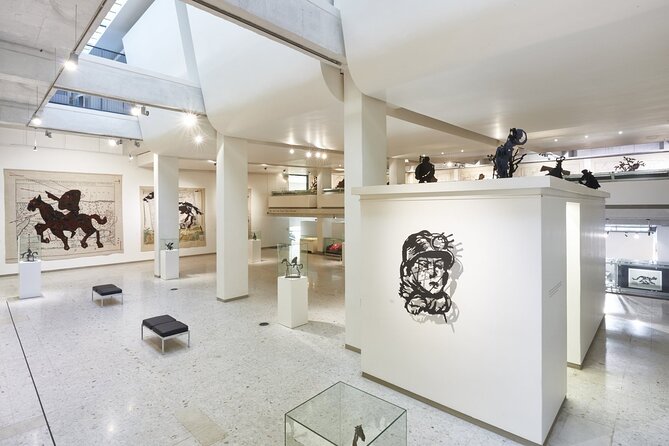
- Wits Art Museum on a working university campus adds depth to the art stops
- Museum Africa links past, present, and future with artifacts and interactive displays
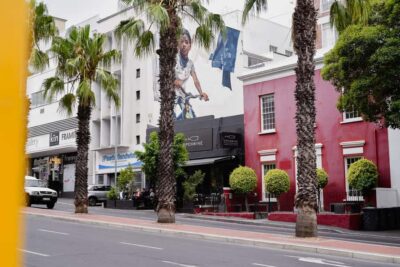
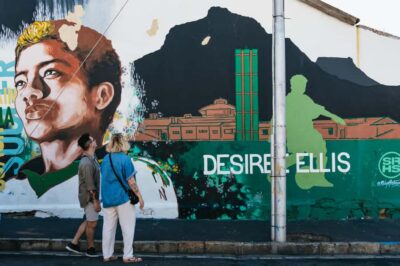
- Street art time around Johannesburg inner-city neighborhoods helps you see how culture lives outside galleries
- A small group size of up to 7 keeps the pace friendly and the Q&A real
Starting at Constitution Hill, where the city’s story gets personal
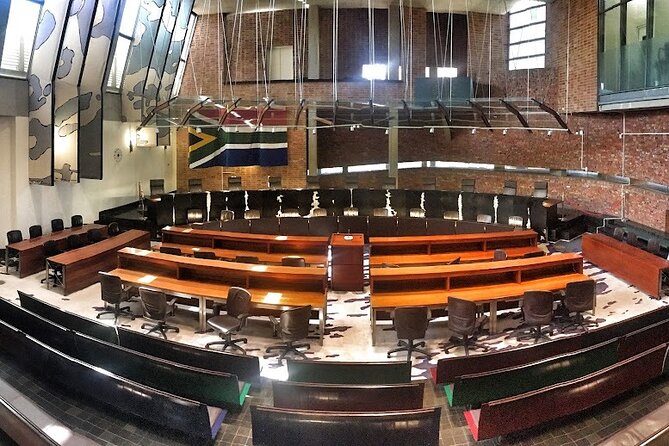
The tour kicks off at Constitution Hill Human Rights Precinct, with the former prison complex at its core. This is one of those places where you can feel the shift from punishment to accountability, since the site is now a human rights precinct and also includes the Constitutional Court.
What makes this stop so useful is that it gives you a framework for everything else you will see later. You are not just collecting sights. You are learning how South Africa’s democracy and human-rights ideals connect to real institutions, real struggles, and real legal change.
You get about 25 minutes here, with admission included. That time is just enough to read the main story and then ask your guide why this matters for understanding Johannesburg today. Expect the conversation to go beyond dates and into how people experience power, law, and freedom.
This is also the moment where the tour’s tone becomes clear. It is thoughtful, sometimes heavy, but it stays grounded in the present. If you know you get overwhelmed easily, take a minute to step back, breathe, and let the information settle.
More City Tours in Johannesburg
- Johannesburg Hop-On Hop-Off City Tour with Soweto Option
★ 4.5 · 768 reviews - Jo’berg in 1 Day: Soweto, Apartheid Museum & City Tour
★ 4.8 · 524 reviews - Soweto: Hop-On Hop-Off Bus, City Tour and Apartheid Museum
★ 4.5 · 250 reviews
Wits University and the Wits Art Museum stop with classroom-level context
Next, you move to the University of the Witwatersrand, one of Africa’s major research universities. Even if you do not care much about universities, the setting helps. It puts you in a place where ideas, education, and creativity are not separate from everyday life.
Right after, you visit the Wits Art Museum on campus. Admission is included, and the museum is known for holding both South African and international art. That mix matters. It helps you see how local artists develop alongside global influences, rather than treating art as a single straight line.
This stop is about 25 minutes. The museum visit is not meant to replace a long, slow art day. Instead, it gives you a solid starting point so later street art and city culture feel more connected.
A practical tip: museum lighting can make photos tricky. I recommend turning your phone brightness down a bit before you start, so you do not lose detail in shadows. And wear shoes that let you move easily, since campus paths can be uneven.
COSATU House and Braamfontein, where labor and city life intersect
After Wits, the tour briefly stops at COSATU Braamfontein. COSATU House is the headquarters for the Congress of South African Trade Unions, one of the country’s biggest labor federations. Even though the stop is short, it anchors the day in how organized labor shaped social and political change.
You spend around 5 minutes here. Think of it as a quick but meaningful waypoint, like a compass reading that tells you what direction the story is going in.
Then you head to Braam Square in Braamfontein. This is a busy public square that has gone through major revitalization. The point here is not just to look at buildings. It is to understand how Johannesburg’s inner city changes, how people use public spaces, and how redevelopment affects what you notice as a visitor.
You get about 15 minutes, and it is a good time to reset, use the bathroom if needed, and buy water if you have not yet. Because once you cross into the next stretch, you will keep moving.
Nelson Mandela Bridge, a quick crossing that links neighborhoods
The tour crosses Nelson Mandela Bridge on the way to Newtown. This is one of those practical moments that also works as storytelling. A bridge forces you to look outward and see how neighborhoods relate to each other.
The bridge segment is brief, about 10 minutes. Still, it helps the itinerary feel like a real city experience, not just a list of doorways.
If you are the type who likes to orient yourself, this is a moment to do it. When you know where you are relative to the center, the later stops make more sense.
More Museum Tours in Johannesburg
- Soweto /Johannesburg and Apartheid Museum Guided Full Day Tour
★ 5.0 · 932 reviews - Johannesburg: Full-Day Tour with Soweto and Apartheid Museum
★ 4.8 · 478 reviews - Full-Day Soweto, Apartheid Museum and Lunch Tour
★ 5.0 · 410 reviews - Half Guided Day Tour of Soweto And Apartheid Museum
★ 5.0 · 356 reviews
Oriental Plaza and the Museum Africa contrast: old warehouses, big museum energy
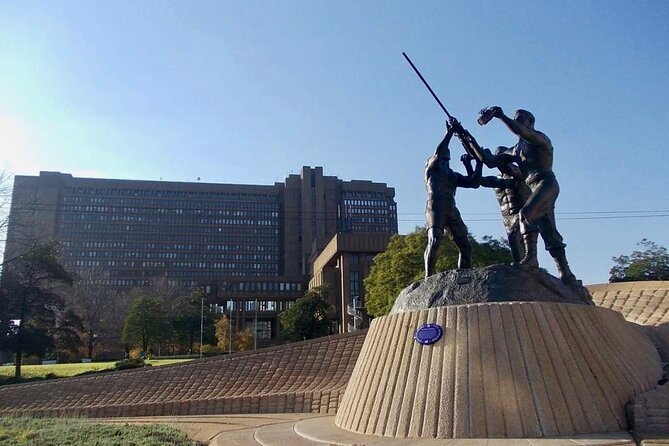
In the inner city, you visit Oriental Plaza, a historic complex originally built in the late 19th century as warehouses and shops. Later, it shifted into a shopping center for the city’s growing population, and that change is part of what makes it interesting.
This is not a long stop, about 20 minutes, but it gives you a real-feeling break. You are not trapped indoors. You are in a place where daily commerce and history overlap.
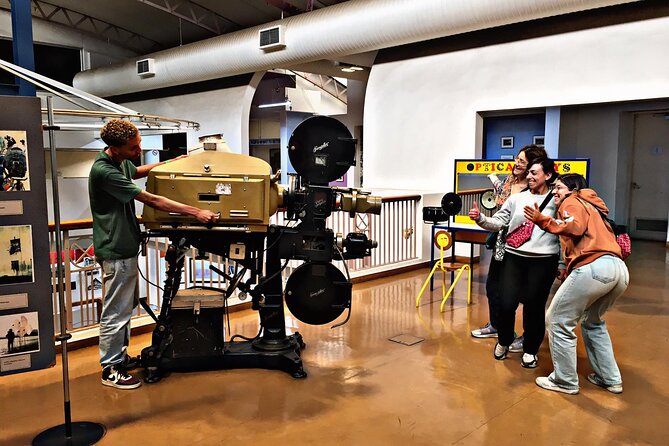
Then you move to Museum Africa. Admission is included, and this stop is deeper, around 35 minutes. Museum Africa focuses on the history of Africa, with exhibits that explore the continent’s past, present, and future through artifacts, displays, and interactive elements.
This is where I like to slow down a bit. Read the main panels first, then go look at the artifacts and visuals your guide points out. Interactive displays are great, but only if you give yourself enough time to actually try them.
The biggest value of this museum stop is how it changes your listening for the rest of the day. Instead of treating South African culture as separate from the wider continent, you start connecting bigger themes.
Market Theatre in Newtown, where art pushed back during apartheid
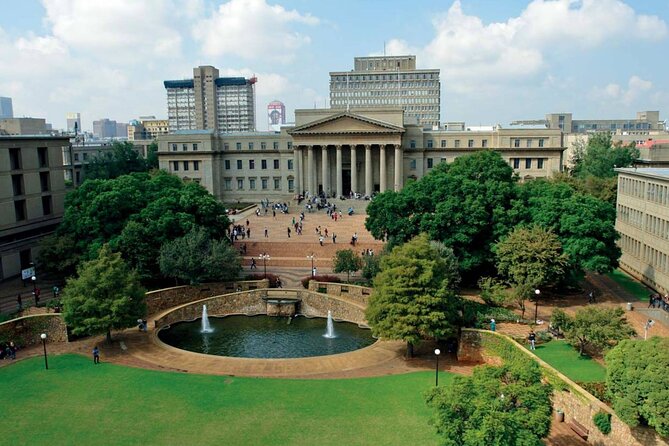
The final museum and cultural stop is the Market Theatre in Newtown. Admission for this segment is free, and you spend about 20 minutes.
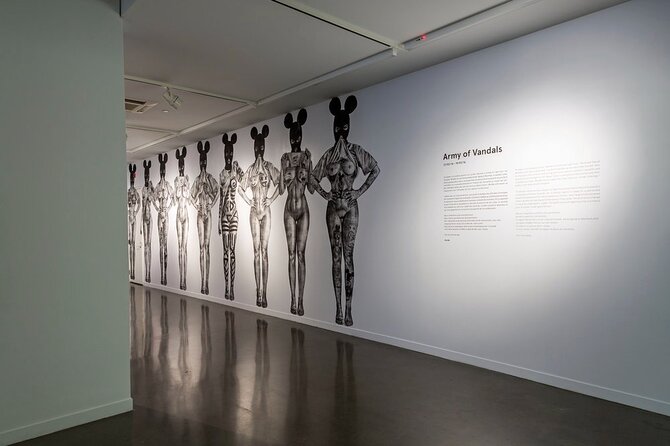
This theater has played a major role in South African cultural life, especially during apartheid. The key idea is that it offered a platform for artists to express themselves freely and challenge oppressive rules.
What you get from this stop is a different angle on change. Earlier, you learned through law and rights. Here, you see how performance and storytelling can act like public pressure, even when formal systems restrict people.
If you are a fan of theater or visual arts, you will probably enjoy the mood shift. If you are not, still pay attention to how the space communicates purpose. You will feel the connection between creativity and activism.
How local transport and the small group shape the whole experience
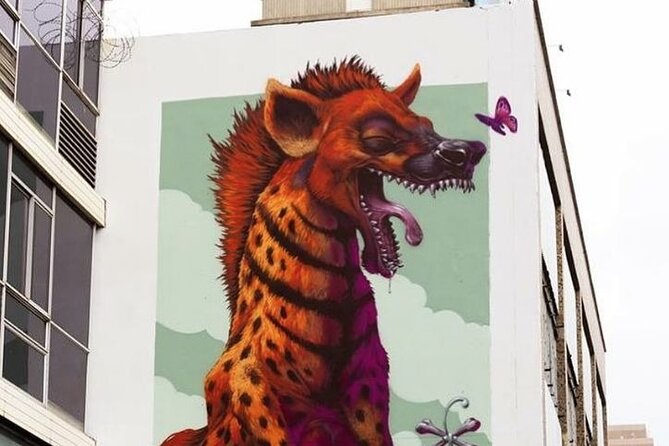
This tour uses local transportation rather than only private shuttles. That is a big deal for value, and also for how the city feels. You get more of Johannesburg in motion, not just static sightseeing.
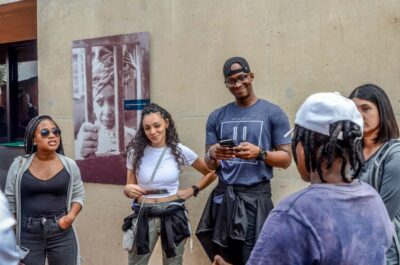
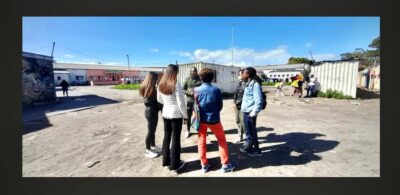
The group size is capped at 7 travelers, which keeps the pace human. In a smaller group, your guide can slow down when someone has a question, and you do not get stuck in a loud crowd that forces you to speed past everything.
Pickup is offered, which matters in a city where travel times can jump around depending on where you start. Also, the tour uses a mobile ticket, so you are not wasting time hunting for printed paperwork.
One more practical note: this route mixes indoor time and outdoor walking. Even if the sites you visit are renovated for tourist comfort and accessibility, you should still dress for movement. Comfortable shoes and a light layer help.
Price and value: what $37.02 buys you in real terms
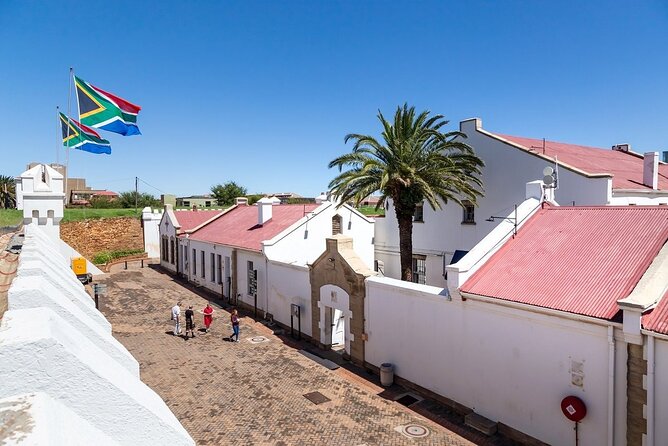
At about $37.02 per person for roughly 3 hours, the price feels reasonable because you are not only paying for guiding. You are also getting included admission at multiple key stops, including Constitution Hill, the Wits Art Museum, and Museum Africa.
Other parts are free, like COSATU House and several city areas, plus the Market Theatre stop. The mix of included and free time helps stretch your sightseeing without turning it into a museum ticket hunt.
You also get time-based value. Short stops at key points mean you see a lot without spending your whole day locked into one place. If you have limited time in Johannesburg, this kind of structured but varied route can be a smart use of half a day.
From a “is it worth it” lens, I think the deciding factor is your interest in connections. If you like connecting human-rights issues, labor, and art to the neighborhoods where you are standing, you will probably feel the value quickly.
What the guides bring to the art and history connections
The experience is led by SKY Travel ZA, and the tour dynamic seems built around both knowledge and conversation. I saw guide names like Sean and Knew in the context of very positive experiences.
What stands out from that kind of guide feedback is not just facts. It is the ability to explain why a site matters and how art connects to purpose, including street art and the ideas behind it.
If you like asking questions, bring at least two. One about history, one about what you are seeing in the city today. Good guides can turn those questions into clear, practical answers.
Also, one reason I like small-group tours is safety and confidence. You tend to stay together, understand the route, and avoid that awkward visitor feeling of wandering into the wrong place at the wrong time.
Who should book this tour, and who might skip it
This tour is a strong fit if you want a guided orientation to Johannesburg that goes beyond postcard landmarks.
It is especially good for:
- First-time visitors who want a coherent story in a short window
- People who enjoy art, whether it is in museums or on streets
- Travelers who like context, meaning why a place matters, not just what it looks like
- Anyone interested in how democracy and human rights show up in physical spaces
You might choose something else if you:
- Want a slower day with more independent exploring
- Prefer purely light entertainment with no political or human-rights content
- Plan to spend most of your time doing long museum hours
Should you book this Johannesburg city evolution, arts, and museums walking tour?
If your time is tight and you want Johannesburg to make sense fast, I would book it. The structure hits the right balance: a major human-rights start, museum stops with included admission, city squares and historic complexes, then a theater with strong cultural meaning.
The best reason to go is simple: you get multiple angles on change in one route. Law, labor, art, and neighborhood life all show up. And with a max group size of 7, you are not just standing in a line waiting your turn.
If you are on the fence, ask yourself one question: do you want your Johannesburg visit to feel like a connected story? If yes, this tour is a good bet.
FAQ
What is the duration of the Johannesburg City Evolution, Arts and Museums walking tour?
It is approximately 3 hours.
How much does the tour cost per person?
The price is $37.02 per person.
Is pickup available?
Yes, pickup is offered.
Is there admission included in the ticket price?
Yes. Admission is included for Constitution Hill Human Rights Precinct, Wits Art Museum, and Museum Africa. Other stops listed are free.
What is the group size limit?
The tour has a maximum of 7 travelers.
Where does the tour start and end?
It starts at Constitution Hill Human Rights Precinct, 11 Kotze St, Braamfontein, Johannesburg, 2017, and ends at The Market Theatre, 56 Margaret Mcingana St, Newtown, Johannesburg, 2001.
What time does the tour begin?
The start time is 10:00 am.
Is the tour near public transportation?
Yes, it is near public transportation.
What is the cancellation policy if my plans change?
You can cancel for a full refund up to 24 hours in advance of the experience start time. If you cancel less than 24 hours before, the amount paid will not be refunded.
More Museum Visits in Johannesburg
- Ultimate Johannesburg Soweto Experience with Apartheid Museum
★ 5.0 · 313 reviews - Maropeng Cradle of Humankind Museum &Sterkfontein Cave Experience
★ 4.5 · 155 reviews - Johannesburg: Soweto & Apartheid Museum Half-Day Tour
★ 4.9 · 99 reviews - Johannesburg: Half-Day Apartheid Museum Tour
★ 4.5 · 73 reviews
More Walking Tours in Johannesburg
- Soweto: Walking Tour with a Local Guide and Lunch
★ 4.9 · 648 reviews - Soweto Walking Tour with Lunch
★ 5.0 · 288 reviews - Johannesburg: Local Food Tasting Guided Walking Tour
★ 4.7 · 192 reviews - Johannesburg: City Centre Walking Tour
★ 4.8 · 152 reviews
Newest around Johannesburg
- Zulu Food Cooking & Dining Experience with a local Chef★ 4.4 · 5 reviews
- Private Soweto Tour 5 hours approximately from Johannesburg or Pretoria.★ 4.5 · 9 reviews
- bicycle tour soweto★ 4.5 · 20 reviews
- Two day Kruger National Park Safari from Johannesburg★ 5.0 · 19 reviews
- Sun City Day Tour From Johannesburg★ 4.5 · 6 reviews
- Taste of Africa★ 5.0 · 9 reviews
- Full-day Johannesburg Bike Or Walking tour – With Transport★ 5.0 · 10 reviews
- Pilanesberg National Park Safari, BIG 5 Full Day★ 5.0 · 4 reviews
Walking Tours, compared.

Browse the lists this tour appears in